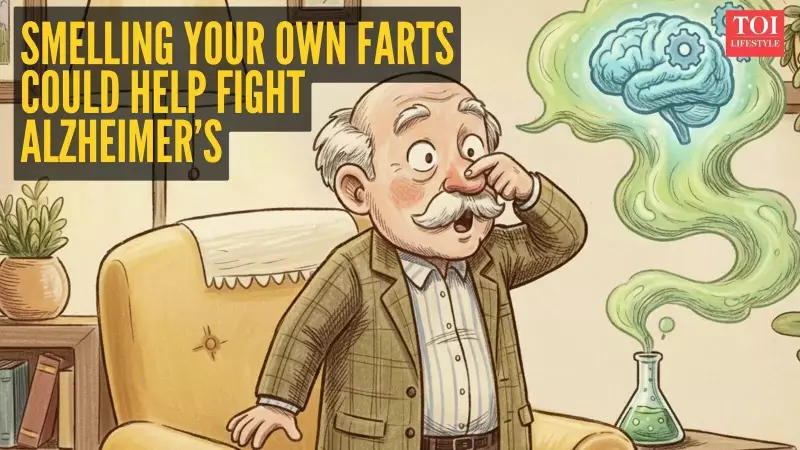
What if the most embarrassing and joked-about bodily function held a secret key to fighting one of humanity's most feared diseases? In a twist that seems straight out of a comedy script, scientists have uncovered a surprising link between the gas responsible for the smell of flatulence and the protection of the ageing brain.
The Stinky Science: From Punchline to Potential Breakthrough
Researchers at the prestigious Johns Hopkins Medicine have published a study suggesting that hydrogen sulfide, the pungent compound that gives farts their characteristic rotten-egg odour, could play a crucial role in slowing down the progression of Alzheimer's disease. Published in the respected journal Proceedings of the National Academy of Sciences, the research turns conventional wisdom on its head.
The human body produces hydrogen sulfide naturally in minute quantities, where it helps regulate vital cellular activities. The team discovered a critical pattern: these levels decrease as we age and fall even more dramatically in individuals diagnosed with Alzheimer's. This depletion, they hypothesise, might be more than just a side effect; it could be a contributing factor to the disease's advance.

Mice, Memory, and a Molecular Delivery System
To test their theory, the scientists conducted experiments on mice that were genetically modified to mimic Alzheimer's in humans. Over a period of 12 weeks, one group of mice received a novel, slow-release compound named NaGYY. This compound was engineered to deliver precise, controlled doses of hydrogen sulfide throughout the body, mimicking its natural production.
The results were striking. Mice treated with NaGYY showed remarkable improvements in cognitive and physical function. In memory and motor tests, their performance was up to 50 percent better compared to the untreated group. The treated mice were notably more active, alert, and demonstrated a superior ability to retain information.
How a Foul Gas Prevents a Fatal Tangle in the Brain
The study delves into the precise molecular mechanism behind this effect. The researchers found that when hydrogen sulfide levels drop too low, a destructive chain reaction is triggered in the brain. An enzyme called GSK3β becomes abnormally attracted to a key brain protein known as Tau.
This improper binding causes the Tau protein to misfold and clump together inside nerve cells, forming toxic tangles. These tangles disrupt communication between neurons, ultimately leading to cell death and the cognitive decline characteristic of Alzheimer's. Hydrogen sulfide appears to act as a guardian, preventing this harmful interaction between GSK3β and Tau. By restoring the gas to normal levels, the researchers observed improved signalling between brain cells and a significant reduction in this dangerous protein buildup.
Important Caveat: The scientists urgently clarify that their findings do not mean smelling flatulence is beneficial. Hydrogen sulfide is highly toxic in large concentrations. The positive effects seen in the study came exclusively from meticulously measured, microscopic doses delivered via a specialised compound, not from environmental exposure.
A New Avenue for Future Alzheimer's Therapies
This research is significant because it marks the first time scientists have been able to precisely replicate the body's natural production of hydrogen sulfide for therapeutic investigation. While the study is promising and conducted on an established animal model, the path to a human treatment is long and requires extensive further clinical trials.
Nevertheless, it opens a completely unexpected and novel pathway in the global quest to combat Alzheimer's disease. A gas synonymous with awkwardness and humour may now provide scientists with fresh insights into the workings of the ageing brain, offering a glimmer of hope for future interventions. It seems that sometimes, scientific answers can come from the most unlikely, and malodorous, of places.