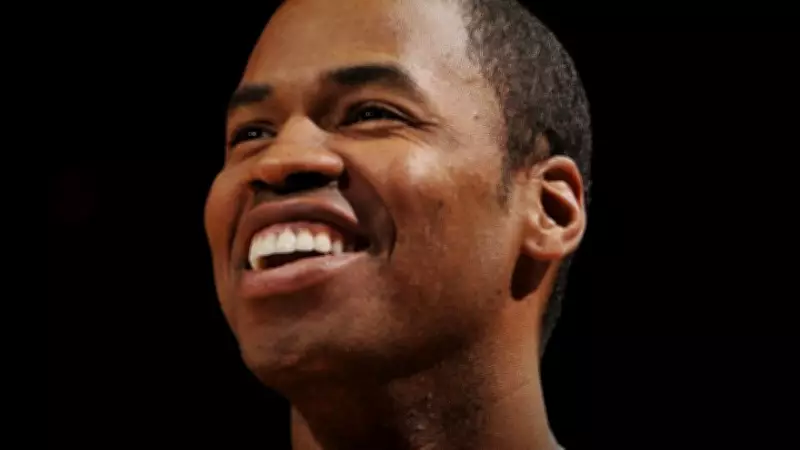
Jason Collins, the NBA veteran who made history in 2013 as the first openly gay active player in any of the four major North American professional sports leagues, has died. He was 47. His family confirmed the news Tuesday in a statement released through the NBA, saying he died after 'a valiant fight with glioblastoma.'
A Trailblazing Career
Collins played 13 seasons in the NBA, retiring in 2014 after stints with eight different teams, including two Eastern Conference championship runs with the New Jersey Nets in 2002 and 2003. But it was his 2013 Sports Illustrated cover story, in which he came out publicly, that made him a figure far larger than basketball. He is survived by his husband, Brunson Green, his parents, and his twin brother Jarron Collins, who also played in the NBA.
The Battle with Glioblastoma
Collins himself described the diagnosis in a first-person account published by ESPN in December 2025, and the speed of it is what strikes you. 'It came on incredibly fast,' he wrote. One month he was getting married to the love of his life in Austin, Texas. Then, according to his family, within hours his mental clarity, short-term memory, and comprehension had disappeared. By the time he could speak for himself, the news was Stage 4 glioblastoma — what he called 'one of the deadliest forms of brain cancer.'

Collins traveled to Singapore for experimental targeted chemotherapy not yet available in the United States, treatments that worked well enough to bring him home, attend NBA All-Star Weekend in Los Angeles, and watch a game at his alma mater, Stanford, reports ESPN. But the cancer came back. It always does.
What is Glioblastoma?
Glioblastoma is a Grade IV brain tumour — the highest classification — that starts in astrocyte cells in the brain or spinal cord, according to the Cleveland Clinic. It has no cure. What makes it particularly brutal is that it grows fast, spreads into surrounding tissue like roots, and operates within the skull's confined space, where any expansion puts immediate pressure on the brain. In Collins' case, the tumour was described as spreading across the underside of his brain 'the width of a baseball,' encroaching on the frontal lobe — the part of the brain, as he put it, 'that makes you, you.'
Glioblastoma is most common in people aged 45 to 70, with the average diagnosis at 64.
Early Symptoms Nobody Should Ignore
What makes glioblastoma so dangerous is that its early signs are easy to dismiss. Severe headaches, typically worse in the morning, are among the most common early signals, affecting roughly half of people with the condition. These headaches often worsen when lying down, bending over, or straining, and tend not to respond to over-the-counter painkillers.
Seizures can also be an early sign, even in people with no prior history of them. According to MD Anderson Cancer Center, mood and personality changes are frequently among the first things families notice — withdrawal, irritability, sudden depression, or behaving in ways entirely out of character. Memory problems, confusion, and difficulty finding words are also telling signs, as are vision changes and physical weakness on one side of the body. The Glioblastoma Research Organization notes that symptoms can be gradual and nearly undetectable at first, which is exactly what makes early diagnosis so difficult and so critical.