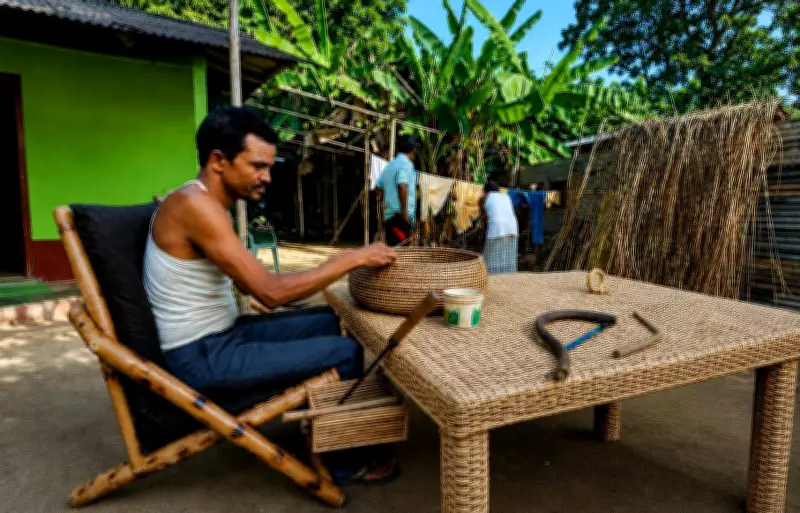
Vadodara: For years, Assam’s bamboo and cane artisans have endured pain, fatigue and frequent injuries while keeping alive a craft deeply rooted in the state’s cultural heritage. A study by researchers at Maharaja Sayajirao University has now developed a specially designed ergonomic workstation that could significantly improve their working conditions, health and productivity.
Study Details
The research, conducted by PhD scholar Poripurna Goswami under the guidance of Dr Urvashi Mishra, assistant professor in the Department of Family and Community Resource Management, Faculty of Family and Community Sciences, examined the occupational challenges faced by bamboo and cane craftsmen in Assam’s Barpeta district. The study found that most artisans work in informal, home-based settings with little or no ergonomic support. They spend more than seven hours a day carrying out repetitive tasks such as splitting, stripping, bending, weaving and finishing bamboo and cane products.
Health Issues
These activities often require them to sit in squatting, bent or cross-legged positions for long periods, placing considerable strain on their bodies. As a result, musculoskeletal problems were found to be widespread. Many craftsmen reported discomfort in the wrists, forearms, necks, shoulders, lower backs, knees and feet. Repeated use of traditional tools also led to excessive strain on the dominant hand. Injuries such as cuts, splinters, punctures and lacerations from handling sharp bamboo edges were also commonly reported.

“Despite the growing demand for eco-friendly bamboo products, the health and safety concerns of artisans have largely remained overlooked,” said Mishra.
Workstation Design
To address these challenges, the study designed a need-based ergonomic workstation tailored to craftsmen’s work practices and physical measurements. The workstation features adjustable working heights, tilting work surfaces, dedicated storage tools, task-specific lighting, support systems to reduce bending and an adjustable ergonomic chair. The researchers said the workstation was developed to reduce awkward postures, minimise repetitive strain and improve workplace organisation.
Trial Results
During a week-long trial involving selected craftsmen, users reported greater comfort, better posture, reduced physical strain and improved ease of work. The study also recommended simple interventions such as adjustable seating, anti-fatigue mats, improved tool handles, scheduled micro-breaks, stretching exercises and the use of protective gloves to further reduce health risks.
Broader Implications
Researchers said ergonomics should not be viewed as a luxury in traditional industries but as a necessity. Better workstation design can help reduce injuries, improve efficiency and enable artisans to continue their profession with greater dignity and physical well-being. As India increasingly promotes sustainable and environmentally friendly crafts, the study highlights the need to focus not only on the products but also on the people who create them. For Assam’s bamboo and cane craftsmen, the findings offer a path towards preserving both a traditional livelihood and their long-term health.