Ahmedabad: A full-term baby who had stopped moving in the womb was born in critical condition after aspirating his own stool, leaving him struggling to breathe from the moment of birth.
Though delivered at a healthy 2.8kg, doctors said the newborn’s condition was dire because meconium — first stool after birth — had entered his airways and severely damaged his lungs, as it was passed inside the womb.
"Nearly 80% of newborns who aspirate meconium in the womb go home without needing hospitalisation. But this child was among the critical 10% whose lungs go into severe distress. He just could not breathe, even on a ventilator," said senior neonatologist Dr Ashish Mehta.

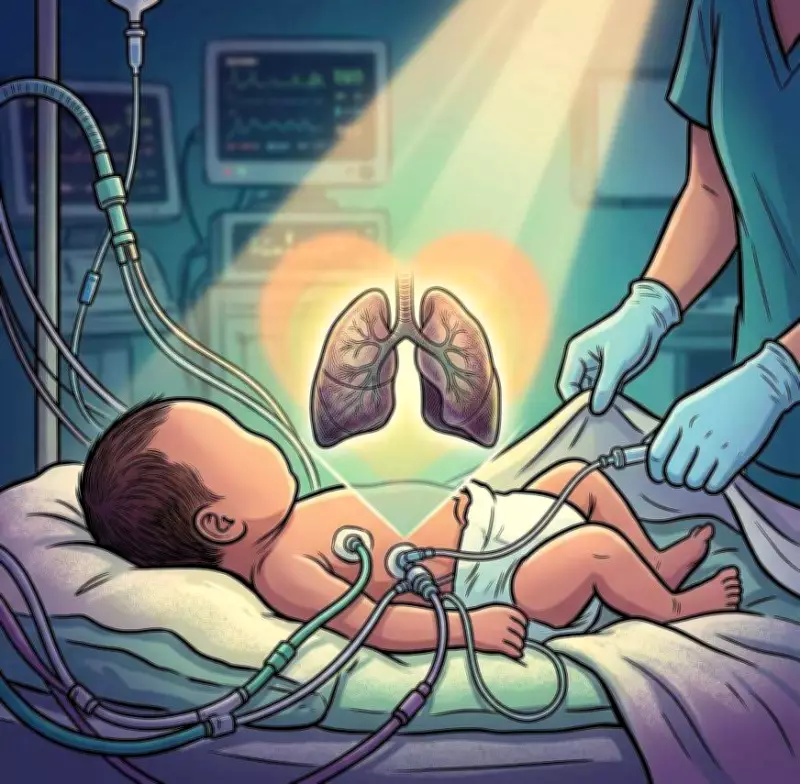
With conventional support failing, the medical team opted for a rarely used intervention in the setting: placing the baby on ECMO, or extracorporeal membrane oxygenation, to bypass the lungs and allow them time to heal while the machine handled oxygenation.
ECMO uses modified heart-lung bypass technology to oxygenate and remove carbon dioxide from blood, outside the body. Used as intensive care life support, it serves as a temporary ‘bridge’ to let the heart or lungs rest during severe, life-threatening failure. The technology became widely known during the Covid pandemic when it was used for adults with extensive lung damage.
Dr Mehta said that while ECMO is commonly used in newborns undergoing heart procedures, there is no documented case in India of a newborn being put on ECMO specifically for lung treatment. "We told the parents that it was not an experiment but a treatment practised abroad and that we had never attempted it but could help save the child. They agreed," he said.
The technical hurdles were significant. Doctors said the smallest catheter available was roughly the size of an adult index finger, and had to be inserted into the newborn’s jugular vein with extreme care to avoid injury. "The challenge was to insert the catheter to reach the heart for aspirating and reinjecting blood. Biggest challenge was to keep the catheter inside the child’s tiny blood vessels for a week to allow the lung time off to heal and get better," Dr Mehta said. A team of neonatal intensivists, cardiothoracic surgeon, cardiac anaesthetist and ECMO team worked tirelessly as a unit.
Doctors said the baby spent six days on ECMO and then two additional days on a ventilator before he could breathe normally on his own. "The child is doing very well. Our prayers have been answered," said the child’s father.
The hospital team said the case is being prepared for reporting, describing it as among the first in western India and in this part of the world, where a newborn was put on ECMO for lung treatment. "This child’s survival will give hope to more such children, continuing with the aim to save the sickest," Dr Mehta said.