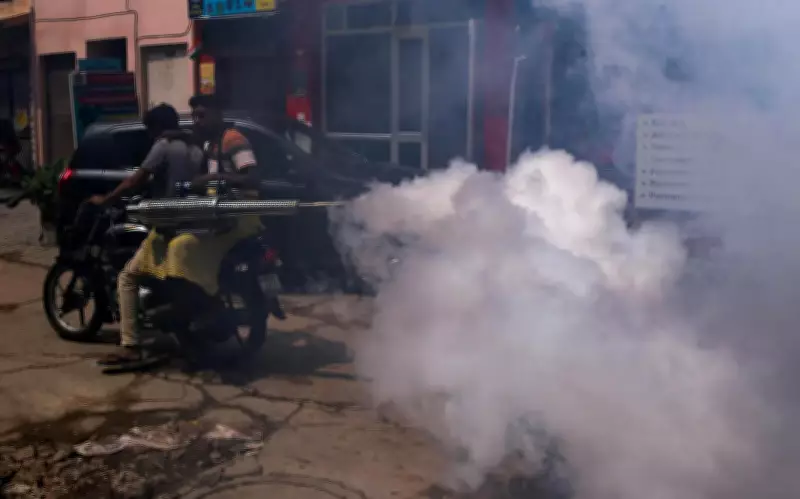
The health department in Gurgaon has screened over 3.1 lakh houses as part of an ongoing fever surveillance drive aimed at preventing outbreaks of vector-borne diseases such as dengue and malaria ahead of the monsoon season. The drive found mosquito larvae in 42 houses and led to the issuance of 30 notices for failure to adopt preventive measures.
Inspection Details
Teams inspected household water coolers and tankers during the drive. Twenty-six water coolers and five tanks were found to contain mosquito larvae. Officials stated that the drive will be conducted for the first 15 days of every month from May to October, a period considered high-risk for dengue and malaria.
Urgency Due to Unusual Weather
The exercise has assumed urgency this year as the city recorded an unusually wet April. According to the India Meteorological Department, Gurgaon received 23.8 mm of rainfall against an average of 7.7 mm, a surplus of 209%. Health officials noted that excess pre-monsoon rain, coupled with rising humidity, could create favorable breeding conditions for mosquitoes.

Dengue and Malaria Trends
Dengue cases in Haryana typically begin rising in May and peak between July and October. The state reported 8,996 dengue and 50 malaria cases in 2022; 8,081 dengue and 85 malaria cases in 2023; and 6,469 dengue cases with nine deaths in 2024. Last year, 2,033 dengue cases were reported, indicating that while numbers were lower than peak outbreak years, the disease remains a recurring seasonal threat. In Gurgaon, dengue has persisted as a concern despite year-to-year variation. In 2022, the city reported 440 cases, followed by 276 cases and one death in 2023, 186 cases in 2024, and 64 cases in 2025. Health officials cautioned that last year's lower tally should not lead to complacency, particularly given this year's wetter-than-normal pre-monsoon conditions.
Hotspot Mapping and Geo-Tagging
The health department has mapped dengue hotspots, including sectors 4, 15, 46, 51, and 56, as well as DLF-1, Sushant Lok-1, and Rajendra Park. Officials said all larvae sites will be geo-tagged to build a database and track high-risk zones more effectively.
Officials' Statements
“We are conducting a survey to identify suspected cases so they can be treated at the earliest. We will gradually increase sample collection to monitor fever clusters in the district,” said district surveillance officer Dr. Jai Prakash. Officials also noted that while malaria outbreaks are relatively uncommon, surveillance remains critical as cases are typically reported between February and September.
Preventive Measures
Health officials said teams are focusing on eliminating breeding sites and spreading awareness among residents about preventive steps such as covering water containers and ensuring regular cleaning of coolers.