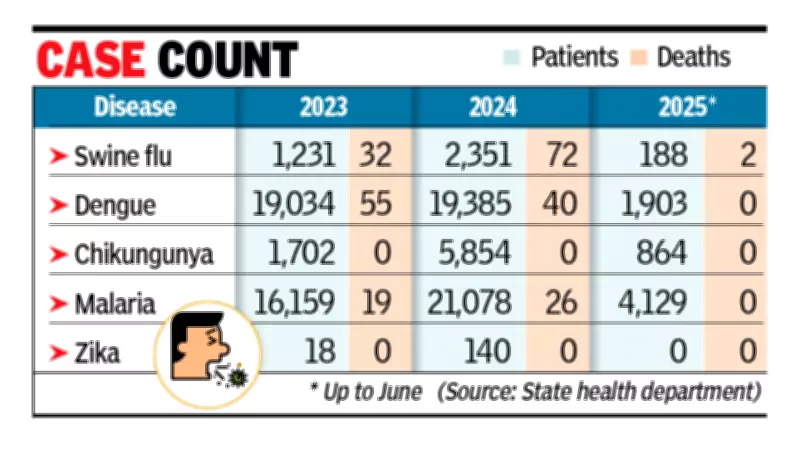
The state health department has ordered intensive disease surveillance, pre-outbreak preparedness, entomological surveys, larval-source management and interdepartmental coordination this monsoon after experts warned of a likely surge in infections because of the El Nino-induced climate pattern.
Health Department Directives
Dr Sandeep Sangale, the joint director of health and in charge of State Vector Borne Disease Control Programme, said, “We have instructed all government and private hospitals to immediately register suspected patients of vector-borne infections. The state will ensure availability of equipment for health tests. We have emphasised on updating data daily on the health department’s portal and identifying early signs of any rise in patient numbers.”
He said a coordinated effort between gram panchayats, municipal councils, municipal corporations, and the water supply and sanitation department had been initiated to monitor any surge in diseases. “Regular district-level reviews and reports to the govt on the implementation of measures have been mandated,” Dr Sangale said.

Central Government Warning
The Union government warned that dengue cases could increase in 2026 because the El Nino event was likely to affect weather patterns, mosquito breeding and disease transmission across the country. The caution note was issued following higher dengue cases in El Nino years 2021 and 2024 in India and globally. The central advisory urged the states to act early and strengthen preparedness before the transmission season.
Preventive Measures
Against this backdrop, the state health department has directed the health authorities in all districts and municipal corporations to implement immediate preventive measures. Dr Sangale said, “With the onset of monsoon, there is an increased risk of vector-borne diseases such as dengue, chikungunya and zika, spread by aedes mosquitoes.”
The health staff and ASHA workers have been told to conduct household surveys and regularly analyse mosquito larva surveys. “They will inspect water tanks, coolers, tyres, flower vases and other water-storing objects. Extensive public awareness campaigns would be conducted through schools, colleges, gram sabhas and social media to observe one ‘Dry Day’ per week.”