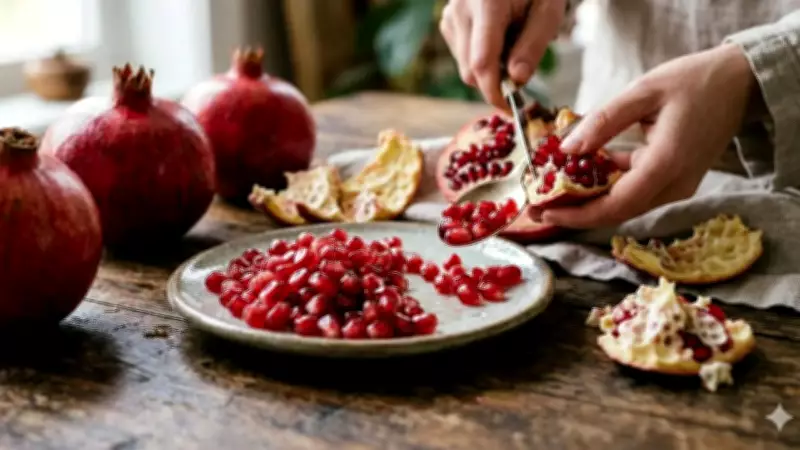
Pomegranates tend to generate a surprising amount of waste once their bright seeds are removed. The thick outer peel is often discarded without much thought, yet many kitchens have quietly discovered ways to repurpose it over time. Some dry the skins near a sunny window, while others save them for teas or cooking powders. The peel carries a slightly bitter aroma when fresh, but this changes once heat or sunlight draws out the moisture. In parts of India and the Middle East, dried pomegranate peel has been used in home remedies and spice blends for years, typically in small amounts rather than as a dominant ingredient.
Growing Interest in Pomegranate Peel
Interest in pomegranate peel has expanded beyond traditional kitchen habits because researchers have been examining the compounds concentrated in the fruit's outer layer. According to a study published in the National Library of Medicine, titled Nutritional importance and industrial uses of pomegranate peel: A critical review, pomegranate peel contains high levels of polyphenols, flavonoids, fiber, and antioxidant compounds that have been linked with antimicrobial, anti-inflammatory, and digestive properties. The study also explored how dried peel extracts are being examined for possible use in food preservation and functional food products, which partly explains why more households have started finding practical ways to reuse the skins instead of discarding them immediately.
8 Simple Kitchen Ideas Using Dried Pomegranate Peels
1. Drying the Peels for Herbal Tea
This is probably the most common use because it requires very little preparation. The peels are washed thoroughly and left to dry until crisp. Some people use direct sunlight, while others place them in a low oven for a few hours. Small dried pieces are steeped in hot water with ginger, mint, or cinnamon. The flavor comes out tart and earthy rather than fruity.

2. Grinding Them into a Cooking Powder
Once dried fully, the peels can be blended into a coarse powder and stored in airtight jars. The taste is slightly bitter, so most people use only a pinch at a time. It often ends up mixed into marinades, spice rubs, or yogurt sauces where the sourness works naturally alongside garlic, cumin, and chili.
3. Stirring Small Amounts into Smoothies
A little peel powder is sometimes added to fruit smoothies, especially berry or citrus blends. The quantity stays small because the flavor can quickly become overpowering. Banana, honey, and dates are commonly used to soften the sharper notes from the peel.
4. Simmering Peels in Soups and Broths
Some cooks add dried peel pieces directly into soups while simmering lentils or vegetables. The peel is usually removed before serving, much like a bay leaf. It leaves behind a faint tartness that slightly deepens the flavor without making the broth taste obviously fruity.
5. Mixing Powdered Peel into Baked Foods
Pomegranate peel powder occasionally appears in homemade crackers, breads, or savory biscuits. It is generally folded into the dry ingredients rather than used as a topping. The flavor becomes milder once baked and blends more naturally with nutty or wholegrain ingredients.
6. Blending It into Chutneys and Dips
Fresh or lightly dried peel is sometimes cooked down with tamarind, garlic, or herbs to make sharp chutneys. The bitterness settles once mixed with salt and acidity. Small spoonfuls are usually enough because the flavor remains concentrated even after blending.
7. Using Dried Peel in Infused Water
Some people place dried peel pieces into bottles of water alongside lemon slices or herbs. It creates a faintly tangy flavor after a few hours in the fridge. The peel is normally strained out before drinking since soaking softens it quite quickly.
8. Adding Peel Powder to Rice or Grain Dishes
A pinch of powdered peel can be stirred into pilaf, couscous, or quinoa during cooking. It does not dominate the dish but gives a subtle sour edge underneath richer ingredients. This tends to work better in savory recipes than sweet ones because of the peel's naturally tannic taste.