NITI Aayog Official Sounds Alarm on India's Gut Health Crisis at Probiotic Symposium
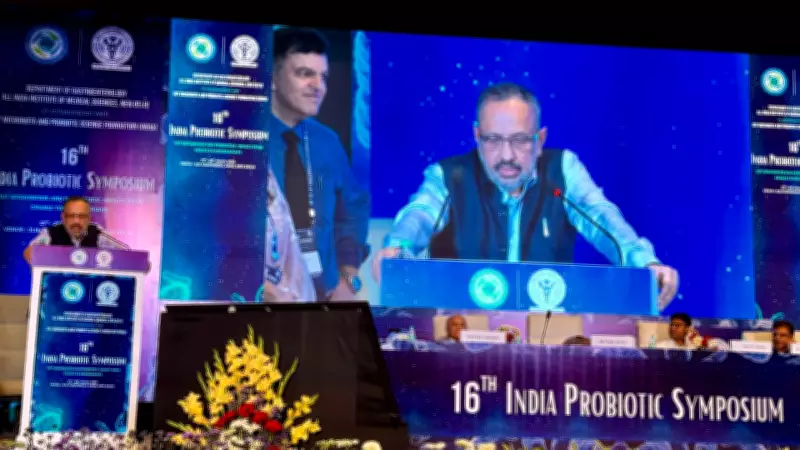
The Gut Microbiota and Probiotic Science Foundation hosted the 16th India Probiotic Symposium in New Delhi on March 27-28, focusing on the theme "Gut Microbiome and Probiotics: Impact from Cradle to Centenarians." This significant event brought together experts to discuss the profound implications of gut health across all stages of life.
Chief Guest Rajiv Gauba Highlights Critical Role of Gut Microbiome
Delivering the Chief Guest address, Rajiv Gauba, Member of NITI Aayog, emphasized the gut microbiome's essential functions in immunity, metabolism, and preventive healthcare. He expressed deep concern over India's rapid dietary shifts, noting that urbanization, changing lifestyles, and the surge in consumption of ultra-processed and refined foods—often promoted through social media and quick commerce platforms—are eroding traditional, nutrient-dense diets.
Gauba cautioned that these trends could lead to severe long-term consequences for gut health, revealing that an estimated 56.4 percent of India's disease burden is directly linked to unhealthy or imbalanced diets. He issued a stark warning: "If neglected, micro-organisms could create macro consequences," underscoring the potential for small imbalances in gut bacteria to trigger widespread health issues.

Linking Gut Health to Economic Development and Viksit Bharat
Gauba positioned gut health within a broader developmental framework, describing healthcare as the most critical sector for both individual well-being and economic growth. He argued that India's demographic dividend can only be realized with a healthy workforce and proactive preparation for active and healthy ageing as the elderly population increases.
He stressed that investment in health is an investment in Viksit Bharat, citing key government initiatives such as Ayushman Bharat, PM-JAY, PM Bharatiya Janaushadhi Pariyojana, and Ayushman Arogya Mandirs. These programs have significantly strengthened primary healthcare and financial protection, with out-of-pocket health expenditure dropping from 62.6 percent to 39.4 percent between FY15 and FY22, saving households over Rs 1.25 lakh crore.
Persistent Healthcare Challenges and the Role of Technology
Despite these gains, Gauba acknowledged ongoing challenges in access, equity, affordability, quality, patient safety, and shortages of skilled healthcare professionals. He noted that socio-economic factors continue to influence access to healthcare services, calling for a more equitable system.
He urged healthcare professionals to take a proactive role by increasing prescriptions of affordable generic medicines and leveraging digital health tools, telemedicine, data analytics, and artificial intelligence. These technologies can expand specialist care to underserved communities and advocate for those lacking quality medical services, bridging critical gaps in the healthcare landscape.
Advances and Misinformation in Probiotic Science
Addressing the evolving field of probiotics, Gauba highlighted that microbiome science has progressed from descriptive studies to mechanistic and translational research. He pointed to emerging frontiers like next-generation microbiome-based therapeutics, synthetic biology, and CRISPR-enabled engineering of probiotic strains with targeted anti-inflammatory and metabolic functions for precision medicine.
However, he cautioned against the growing spread of misinformation and misleading advertisements in the probiotics and supplements market. Gauba urged clinicians and researchers to use their credibility and media reach to disseminate accurate information, promote healthy dietary habits, and champion preventive lifestyles that reduce the need for expensive diagnostics and procedures.
India's Unique Position to Lead the Global Probiotic Movement
Highlighting India's rich heritage of fermented foods and traditional dietary practices, Gauba stated that the country is uniquely positioned to lead the global probiotic movement. By combining traditional knowledge with genomic and microbiome research, India can develop clinically validated probiotics with vast public health potential.

He underlined that probiotics could significantly reduce infectious and chronic disease burdens, improve nutrition, and strengthen population immunity. Robust collaboration between academia, industry, and regulators is essential to translate scientific advances into safe, effective, and accessible products, ensuring that innovations benefit the broader population.
Encouraging Young Researchers and Future Collaborations
Gauba lauded the participation of young researchers and innovators at the symposium, encouraging them to adopt multidisciplinary and evidence-based approaches to tackle complex health challenges. He expressed confidence that the event would catalyze new collaborations and reinforce India's leadership in microbiome and probiotic science, paving the way for groundbreaking advancements in healthcare.