Desert Survival Secrets: How Animals Thrive Without Water for Years
Water is fundamental to life, yet in the natural world, numerous creatures defy this norm by thriving in some of the driest habitats on Earth. From scorching deserts to parched grounds, these animals have evolved remarkable strategies to obtain and conserve water, enabling them to survive for days, months, or even years without a direct drink.
Why Animals Can Endure Long Periods Without Water
Animals inhabiting arid regions possess specialized adaptations that mitigate water scarcity. Unlike humans, they often do not need to drink water directly; instead, they hydrate through food sources, metabolic processes, or stored reserves. These adaptations include minimizing water loss through concentrated waste, behavioral adjustments like nocturnal activity to avoid heat, and metabolic slowdowns that reduce water needs.
Camels: Masters of Desert Adaptation
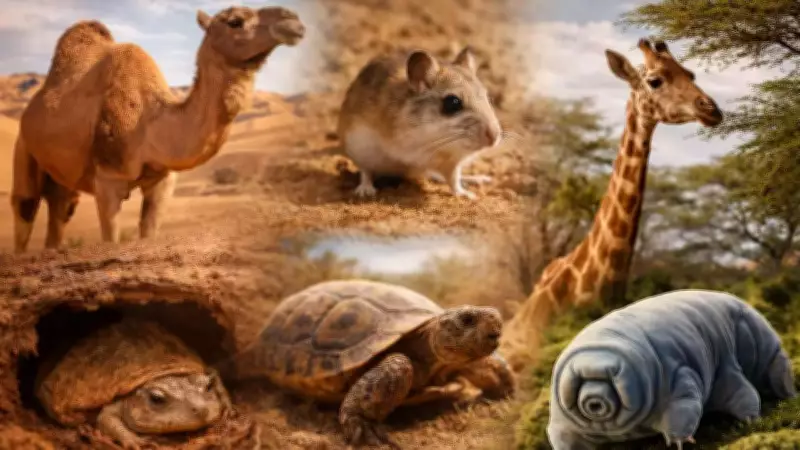
Research from a study titled "Dromedary camel and its adaptation mechanisms to desert environment: A review" highlights camels as iconic desert survivors. They can endure without water for over 10 days, depending on environmental conditions. Their secret lies not in storing water but in efficient utilization, conserving sweat and excreting highly concentrated urine. Additionally, fat in their humps converts to energy and provides metabolic water, enhancing their resilience.

Kangaroo Rats: Lifelong Abstainers from Drinking
A study in the National Medicine Library reveals that kangaroo rats never drink water throughout their lives. They derive all necessary moisture from dry seeds, aided by highly efficient kidneys that produce extremely concentrated urine. Their respiratory systems also minimize moisture loss, making them perfectly adapted to arid environments.
Desert Amphibians: Aestivation for Survival
As published in the Journal of Arid Environments, some animals avoid water use entirely through aestivation. Water-holding frogs, for instance, dig into the ground and enter a dormant state during dry seasons, with decreased metabolism allowing survival without water until rainfall returns. Similar mechanisms are observed in other amphibians and lungfish.
Tortoises: Internal Water Storage Experts
According to Ecological Indicators, tortoises store significant water in their bladders, enabling them to survive for months without intake. Their low metabolic rates further aid water conservation, making them well-suited for desert life.
Giraffes: Hydration from Plant-Based Diets
Cited in Environmental Advances, giraffes obtain most of their water from their diet, particularly from water-rich leaves of acacia trees. This allows them to survive long periods without drinking from external sources.
Tardigrades: Microscopic Marvels of Dehydration Survival
One of the most extraordinary examples is the tardigrade, or "water bear." These microscopic organisms can survive extreme dehydration by entering cryptobiosis, a state where they lose almost all water content and halt metabolism. They can remain in this condition for years or decades, reviving upon rehydration, showcasing unparalleled toughness in the animal kingdom.
These adaptations underscore the incredible diversity and resilience of life in water-scarce environments, offering insights into survival strategies that challenge our understanding of biological limits.