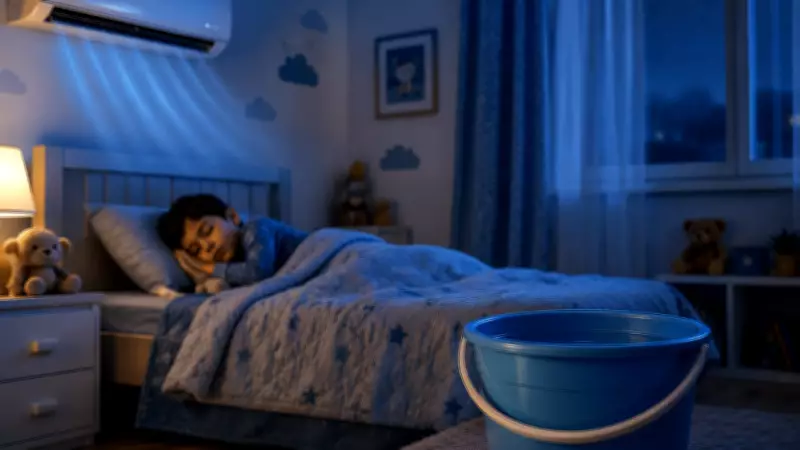
When an air conditioner works through the night, it makes the room feel calm, clean and almost sealed off from the outside world. That comfort is welcome on hot, sticky evenings, especially for children who sleep better in cooler air. But there is a quiet trade-off many parents notice only after a few nights: the room can start to feel too dry. A child may wake with a scratchy throat, a blocked nose, dry lips or irritated eyes, even when the temperature itself feels perfect. That is where a simple bucket of water comes in. It is old-fashioned, low-cost and almost laughably plain, yet many families still rely on it for a reason. Scroll down to know more.
Air Conditioning Can Dry Out the Room
An air conditioner does more than lower the temperature. It also pulls moisture out of the air as it cools. That is part of how it works, but in a closed bedroom, especially one with the doors and windows shut through the night, the result can be air that feels cooler but much drier than the body prefers.
Children are often more sensitive to this than adults. Their skin is softer, their noses can dry out faster, and they may not always know how to describe what is bothering them. Instead of saying the room feels dry, they may simply become restless, wake up more often or start breathing through their mouth.

A bucket of water placed in the room does not turn the bedroom into a spa. It does not replace a proper humidifier either. But it can gently add a little moisture back into the air, especially in a small room, and that small shift can make sleep feel less harsh.
It May Ease Dryness in the Nose and Throat
One of the most common complaints after sleeping in air-conditioned air is waking up with a dry mouth or a scratchy throat. Children who breathe through their mouths at night can feel this even more strongly. Dry air can also make the inside of the nose feel irritated, which is especially uncomfortable for kids who already have allergies, a mild cold or seasonal congestion.
The idea behind keeping water in the room is simple: as the water slowly evaporates, it may slightly soften the dryness around it. That does not mean it will cure congestion or stop a cold. It simply means the sleeping environment may feel gentler on the airway.
For parents, that matters. A child who sleeps more comfortably is more likely to wake up refreshed instead of groggy, cranky or thirsty. Sometimes the difference is not dramatic, but sleep comfort often depends on small things working together.
It Can Be a Helpful Low-Tech Backup
Not every home has a humidifier, and not every family wants to run one every night. Some parents are cautious about adding too many gadgets to a child's room. A bucket of water offers a simple, familiar alternative. It does not need electricity, it does not make noise, and it does not require settings, filters or apps.
In many households, that is exactly why it survives. It is a practical backup when the AC is running hard, the weather is dry, or the room begins to feel stuffy in a strange, dehydrated way. In older homes, this trick has been used for years because it is easy, inexpensive and available to almost everyone.
Still, it works best when used with common sense. A bucket should be clean, stable and placed where it cannot be knocked over. If there are very young children in the room, safety matters more than tradition. It should never become a hazard in the name of comfort.
It May Make Sleep Feel Less Harsh on the Skin and Eyes
Dry air can do more than irritate the nose. It can also leave skin feeling tight and eyes feeling tired. Children with sensitive skin, eczema or mild eye irritation may feel more discomfort in an air-conditioned room than parents realize. They may rub their eyes, toss around or wake more frequently.
A little extra humidity can make the room feel softer around the edges. Again, the bucket is not a medical fix. It is simply a way of making the air less aggressive. In a child's bedroom, that can be enough to improve the overall sleep experience.
This is one reason many parents notice that children seem to sleep better when the room feels balanced rather than just cold. Cooling alone is not always enough. Comfort is about the quality of the air, not only the temperature.

It Reflects a Broader Truth About Sleep
Good sleep for children is rarely built on one big solution. It comes from a room that feels safe, quiet, steady and comfortable. Temperature matters. Darkness matters. Noise matters. So does the feel of the air. A bucket of water is only one small piece of that picture, but it speaks to a larger parenting instinct: notice what the body is reacting to, then adjust the room, not just the thermostat.
In many homes, especially during hot weather, this tiny habit sits beside other simple nighttime routines, like keeping water nearby, avoiding direct AC wind on the child's face and making sure blankets are light enough. These are not dramatic interventions. They are the quiet housekeeping of better sleep.
The reason this old practice still makes sense is not because it is magical. It is because it responds to a real problem with a direct, low-cost solution. Air-conditioned rooms can become too dry for some children. A bucket of water may help add a touch of moisture, making the sleep environment more comfortable and less irritating.