

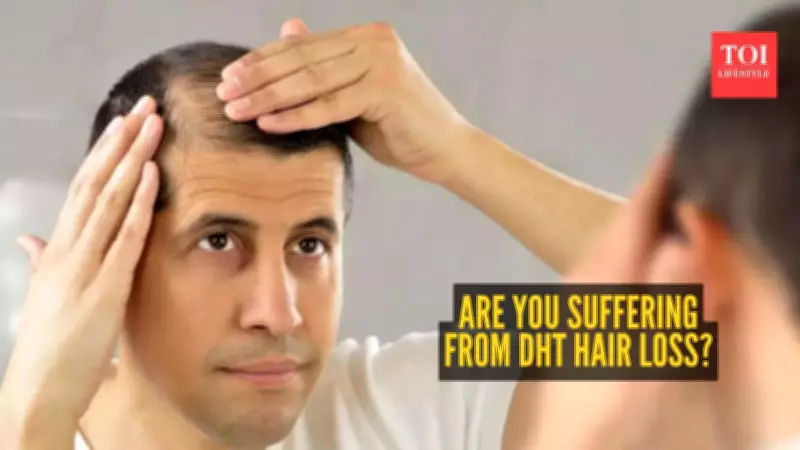
Understanding DHT Hair Loss: Symptoms, Causes, and Early Detection
If you have been noticing more hair accumulating on your pillow, clogging your shower drain, or clinging to your hairbrush recently, you are certainly not alone. Hair fall is a concern that often sneaks up quietly before becoming impossible to overlook. In many cases, a primary factor behind this issue is DHT, a hormone that can significantly impact hair health.
Let us simplify this topic without diving into overly complex scientific jargon—focusing on what you genuinely need to know to understand and address it effectively.
What Exactly Is DHT?
DHT stands for dihydrotestosterone, a hormone naturally produced by your body. It is derived from testosterone, which both men and women have, albeit in varying amounts. DHT plays crucial roles during puberty, such as promoting body hair growth and deepening voices in males. Therefore, it is not inherently a "bad" hormone.

The trouble begins when your hair follicles become overly sensitive to DHT, leading to adverse effects on hair growth and retention.
What Is DHT Hair Loss?
DHT hair loss, medically termed androgenetic alopecia, occurs when this hormone attaches to hair follicles and gradually causes them to shrink. This process unfolds in real-life scenarios as follows:
- Hair grows progressively thinner with each growth cycle.
- Hair growth slows down noticeably.
- Eventually, the follicle may cease producing hair altogether.
This condition is often labeled "genetic hair loss" because sensitivity to DHT is typically inherited from family members.
Why Does DHT Cause Hair Loss?
Imagine your hair follicles as tiny, efficient factories. When DHT binds to them, it essentially signals them to reduce and eventually halt production. Over time, this leads to:
- Hair becoming finer, resembling baby hair.
- A shortened growth phase and an extended resting phase.
- Potential complete hair loss in affected areas.
This is not a sudden onset of baldness but rather a slow, insidious process that can catch individuals off guard if not monitored.
Signs You Might Be Dealing with DHT Hair Loss
Not all hair fall is linked to DHT, so recognizing specific signs is essential for accurate identification. Here are key indicators:
- Gradual Thinning, Not Sudden Shedding: If your hair is slowly losing volume over months or years, it strongly suggests DHT-related progression rather than abrupt loss.
- Receding Hairline (Especially in Men): This often starts at the temples, forming a classic "M" shape.
- Thinning at the Crown: Hair may become sparse at the top or back of the head.
- Wider Parting (in Women): Women typically experience diffuse thinning rather than bald patches, noticeable as a wider parting or a thinner ponytail.
- Hair Strands Becoming Finer: If thick hair transforms into soft, wispy strands, it is a significant red flag.
- Family History of Hair Loss: A genetic predisposition, with parents or grandparents having thinning hair or baldness, increases likelihood.
How Is It Different from Normal Hair Fall?
Losing 50 to 100 hair strands daily is considered normal and part of the natural hair cycle. However, DHT-related hair loss differs markedly:
- Normal Hair Fall: Temporary, even shedding across the scalp, often regrows and is triggered by factors like stress or diet.
- DHT Hair Loss: Progressive, patterned thinning in specific areas, may not regrow, and is driven by hormone sensitivity.
If your hair does not rebound as it once did, it is time to pay closer attention.
Who Is More Likely to Experience DHT Hair Loss?
While many people can be affected, higher risks apply to those with:
- A family history of baldness.
- Age in the late 20s or 30s, though it can start earlier.
- Hormonal imbalances or conditions like PCOS in women.
Contrary to common belief, women are not immune; female pattern hair loss is a genuine concern, though it manifests differently than in men.
Can You Test for DHT Hair Loss?
There is no definitive at-home test, but you can assess through:

- Pattern Observation: Thinning in specific areas like temples, crown, or parting.
- Timeline Tracking: Worsening gradually over time.
- Texture Check: Strands becoming thinner.
- Consulting a Dermatologist: The most reliable method, involving scalp examination, dermoscopy, or blood tests if necessary.
Can DHT Hair Loss Be Stopped?
While you cannot eliminate DHT entirely—your body requires it—you can manage its effects through:
- DHT Blockers: Medications or treatments that reduce the hormone's impact on follicles.
- Topical Treatments: Solutions that stimulate growth and enhance thickness.
- Lifestyle Adjustments: Balanced diet rich in protein, iron, and biotin; stress management; proper scalp care.
- Early Action: Prompt intervention significantly improves chances of slowing progression.
A Quick Reality Check
DHT hair loss does not occur overnight, and panicking at the first sign of hair fall is unnecessary. However, ignoring persistent symptoms can lead to regrets. If your hair feels thinner, looks less dense, or fails to regrow as before, it warrants investigation.
It Is Common, So Do Not Worry
DHT hair loss is incredibly prevalent and often misunderstood. It is not due to poor hair care or incorrect shampoo choices but stems from a combination of hormones, genetics, and time. The positive aspect is that you are not powerless.
Understanding the condition is the first step toward effective management. If your hair has been sending subtle signals, do not dismiss them. Pay attention, act early, and avoid falling for unverified miracle cures online. With informed approaches, you can better navigate this common issue.
