

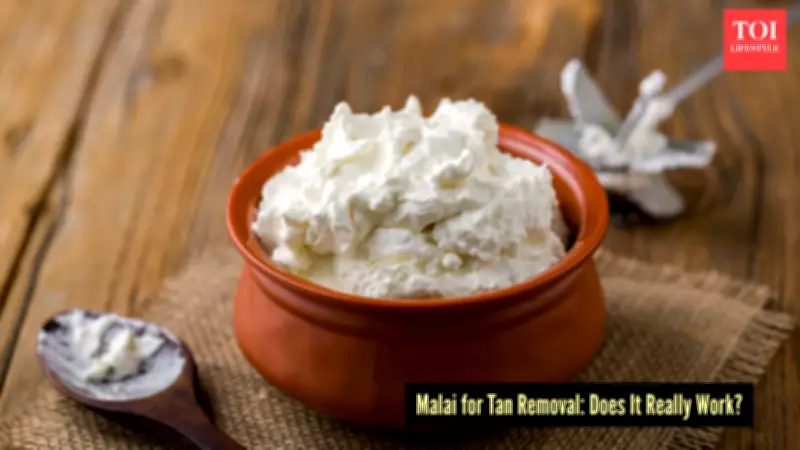
Malai for Tan Removal: Dermatologists Reveal the Science Behind Grandma's Remedy
Indian summers are notoriously harsh, often leaving skin with uneven pigmentation and stubborn sun tans after even brief outdoor exposure. For generations, the immediate family recommendation has been to head to the kitchen and apply fresh milk cream, or malai, as a trusted desi skincare solution. However, in today's world where bathroom shelves are stocked with advanced serums and chemical treatments, does this traditional kitchen hack truly hold up under scientific scrutiny? Dermatologists have now analyzed the chemical composition of milk cream, and their verdict is clear: yes, it works effectively, but with a crucial caveat that users must understand.
The 'AHA' Revelation: How Malai Chemically Dissolves Tan
Grandmothers were indeed correct about malai's efficacy. Beyond being a soothing paste, malai is naturally rich in lactic acid, which is classified as an Alpha Hydroxy Acid (AHA). Unlike physical exfoliants that can aggravate sun-damaged skin through harsh scrubbing, malai operates on a microscopic level. The lactic acid chemically breaks down the invisible bonds that hold dead, pigmented skin cells together, thereby accelerating cellular turnover. This process allows the darkened top layer of skin to shed gradually and safely, revealing fresher skin underneath.
Soothing Properties and Enhanced Delivery Mechanism
Malai's benefits extend beyond mere exfoliation. Ultraviolet rays from the sun can severely compromise the skin's protective lipid barrier, leading to dehydration and dullness. Malai addresses this issue promptly due to its high content of natural saturated fats, proteins, and ceramides, which act as potent emollients. These components form a protective shield that locks in moisture, repairs the skin barrier, and restores a hydrated glow.

Furthermore, sun exposure often triggers micro-inflammation, and applying harsh treatments can cause the skin to produce excess melanin in defense, a condition known as Post-Inflammatory Hyperpigmentation. Malai's cooling nature helps prevent this defensive darkening response. Additionally, the traditional practice of mixing malai with a pinch of turmeric has a scientific basis: curcumin, the active compound in turmeric that blocks melanin, is fat-soluble. The heavy fats in malai serve as an effective delivery vehicle, facilitating the penetration of turmeric's beneficial compounds into the skin cells.
Critical Warning: Who Should Avoid Using Malai?
Before rushing to prepare a malai face pack, it is essential to heed dermatologists' significant warning: this remedy is strictly suitable for individuals with dry to normal skin types. Malai is highly comedogenic, meaning it has a strong tendency to clog pores. For those with oily, acne-prone, or fungal acne-prone skin, applying thick cream can trap natural sebum, promote bacterial growth, and lead to severe breakouts. Skin experts strongly advise people with oily skin to opt for alternatives like plain yogurt or aloe vera instead.
Final Verdict: Malai vs. Other DIY Remedies
Despite the restrictions for oily skin, dermatologists still endorse malai over many popular DIY tan removal methods. Viral internet hacks promoting raw lemon or tomato juice for tan removal are particularly cautioned against, as the high acidity in lemons can cause chemical burns on sun-sensitized skin. In contrast, malai is pH-balanced and safe for appropriate skin types. However, users should maintain realistic expectations: malai works gradually to reverse surface-level pigmentation and is not a miraculous cure for deep UV damage or photo-aging. It should be viewed as a gentle, progressive fading treatment rather than an instant solution.

