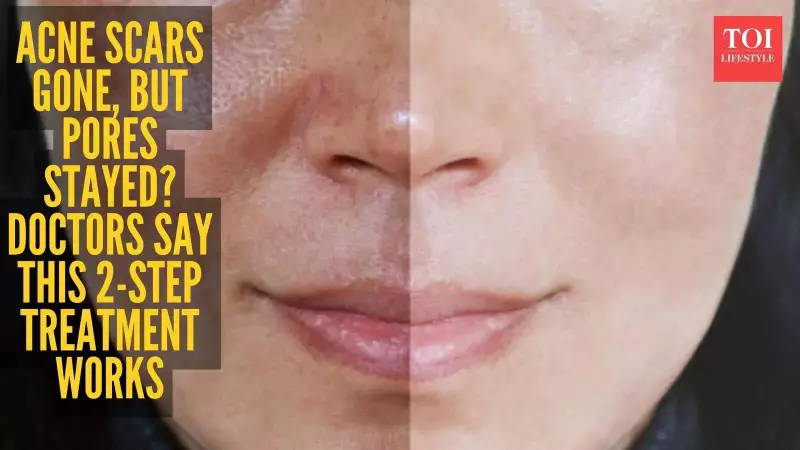
For millions battling acne, the struggle often continues long after the active breakouts subside. The stubborn, enlarged pores left behind can feel like a permanent reminder, resisting even the most diligent skincare routines. However, a groundbreaking new study offers a fresh ray of hope, suggesting a dual-action treatment that could be the key to smoother skin.
The Science Behind the Combination Treatment
Conducted at the dermatology department of the First Affiliated Hospital of Xi’an Jiaotong University, the research focused on a common yet frustrating concern. The study involved 40 participants (32 women and 8 men), all aged between 18 and 40, with acne-prone skin and visibly enlarged pores. Notably, most participants had Fitzpatrick skin type IV, a skin tone very common among the Indian population, making the findings particularly relevant.
These were not experimental subjects but regular patients who had seen their acne improve, yet their pores remained persistently large. The innovative treatment they received was a combination of two well-known injectables: botulinum toxin A (30 to 50 units) and non-cross-linked hyaluronic acid (2.5 ml).

The logic is elegantly simple. Botulinum toxin A works by calming overactive oil glands and relaxing the muscles around pores, reducing their apparent size. Hyaluronic acid, a powerful humectant, provides deep, structural hydration, improving skin plumpness and texture. Delivered via mesotherapy with fine microneedles, the goal was synergistic: control oil production while simultaneously enhancing skin hydration and health.
Measurable Results and High Patient Satisfaction
The researchers left nothing to chance. Using the advanced VISIA Skin Image Analyzer, they captured detailed facial images before the treatment, and again at one-month and four-month intervals. The device quantitatively measured pore size, skin texture, and porphyrins (markers of oil and acne-causing bacteria).
The results were compelling. One month post-treatment, the improvement was striking. Pore size scores dropped significantly, skin texture became smoother, and oil-related markers reduced. Doctors rated the overall improvement at an impressive 95% effectiveness on the Global Aesthetic Improvement Scale, with most patients categorized as "improved" or "much improved."
By the four-month mark, while some effects naturally softened, the skin remained in a much better state than before treatment. Pores did not revert to their original size, and texture and oil control were sustained. Crucially, the combination therapy proved superior to using botulinum toxin alone, offering longer-lasting benefits.
A Safe and Well-Tolerated Procedure
Patient satisfaction mirrored the clinical data. Nearly 90% of participants reported satisfaction at the one-month follow-up, a figure that remained high at the four-month check. Only two patients saw minimal change in their pores, and no one experienced a worsening of their skin condition.
On the safety front, the treatment was well-received. Side effects were mild and transient, including temporary redness, minor bruising, or a feeling of skin tightness. All participants noted a brief stinging sensation during the injections. Importantly, there were no reports of serious adverse effects like facial muscle weakness, asymmetry, allergic reactions, or breathing difficulties.
This research is significant because it shifts the paradigm from single-target treatments. While options like retinoids or chemical peels focus primarily on oil control, this dual approach addresses both the cause (excess oil) and the skin's supportive structure (hydration). For anyone in India tired of temporary fixes for persistent pores, this combination therapy emerges as a scientifically backed, promising avenue worth discussing with a dermatologist.