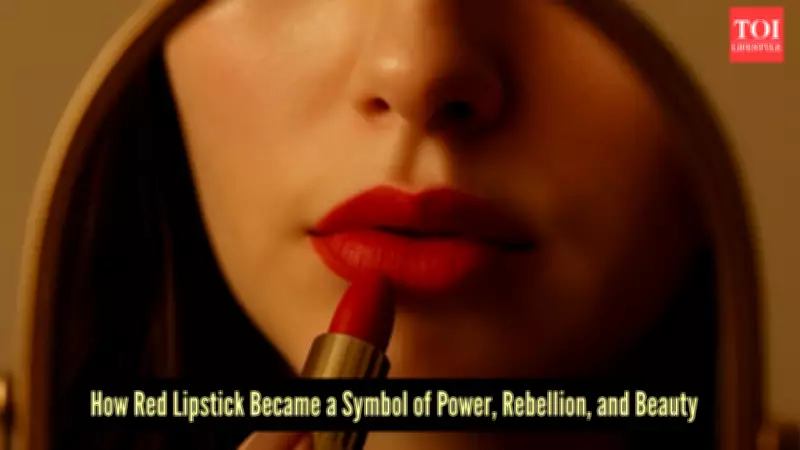
You probably did not think twice before swiping on that ruby-red lipstick this morning. It is just makeup, right? Well, not quite. Long before a bold lip became a staple of modern beauty or a touch of weekend glamour, it was a wildly dangerous political statement. We are talking arrests, accusations of witchcraft, and total social ruin. For centuries, the world just could not figure out what to do with painted lips. Was it a flex of aristocratic wealth, the literal work of the devil, or a badge of ultimate vulgarity? Here is the bizarre, scandalous history of the beauty product currently sitting at the bottom of your handbag.
Bug Juice and Strict Laws
If you were roaming the halls of high society in Ancient Egypt, a painted lip meant you had arrived. It was the ultimate status symbol for both men and women. Cleopatra famously rocked a vibrant red, achieving the striking look by crushing up carmine beetles. Nobody batted an eye; it just meant you were wealthy and powerful. But hop over to Ancient Greece, and the vibe completely flipped. The Greeks were obsessed with a bare-faced, unadorned aesthetic. In fact, the first time lipstick ever faced legal regulation was in Greece, where it was strictly reserved for sex workers. The law actually mandated that prostitutes had to wear lip paint in public. Why? So respectable men would not accidentally confuse them for upper-class women. Talk about a double standard.
Witchcraft and the Devil's Work
Things only got weirder as the Middle Ages rolled around. The Christian church started looking at cosmetics as a full-blown theological crisis. Altering your face—which they viewed as God's perfect creation—was seen as an act of supreme deception and defiance. Suddenly, lip paint was not just tacky. It was declared an incarnation of the devil. Women who wore makeup were routinely accused of trying to trick men. And society took that fear to absolute extremes. By 1770, the British Parliament literally passed a law stating that any woman who seduced a man into marriage using lip or cheek paint could be tried for witchcraft. If caught, your marriage was legally annulled, and the punishments were terrifyingly severe.

Victorian Prudes and Bitten Lips
A century later, the Victorian era hit, bringing with it a wave of intense prudishness. Queen Victoria was not a fan of makeup. She publicly declared it impolite and downright vulgar. The "it girl" look of the 1800s was practically ghostly—pale, fragile, and naturally flushed. Wearing noticeable color on your lips meant you were either a low-class stage actor or a woman of the night. But women still wanted that flush of red. So, what did high-society ladies do? They bit their lips. Repeatedly. Some even rubbed stinging salves into their skin just to draw blood to the surface without breaking the strict social rules. It was a painful, exhausting way to adhere to an impossible standard of beauty.
The Ultimate Symbol of Rebellion
So, how did we get from witchcraft trials to the modern makeup aisle? Emancipation. The real turning point for lipstick was not a clever marketing campaign. It was a massive protest. During the 1912 Suffragette march in New York City, leaders like Elizabeth Cady Stanton and Charlotte Perkins Gilman wore bright red lipstick as a uniform of rebellion. Because conservative men still considered it shocking and unacceptable, wearing it became a deliberate, highly visible act of female liberation. By the time the roaring 1920s arrived, flappers had fully embraced the bold lip. Hollywood turned it into a symbol of pure glamour, and brands finally started packaging it in those sleek, twist-up metal tubes we know today. It was no longer a scandalous secret kept in the shadows—it was an everyday necessity. The next time you reach for your favorite shade, remember its history. You are not just applying a cosmetic. You are wearing centuries of rebellion.