

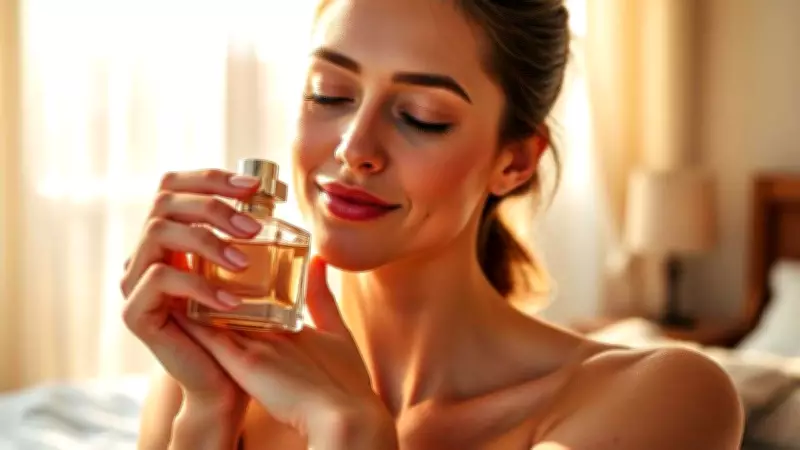
The Mystery of the Vanishing Perfume: Why Your Scent Doesn't Last
Have you ever stood at your vanity, carefully selected a fragrance, only to find it has completely disappeared by midday? This frustrating experience is all too common among perfume enthusiasts, who often lament the "vanishing fragrance" phenomenon. While it might be tempting to blame the perfume brand or the product's price, the real culprit might be staring back at you in the mirror. Your skin, a living organ, requires proper preparation to effectively hold those precious fragrance oils.
Understanding How Fragrance Works on Skin
At its core, a perfume is a blend of organic compounds designed to float through the air and be detected by the nose. The challenge arises when individual skin chemistry accelerates this process. Factors like dryness and incorrect application spots can cause those expensive scent molecules to evaporate rapidly. However, with a few strategic adjustments to your routine, you can transform that fleeting sensation into a lasting personal aroma that endures throughout the day.
Moisturizer: The Secret Weapon for Scent Longevity
It may seem counterintuitive, but one of the biggest mistakes in perfume use is applying it to dry skin. Picture skin that's parched and cracked like a desert—when you spray perfume onto it, the fragrance is either absorbed too deeply or evaporates almost instantly. To make a scent persist, you need to help it adhere to your skin's surface. Applying fragrance to pulse points leverages body heat for a steady release, and opting for higher oil concentrations, such as Eau de Parfum, can significantly boost staying power.

Scientific Insight: A fascinating study published in the journal Cosmetics, titled "Nanoemulsions as a Form of Perfumery Products," investigates the link between liquid structure and stability on surfaces. The research reveals that in environments rich in lipids or moisture, the evaporation rate of perfume slows dramatically. This explains why experts recommend layering perfumes over unscented lotions—their lipid content helps trap scent molecules effectively.
Prioritizing hydration acts as a protective barrier. It ensures the perfume sits on top of your skin without penetrating too deeply and drying out, thereby extending its wear time and reducing the need for frequent reapplication.
Mastering Application: Heat and Pulse Points
Once your skin is adequately moisturized, it's time to apply your fragrance with precision. Rather than haphazardly spritzing it on your neck or clothing, the correct method involves targeting pulse points where blood vessels are close to the skin's surface. Ideal spots include your wrists, inner elbows, and behind the knees.
The Role of Body Heat: The interaction between body temperature and scent is more profound than many realize. A comprehensive review in the Building and Environment journal explores how the human body interacts with aromatic compounds based on thermal and environmental factors. The findings suggest that our natural body heat can promote a more consistent release of scent molecules. By focusing on pulse points, you harness your own body temperature to emit the fragrance in a gradual, sustained manner rather than a quick burst that fades away.
Environmental conditions also play a crucial role. Applying perfume in a dry or air-conditioned room can lead to rapid dissipation. To counteract this, spritz your pulse points and consider a light mist on your hair or natural-fiber clothing for added longevity.
Choosing the Right Fragrance Concentration
Additionally, take a moment to scrutinize your perfume bottle's label. The distinctions between Eau de Cologne, Eau de Toilette, and Eau de Parfum are frequently overlooked, yet they are more than just elegant French terms—each indicates the oil content in the fragrance formulation. For instance, Eau de Cologne typically contains only 2-5% perfume oil.
If you desire a scent that lasts through a long, demanding day, it's wise to select a Parfum or Eau de Parfum. These variants have a higher oil concentration and lower alcohol content. Since alcohol facilitates evaporation, reducing its presence means more scent molecules remain on your skin for an extended period.

