Starfish, also known as sea stars, captivate marine enthusiasts with their incredible diversity and beauty. Scientists have identified around 2,000 different species, each displaying unique shapes, colors, and sizes. Some starfish grow several feet in diameter, playing vital roles in ocean ecosystems. These fascinating creatures are more than just marine animals; they represent evolutionary artistry beneath the waves.
Midgardia xandaros: The Giant of the Deep
Midgardia xandaros holds the title for the largest known starfish. Its arms stretch over four feet across, yet its central disc remains surprisingly small. This deep-sea dweller uses its lengthy spine-covered arms to capture floating food particles in the dark ocean depths.
Sunflower Sea Star: The Speedy Hunter
The sunflower sea star, scientifically named Pycnopodia helianthoides, ranks among the largest and fastest starfish species. It boasts up to 24 arms and can reach nearly one meter in width. This predator hunts sea urchins, clams, and mollusks across the seafloor with remarkable speed. Its feeding habits help maintain balance in kelp forest ecosystems. Unfortunately, this species now faces critical endangerment.

Protoreaster nodosus: The Cookie Lookalike
Protoreaster nodosus features dark conical projections on its surface, earning it the nickname "cookie star." Found in Indo-Pacific coral reefs, its striking pattern serves a dual purpose. The horn-like structures deter predators while providing shelter for small marine creatures among its knobs, enhancing reef biodiversity.
Protoreaster lincki: The African Red Knob Star
This species displays brilliant red tubercles arranged in a striking grid pattern against a dull background. Native to the western Indian Ocean, the African red knob sea star adds vibrant color to coral reefs. Its vivid appearance excites marine biologists studying reef ecosystems.
Crown-of-Thorns Starfish: The Beautiful Destroyer
The crown-of-thorns starfish, Acanthaster planci, presents a dramatic appearance with up to 21 toxic spines radiating from its central disc. While visually stunning, this species can devastate coral reefs when populations surge. Its coral-eating habits create significant ecological impacts, making it both feared and admired.
Blue Starfish: The Vivid Scavenger
Linckia laevigata, commonly called the blue starfish, glows with a vivid cerulean hue in shallow Indo-Pacific reefs. Its bright color contrasts dramatically with coral landscapes, making it a favorite subject for underwater photographers. This scavenger sometimes appears in green or pink variations.
Fragile Rainbow Star: The Artistic Feeder
Astrometis sertulifera earns its name from its stunning mix of purple, orange, and red colors. Unlike typical sea stars, it captures prey using specialized structures called pedicellariae on its back. It holds captured food until consumption, showcasing an extraordinary feeding adaptation that appears almost artistic.
Seven-Armed Starfish: The Intertidal Predator
Astrostole scabra, the seven-armed starfish, inhabits Australasian shorelines with up to seven robust arms. It displays varied hues from crimson to slate gray. This predator feeds on mussels, playing an ecologically significant role in intertidal zones while attracting attention with its attractive appearance.
Brisingid Star: The Alien of the Deep
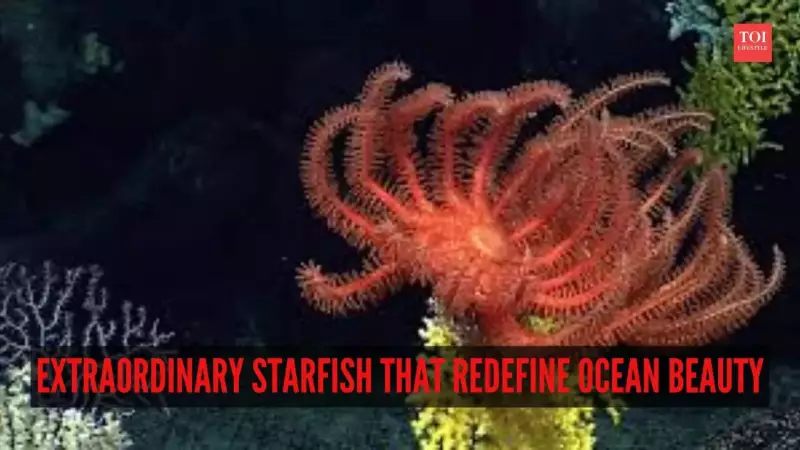
Novodinia antillensis, known as the velcro sea star or brisingid star, lives in deeper ocean waters. Its 10 to 14 tapering arms equipped with eyespots create an almost alien appearance. Spines and pedicellariae add textural complexity, demonstrating remarkable adaptations to life in the ocean's silent depths.
Starfish as Evolutionary Artworks
From the multi-armed sunflower star to the colorful blue and red knob stars, starfish represent nature's artistic achievements through evolution. Each species contributes uniquely to the ocean's pulse and biodiversity. Studying these creatures deepens our appreciation for marine life diversity and the intricate ecosystems thriving beneath the surface.