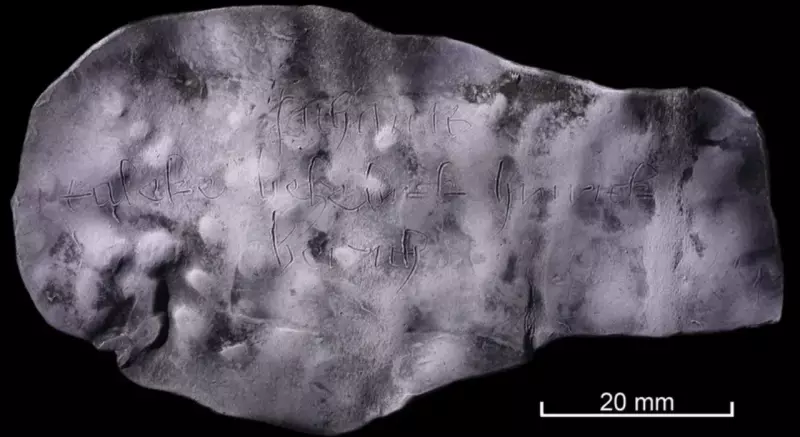
Archaeologists in Germany have made a chilling and historically unique discovery during a routine excavation, unearthing a medieval curse tablet inscribed with demonic names and intended to harm two specific individuals.
A Sinister Find in an Unlikely Place
The remarkable artifact was found in a place no one expected: the floor of an old latrine. The discovery occurred during standard excavation work for an extension to the town hall in the historic port city of Rostock, located on Germany's Baltic Sea coast. The team, led by excavation director Dr. Jörg Ansorge, lifted what appeared to be a simple, tightly rolled strip of lead from the ground.
Its true significance only became clear after experts carefully unrolled the fragile metal sheet. They were met with a faint Gothic script that formed a curse, explicitly naming two people—a woman called Taleke and a man named Hinrik. Alongside these names, the inscription invoked three demonic figures: Sathanas (Satan), Beelzebuk (Beelzebub), and Berith.

Dr. Ansorge confirmed this is a find without any known parallel from the Middle Ages. The text was not crudely scratched but carefully formed in Gothic minuscule, indicating it was written by an experienced hand. The tablet was deliberately concealed beneath the latrine at the edge of a former property, following an ancient practice meant to hide the curse and allow its malicious magic to work unseen by its targets.
Unraveling a Medieval Mystery
The officials involved in the dig have been left pondering the dark motivation behind this personal attack. Was it driven by jealousy, unrequited love, or a deliberate attempt to destroy a relationship? No further identifying details about Taleke or Hinrik have been recovered, leaving their story and connection shrouded in mystery.
What makes this discovery particularly unusual is its date. While curse tablets are well-documented in the ancient Greek and Roman worlds (from roughly 800 BC to 600 AD), no comparable example from the 15th century was previously known. "Curse tablets are actually known from antiquity," Dr. Ansorge explained. "Our discovery, on the other hand, can be dated to the 15th century. This is truly a very special find."
The Rostock town hall site, managed by the municipal property agency KOE, has been relatively poor in the quantity of artifacts found. However, the quality of discoveries has been exceptional. Alongside the sinister lead tablet, archaeologists have uncovered:
- Valencian lusterware from Spain.
- A remarkably well-preserved leather shoe.
- Bronze taps dating from the 16th and 17th centuries.
Dr. Ansorge aptly described the site as "poor in quantity, but top quality in results."
Historical Significance and Lasting Impact
Rostock is famed for its medieval Hanseatic League past, striking Gothic architecture like St. Mary’s Church with its astronomical clock, and a vibrant university life. This find adds a deeply personal and shadowy layer to the city's rich history, revealing the private fears and conflicts of its past inhabitants.
As reported by international outlets like CBS News, the Rostock tablet stands out globally for its medieval date and clear, personal targeting. Archaeologists continue to analyze the tablet as part of the wider site documentation. Centuries after it was hidden to be forgotten, its message of malice has resurfaced, offering a rare and tangible glimpse into the supernatural beliefs and personal vendettas of the medieval world.