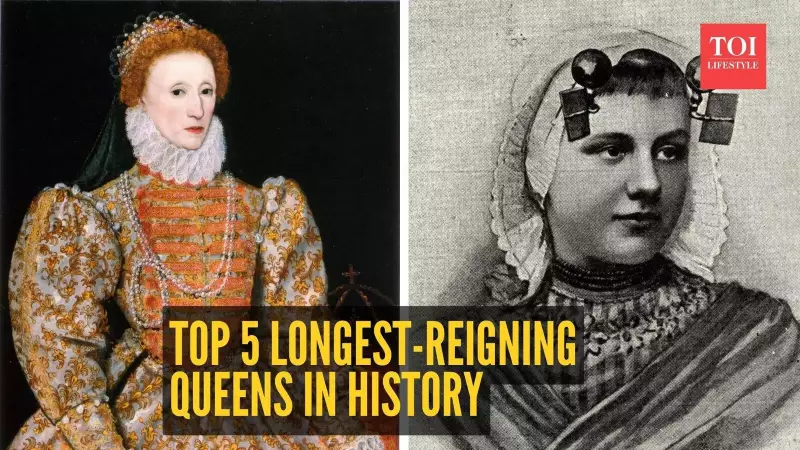
In the grand tapestry of history, rulers often appear as fleeting figures. Yet, a select few endure on the throne for so long that they become a permanent fixture in the lives of their people. When a queen reigns for decades, she witnesses the gradual transformation of the world. Generations evolve, societies shift, but her leadership remains a constant. These extended reigns are historically significant, offering a crucial sense of stability and continuity through eras of profound change.
Monarchs Who Defined Eras
Some queens governed for such extensive periods that their rule became woven into the daily fabric of history. They were more than just political leaders; they were familiar, guiding presences who steered their nations through both tranquil and turbulent times. Here, we delve into the lives and legacies of five of the world's longest-reigning queens.
Queen Elizabeth II: A 70-Year Pillar of Stability
Queen Elizabeth II ascended to the British throne in 1952 and reigned until her passing in 2022. Her 70-year rule stands as the longest in British history. Her tenure spanned an era of unprecedented change in society, politics, and technology. Throughout this rapid evolution, she was renowned for her unwavering sense of duty and consistency. Her focus on stability and diplomatic service helped modernize and maintain the relevance of the monarchy. For millions across the globe and multiple generations, she embodied continuity.

Queen Victoria: The Sovereign of an Age
Queen Victoria ruled the United Kingdom from 1837 to 1901, a period lasting 63 years and 7 months. Her reign was so influential that it lent its name to the Victorian Age. This epoch marked the peak of the British Empire, characterized by massive industrial growth, cultural flourishing, and global expansion. Despite facing significant challenges, her lengthy rule provided a framework for long-term stability and social reform. Queen Victoria's impact was so profound that her name defines an entire historical era.
Queen Wilhelmina: A Beacon During Wartime
Queen Wilhelmina served as the monarch of the Netherlands for an impressive 58 years, from 1890 to 1948. Her reign encompassed the immense trials of both World Wars. During these dark periods, especially the German occupation in World War II, she emerged as a powerful symbol of national resistance and unity for the Dutch people. Her steadfast leadership fortified the monarchy's place in Dutch society, securing her legacy as one of modern Europe's most significant long-reigning queens.
Queen Margrethe II: Denmark's Modern Monarch
Queen Margrethe II of Denmark was the nation's second-longest-serving sovereign, ruling for 52 years from 14 January 1972 until her abdication on 14 January 2024. Her approach was defined by a skillful balance between cherished royal traditions and the demands of contemporary life. An artist and intellectual, she actively engaged in cultural initiatives while maintaining her constitutional role. Her emphasis on public engagement and diplomacy, coupled with her steady presence over five decades, cemented her status as a deeply respected figure in Denmark and internationally.
Queen Elizabeth I: The Foundation of a Golden Age
Queen Elizabeth I governed England for 44 years, from 17 November 1558 until 24 March 1603. Her rule, known as the Elizabethan Era, was a golden age of English history. Under her leadership, England solidified its political and military power and expanded its global reach. A great patron of the arts, literature, and exploration, she fostered a cultural renaissance that shaped England's national identity. Her long and successful reign laid a formidable political and cultural foundation that resonates through history.
The enduring reigns of these five queens demonstrate how sustained leadership can provide a nation with invaluable continuity. They navigated wars, societal upheavals, and technological revolutions, leaving indelible marks that shaped their countries' destinies for generations to come.