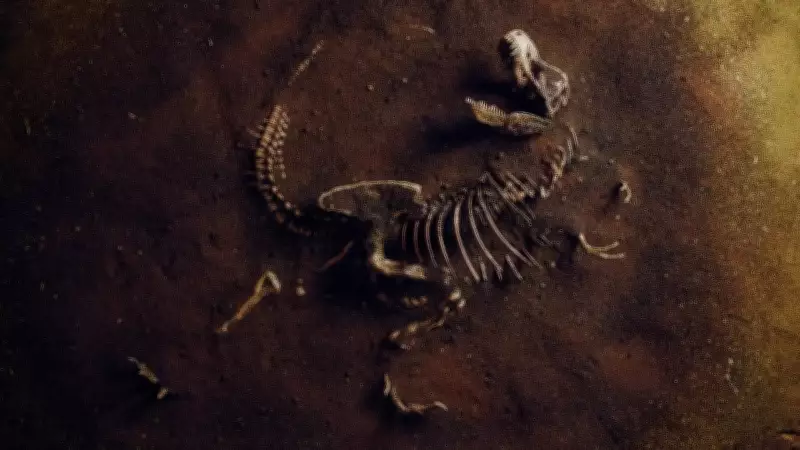
The mention of dinosaurs typically evokes images of landscapes such as the Badlands of North America and Patagonia in Argentina. However, long before the Indian subcontinent became the habitat for tigers, elephants, and humans, it thrived as the natural habitat of various types of dinosaurs. The Indian subcontinent was part of the ancient continent known as Gondwana during the greater part of the Mesozoic Era, which gradually drifted northward due to giant herbivores stampeding through the region's floodplains, along with predatory dinosaurs hunting for prey.
Today, fossil discoveries from Rajasthan, Madhya Pradesh, Gujarat and Telangana have revealed that India was home to an extraordinary diversity of dinosaurs. Their names honour rivers, scientists, villages and regions tied to their discovery, while also shedding light on one of the most fascinating chapters in the country's natural history. Eight of India's scientifically established dinosaur genera are discussed below.
Tharosaurus indicus
Tharosaurus indicus is the name of one of India's most recent dinosaur discoveries in 2024 from the Jaisalmer Basin region of Rajasthan. This genus belongs to the Middle Jurassic period, dating back approximately 168 million years ago. This long-necked plant-eater was part of the same evolutionary branch as the famous Diplodocus from North America. The findings have revolutionized the scientific perception of dinosaur migration, with the implication that such large sauropods migrated all over Gondwana much more extensively and earlier than had previously been thought. It also firmly places Rajasthan among the world's important Jurassic fossil regions.

Rajasaurus narmadensis
Probably no dinosaur from India enjoys such fame as the Rajasaurus narmadensis, whose name translates into “princely lizard of the Narmada.” Having appeared in the late Cretaceous period some 67 million years ago, this ferocious predator was unearthed in the Narmada Valley of Gujarat province and identified in 2003. Part of the abelisaurid sub-family, Rajasaurus was about 7-9 meters long and had a characteristic horned crest on its skull. At a time when India was an isolated island drifting northwards, it likely occupied the role of apex predator, dominating ecosystems shortly before the asteroid impact that ended the age of dinosaurs.
Isisaurus colberti
Above much of its surroundings rose Isisaurus colberti, which was one of the largest titanosaurs and lived in India during the Late Cretaceous period. Originally assigned to another genus before being reclassified in 1997, its name honours the Indian Statistical Institute, while the species name recognises American palaeontologist Edwin Harris Colbert. Unlike many titanosaurs known only from fragmentary remains, Isisaurus is represented by relatively complete fossils, making it invaluable to researchers.
Barapasaurus tagorei
Barapasaurus means "big-legged lizard." It is an accurate name for one of the first Indian dinosaurs, which inhabited the present-day Telangana during the Early Jurassic period, 180 million years ago. Barapasaurus' species name, tagorei, pays tribute to the famous Indian writer and Nobel Prize winner Rabindranath Tagore.
Kotasaurus yamanpalliensis
Kotasaurus yamanpalliensis was discovered in the area of Telangana known as the Kota Formation near the village of Yamanpalli. This dinosaur was named after both the formation where it had been found and the village. Living in the Early Jurassic period, some 180 million years ago, this sauropod was a combination of primitive and advanced traits. Kotasaurus is considered a transitional dinosaur.
Jainosaurus septentrionalis
Jainosaurus septentrionalis, named after the distinguished Indian palaeontologist Sohan Lal Jain, was another gigantic titanosaur living in India in the Late Cretaceous Period. Remains of this herbivore, discovered in the Lameta Formation of central India, were of one of the latest dinosaurs surviving in the subcontinent just before the end-Cretaceous mass extinction event.

Indosuchus raptorius
Despite its name meaning "Indian crocodile," Indosuchus raptorius was no crocodile at all. It was a big meat-eating dinosaur classified under abelisaurids along with Rajasaurus. Being discovered in the Lameta Formation in the early twentieth century, this theropod dinosaur may have measured about seven metres in length. With strong jaws and serrated teeth, it was definitely a very dangerous predator.
Indosaurus matleyi
Indosaurus matleyi is one of the earliest predatory dinosaurs found in India. The species is named after Charles Alfred Matley, the distinguished British geologist and palaeontologist who made immense contributions towards fossil findings in India.