Feather Transformations: How Birds Change Colors for Survival and Mating
The natural world is a dynamic fashion show, with birds constantly undergoing phenotypic transformations as they fly to and from their nests. Feather replacement is not limited to breeding seasons; many species perform a wide range of moults throughout the year due to environmental shifts. This process begins when birds shed their previous year's high-chroma breeding plumage, transitioning into cryptic earthy tones that help them blend seamlessly with their surroundings. Triggered by photoperiodic changes and hormonal responses, these color shifts range from vibrant hues to softer shades, allowing birds to strike a delicate balance between visibility for mating and invisibility from predators.
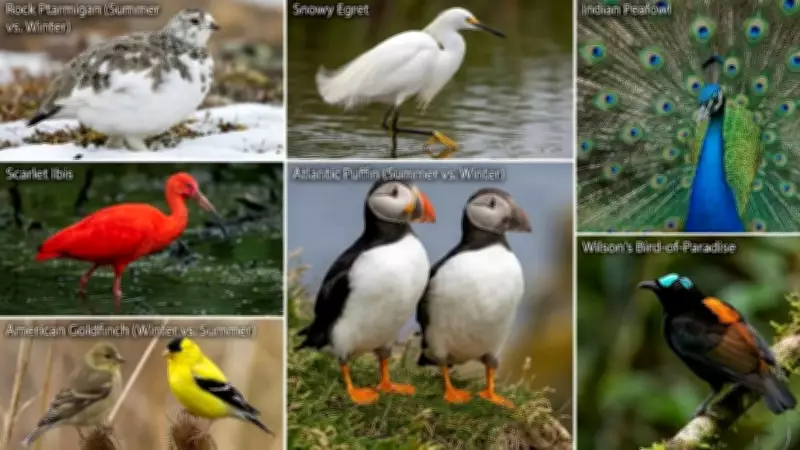
Here are seven remarkable species that demonstrate how creating a new appearance enhances their ability to thrive and survive in specific habitats and seasons.
Scarlet Ibis
The Scarlet Ibis relies heavily on dietary pigments to maintain its striking red feather coloration. According to the National Zoo Smithsonian Institution, this bird obtains most of its carotenoids from brine shrimp and crustaceans in its diet. Without these specific carotenoids, the ibis's feathers fade to a light pink or white, highlighting the critical link between nutrition and plumage vibrancy.

Indian Peafowl
The male Indian Peafowl's tail feathers showcase an evolutionary biophotonic structure, utilizing structural coloration through light interaction. Research from The Royal Society reveals that the iridescence of these feathers results from microscopic 'photonic crystals'. The angle of light reflection and refraction produces brilliant blues and greens, forming the elaborate courtship display that attracts potential mates.
American Goldfinch
American Goldfinches undergo a pre-alternate moult each spring, transitioning from dull olive-brown winter feathers to bright yellow spring plumage. This change signals health and vitality to entice mates, before reverting to camouflaged feathers in the fall for better predator avoidance.
Rock Ptarmigan
The Rock Ptarmigan is a master of morphological adaptation, blending perfectly with its surroundings through three annual moults. The most notable transition is from mottled brown in summer to completely white in winter, achieving near-perfect crypsis against the Arctic tundra's snow.
Atlantic Puffin
Atlantic Puffins, often called 'sea parrots', undergo a unique transformation where their bright orange beaks and faces shift to muted non-breeding plumage in the fall after the breeding season. This change helps them maintain a lower profile during non-mating periods.
Snowy Egret
The Snowy Egret develops long, delicate 'aigrette' feathers on its back to attract mates in wetland colonies. Historically used in the fashion industry, these feathers, as noted by the National Audubon Society, also serve as signals of high status to females during breeding seasons.
Wilson’s Bird-of-Paradise
This species features turquoise absorbent skin on its upper head, which stores excess fluid during courtship dances. Its colorful markings and unique feather structure are designed to be viewed from above, making the courted individual appear more attractive and enhancing mating success.
These examples illustrate the sophisticated strategies birds employ through feather color changes, driven by evolutionary pressures to survive and reproduce in diverse environments.