Firodia Karandak 2026 Marks Historic Shift in Pune's Premier Theatre Competition
For years, the Firodia Karandak theatre competition adhered to a predictable, unwritten pattern. Established colleges consistently dominated the winners' list, and traditional dramatic formats largely defined what constituted success on this prestigious stage. However, the 2026 edition of the competition has decisively broken this mold, signaling a transformative era.
This year, the spotlight dramatically shifted. It moved beyond familiar names to celebrate not only innovative themes and avant-garde performance styles but also to spotlight newer academic institutions that are actively rewriting the rulebook for a winning theatrical production.
New Winners Take Centre Stage with Historical Biography
MIT AOE Alandi emerged as the night's most celebrated winner with their production, Cinema Camera. The play is a biographical exploration of the life and work of pioneering Indian filmmaker and innovator, Baburao Painter. Departing from the common reliance on fictional or mythological narratives, the team embarked on a rigorous historical journey.

They traveled to Kolhapur, conducted interviews with Painter's daughter, and dedicated nearly two months to intensive research before bringing the story to the stage. This meticulous preparation culminated in a clean sweep, with the team securing top honors in writing, direction, and music categories.
The significance of this victory is amplified by the team's composition. "Almost half our team were first-year students who had never done theatre before. The journey really began with explaining how everything works," revealed student representative Udaya Deshmukh. In a competition long associated with seasoned contenders, this win unmistakably marks a powerful generational shift.
Experimentation and Social Commentary Find Favor
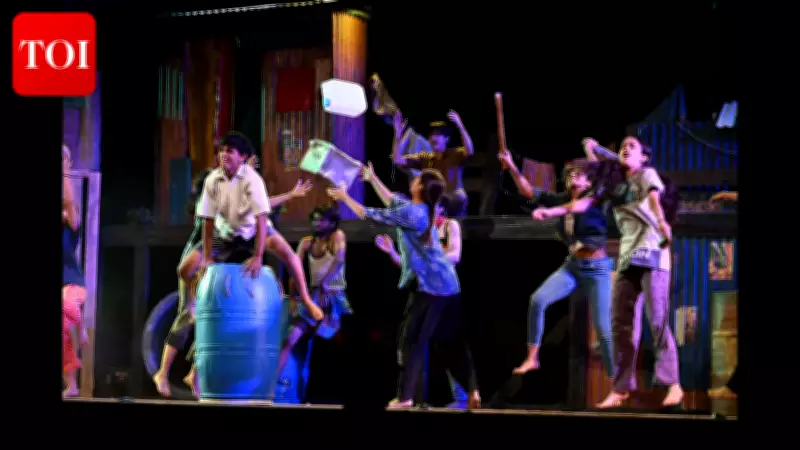
If Cinema Camera represented a shift in subject matter, MIT World Peace University's production, Rapta, symbolized a radical evolution in the language of theatrical communication. The team employed rap music as its primary storytelling medium to confront the urgent issues of sexual harassment and assault.
"We wanted to talk about a serious social issue, but in a way that wouldn't feel heavy or disconnected for today's generation," explained student representative Parnika Kulkarni. She added that their powerful presentation drew direct inspiration from the vibrant hip-hop culture of Mumbai's Dharavi. The institute's bold approach earned them a well-deserved second place and widespread applause, particularly for rapper Rajas Shinde's performance.
Movement, Music, and an All-Girls Ensemble Shine
Pimpri Chinchwad College of Engineering (PCCOE) captivated the audience with Akhtari, an all-girls production inspired by the legendary life of singer Begum Akhtar. The play distinguished itself through compelling physical storytelling and the integration of live musical elements.
The team's dedication secured them third place overall, along with the highly coveted Special Award for Kinetic Performer, one of the evening's most discussed accolades. "Balancing engineering academics and rehearsals was definitely challenging, but over time the team stopped feeling like just a group and became a family," shared student representative Arya Deshpande, highlighting the collaborative spirit behind their success.
Industry Voices Hail a New Era of Storytelling
The changes observed at Firodia Karandak 2026 have resonated strongly with theatre professionals. Manasi Vaze, a renowned professional dancer, noted, "There is tremendous energy and honesty in the way today's students approach performances. When teams speak about experiences relevant to their own generation, to me that feels real and signals a shift in storytelling."
Echoing this sentiment, writer Hemant Edlabadkar observed, "Firodia Karandak is a place where you now see biographies, social commentary, and experimental narratives coexisting. Each team brings a different interpretation of the topic at hand, and I think that diversity keeps the competition alive and vibrant."

The 2026 Firodia Karandak has conclusively demonstrated that the landscape of competitive theatre in Pune is evolving. By embracing fresh narratives, diverse formats, and new voices from previously underrepresented colleges, the competition has reinvigorated its legacy and set a compelling new standard for artistic innovation and relevance.