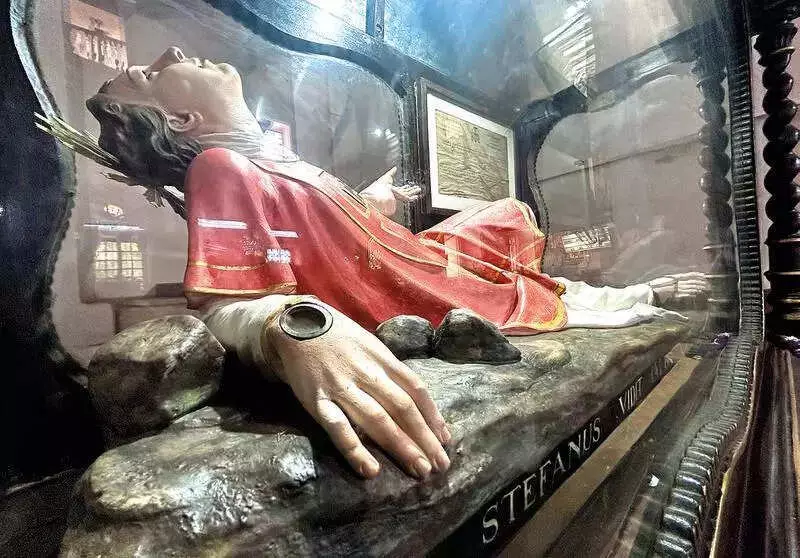
While the revered relics of St Francis Xavier at Old Goa's Bom Jesus Basilica draw throngs of pilgrims, a smaller but equally significant Christian treasure recently marked a quiet milestone just 10 kilometers away. On the scenic island of St Estevam, a minute bone relic of St Stephen, recognized as Christianity's first martyr, completed 100 years of its presence, an anniversary that passed with little fanfare but deep local devotion.
A Century of Quiet Devotion
The centenary of the relic's installation in the island church fell on August 3, 2025, commemorating the day in 1925 when the sacred object arrived. Parish priest Fr Manuelio Rodrigues revealed that the milestone was observed with a day of adoration of the Blessed Sacrament. The feast of St Stephen itself was celebrated with the customary pomp and piety on Friday, drawing devotees to the hilltop church, which is itself over 250 years old.
Fr V B Monteiro, a historian and island resident, explained the deep historical connection. "After the Portuguese took over Goa on November 25, 1510, they circled our Juvem island and entered it on December 26 – the feast day of St Stephen," he said. This event led the island to be named after the saint, a name it earned even before the arrival of St Francis Xavier in Goa.

The Journey of the Sacred Relic
The relic's journey to the island is credited to a native son, Fr Leandro Da Rosa (1885-1957). Popularly known as Padre Mestre Rosa, he was a distinguished theologian who held important chairs at the Rachol Seminary. In 1925, he brought the urn containing the tiny bone fragment of St Stephen to his homeland.
St Stephen, a Greek-speaking Jew, was stoned to death in Jerusalem shortly after the resurrection of Jesus Christ. He is venerated as the patron saint of stone masons and those suffering from headaches. Despite the relic's low profile, ailing devotees seeking solace have traveled to the St Estevam church from distant places, including Bengaluru.
An Island Steeped in History and Humility
The island, known as Jua, Juvem, or Sakecho Zunvo (island of vegetables), is famous across Goa for its cultivation of bhende (lady's fingers). However, its past speaks of simpler times. An elderly islander shared a nostalgic local saying that highlights the community's former poverty: "Ekach vistidan chear festam (One dress for four feasts)." He explained that one good dress would be worn for Christmas, the feast of the patron saint the next day, the feast of Christ the King on December 27, and New Year's celebrations.
The feast of Christ the King, originally held at the historic fort atop the island, was later moved to November. Fr Leandro Da Rosa also built the prominent monument of Christ the King on the hill, which offers a stunning 90-degree panoramic view of three Goan talukas: Tiswadi, Ponda, and Bicholim. In his honor, a bust was installed at St Anne's Chapel on the island.
Monteiro added that the island's Christian roots run deep. The local comunidade, one of the richest in Tiswadi at the time, built the first church here in 1575, after the Zuvenkars embraced Christianity in the 1550s. As one of the seven islands in the Mandovi basin and also one of the largest, St Estevam holds a wealth of history, heritage sites, and ruins waiting to be explored, standing in serene contrast to the bustling pilgrim centers of Old Goa.