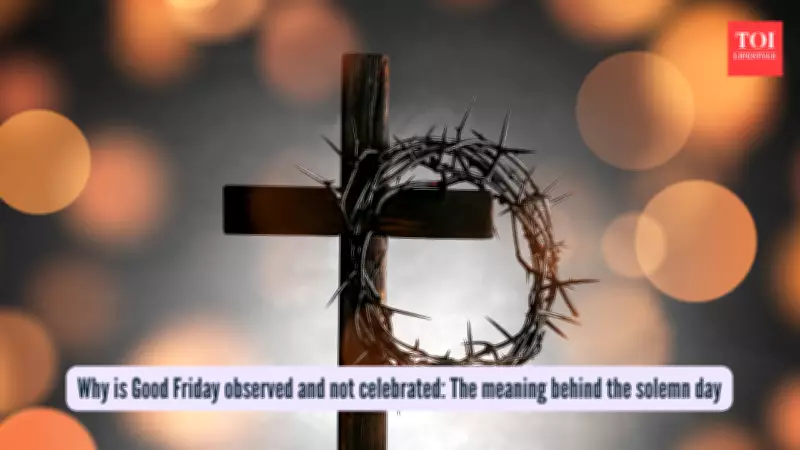
Good Friday: The Solemn Heart of Holy Week
Every year, Christians across the globe gather on a profoundly solemn day to commemorate the crucifixion of Jesus Christ. Known as Good Friday, this pivotal event sits at the very core of Holy Week, occurring just two days before the joyous celebration of Easter Sunday. While millions recognize it as a holiday, it is not a "celebration" in the conventional sense; rather, it is a day dedicated to mourning, deep reflection, and rigorous spiritual discipline. Many people often ponder why such a sorrowful occasion is termed "Good" Friday and why it is observed with such solemnity instead of festivity.
Why Good Friday Is Observed and Not Celebrated
For believers, Good Friday is fundamentally about honoring the ultimate sacrifice they believe Jesus made, dying on the cross to bear the sins of humanity upon himself. This day is observed with reverence because it represents a moment of profound spiritual significance, focusing on sacrifice and redemption rather than merriment.
What Good Friday Remembers
Good Friday is the day when Christians remember the arrest, trial, scourging, crucifixion, and death of Jesus at Calvary, as meticulously recorded in the Gospels. According to biblical tradition, Jesus was arrested following the Last Supper, unjustly condemned by Roman authorities, compelled to carry his own cross, and ultimately nailed between two criminals, where he endured several hours of suffering before his death.

The Bible further notes that at the moment of his death, darkness enveloped the land, and the curtain in the Jerusalem temple was torn in two, symbolizing the end of the separation between God and humanity. For Christians, this event is not merely a tragic execution but a transformative turning point where God's love and justice converge, offering a path to salvation.
Why "Good" and Why It Is Observed
Many individuals question why a day marked by such suffering is called "Good" Friday. According to Christian teaching, the term "good" refers to the positive outcome of Jesus' death, which includes forgiveness, reconciliation, and the promise of eternal life. Christianity.com elucidates that Good Friday is "a day of mourning and reflection," yet it is also "a day of hope and new beginnings," as it directly leads to the Resurrection celebrated on Easter Sunday.
Traditions of Solemn Remembrance
Due to its grave significance, Good Friday is characterized by quiet, prayerful rituals rather than joyful festivities. Worldwide, Christians participate in special church services, such as the "Stations of the Cross," and readings of the Passion of Christ. In numerous communities, families engage in fasting, abstain from meat, and dedicate time to meditation, treating the day more as a sacred pause than a celebratory occasion.
This observance underscores the deep spiritual discipline and reflective nature of the day, emphasizing its role in preparing hearts for the hope and renewal of Easter. Through these traditions, believers connect with the core message of sacrifice and redemption, making Good Friday a cornerstone of Christian faith and practice.