Kerala High Court Mandates Documentation Before Restoring Historic Harikanyaka Temple
The Kerala High Court has issued a crucial directive for the preservation of the centuries-old Harikanyaka Temple at Ariyannur in Thrissur district. The court has ordered that proper documentation must be completed before any restoration work begins on this deteriorating architectural marvel.
Court's Detailed Directions for Preservation
A bench comprising Justices V Raja Vijayaraghavan and K V Jayakumar has instructed the Cochin Devaswom Board's maramath wing executive engineer to conduct detailed consultations with the archaeological department director and restoration wing engineers. The court emphasized the need to submit a comprehensive outline for proper documentation procedures.
The government pleader has been directed to inform the archaeological department director about the importance of restoring this historic structure and to obtain instructions regarding measures that could restore the temple to its former glory. The court was considering a suo motu petition initiated based on a complaint from the temple advisory committee (TAC) of the Ariyannur temple, which sought permission to complete restoration works.

Architectural Significance and Current Condition
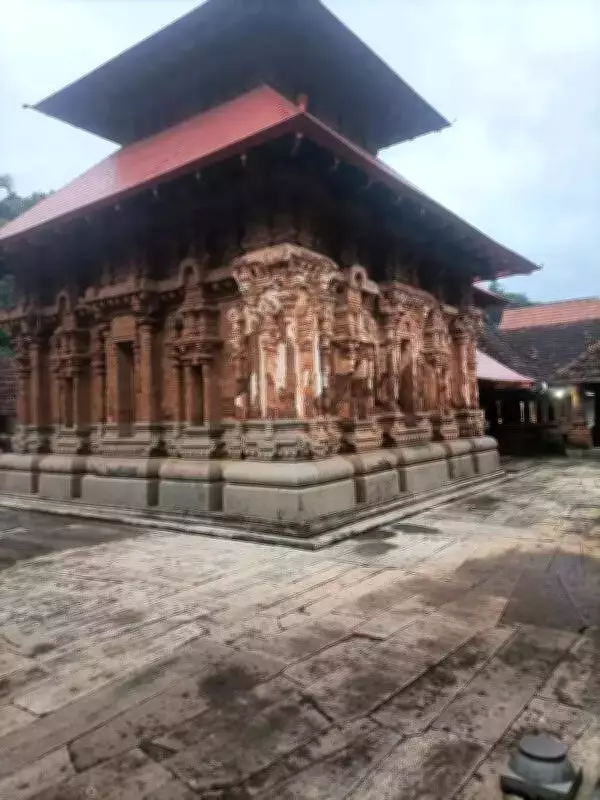
The Harikanyaka Temple is among the 108 Durga temples in Kerala and is believed to have been constructed by Perumthachan, the legendary architect said to have lived in Kerala. The temple's Sreekovil is attributed to Perumthachan, and the 'Uli' (chisel) reportedly used by him during construction is embedded in the main base structure.
However, the temple currently exists in a deplorable and alarming condition. The roof of the Naalambalam is covered with temporary tarpaulin sheets, exposing the structure to continuous water ingress. The Namaskara Mandapam suffers severe leakage problems, resulting in dampness and structural weakening.
Extensive Damage to Heritage Elements
The prolonged exposure to moisture has caused significant deterioration:
- Laterite stone walls have begun to deteriorate, causing portions of the masonry to crumble
- Ornamental carvings and architectural details have suffered irreversible damage from seepage, biological growth, and neglect
- Wooden elements including beams and carved panels are affected by decay and infestation
- Structural stability and aesthetic integrity have been seriously compromised
Controversy Over Previous Construction Work
The temple advisory committee, along with temple authorities, has already completed construction of the Saraswathi Mandapam and Pattupura using new building materials. However, the archaeological department had denied permission for this work and has stated that these unauthorized and unethical actions were undertaken without its approval within the protected monument.
The court observed that restoration of such historic temples cannot be carried out by TAC members without proper documentation. Accordingly, the High Court has ordered the devaswom board to take steps for proper documentation in consultation with the archaeological department before commencing restoration works. The petition has been adjourned for consideration after three weeks.