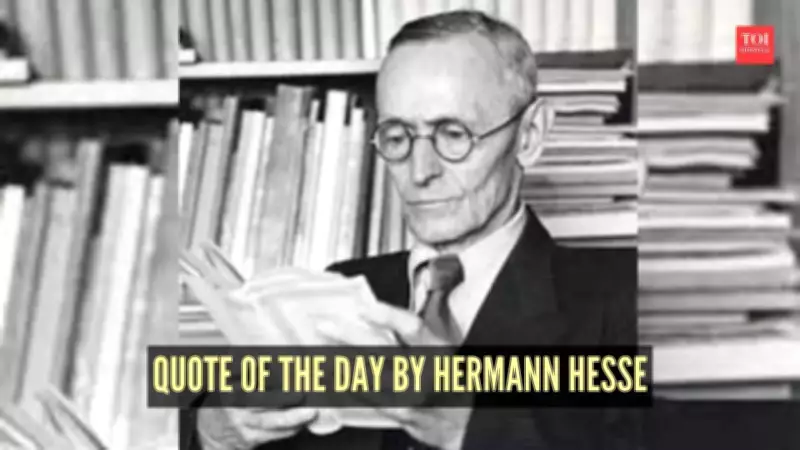
Hermann Hesse: The Literary Pioneer of Inner Journeys
Hermann Hesse, the celebrated German-Swiss novelist, poet, and painter who lived from 1877 to 1962, carved a unique niche in world literature by delving deep into the human psyche. His works are renowned for their profound psychological insight and spiritual depth, resonating with readers globally who seek meaning beyond material success. Hesse's literary style is often described as an "inner journey," boldly challenging societal norms and conventions.
Masterpieces and Themes of Individuality
Among his most influential works are Siddhartha, Steppenwolf, and The Glass Bead Game. These novels explore timeless themes such as individuality, enlightenment, and the synthesis of opposites. In 1946, Hesse's exceptional contributions were recognized with the Nobel Prize in Literature, awarded for his ability to revitalize classical artistic concepts while forging a new tradition. His writings have inspired countless generations, offering a beacon of introspection and spiritual growth.
Decoding Hesse's Definition of Wisdom
A quote attributed to Hermann Hesse encapsulates his philosophical worldview: "Wisdom is nothing but a preparation of the soul, a capacity, a secret art of thinking, feeling and breathing thoughts of unity at every moment of life." This statement redefines wisdom, positioning it as far more than mere intelligence or accumulated knowledge.

Hesse describes wisdom as a "preparation of the soul," emphasizing it as an ongoing process rather than a final achievement. It involves cultivating readiness to embrace life's lessons, both joyful and challenging, fostering self-awareness and patience. This inner preparation enables individuals to respond thoughtfully rather than react impulsively, creating a resilient inner world.
The Art of Unity in Thought and Life
Further, Hesse portrays wisdom as a "secret art of thinking, feeling and breathing thoughts of unity." The concept of unity is pivotal here. Wise individuals perceive connections where others see divisions—between people, cultures, and conflicting ideas. Breathing thoughts of unity means living in harmony with oneself and the world, blending reason with emotion, personal goals with societal needs, and action with contemplation.
In this view, wisdom is a dynamic, living process that unfolds in everyday experiences, not just during meditation or study. It thrives through compassion and understanding, applied in real-life situations. Hesse's perspective challenges conventional notions of wisdom as intellectual superiority, instead presenting it as an inner discipline centered on harmony and unity.
Relevance in Today's World
Hesse's insights urge us to live thoughtfully and meaningfully. In an era often fragmented by differences and distractions, his wisdom reminds us that true balance and clarity stem from unity within ourselves and with others. By preparing our souls and embracing this secret art, we can navigate life with greater purpose and peace.