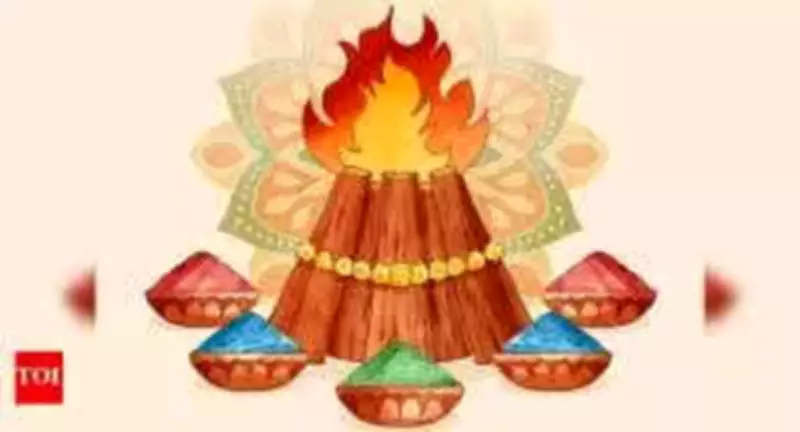
Holashtak 2026: Understanding the Eight-Day Inauspicious Period Before Holi
The vibrant festival of Holi is preceded by a significant period known as Holashtak, which holds deep religious and astrological importance in Hinduism. This eight-day timeframe is considered highly inauspicious for undertaking various auspicious activities, making it a crucial period for devotees to observe with caution and reverence.
When Does Holashtak 2026 Begin and End?
According to the Hindu calendar, Holashtak 2026 will commence on February 24, 2026, corresponding to the Ashtami tithi of Shukla Paksha in the month of Phalgun. The period will extend for eight consecutive days, concluding on Holika Dahan, March 3, 2026. The following day, March 4, 2026, will witness the joyous celebration of Rangwali Holi, marking the end of this restrictive phase.
Significance and Prohibitions During Holashtak
Holashtak derives its name from two components: "Holi" referring to the festival and "Ashtak" meaning eight days. This period is regarded as one of the most critical in Hindu tradition, during which numerous auspicious ceremonies and activities are strictly avoided. The preparation for Holika Dahan traditionally begins within this timeframe.

Activities considered inauspicious during Holashtak include:
- Marriage ceremonies and engagements
- Mundan (first hair cutting) rituals
- Griha Pravesh (housewarming ceremonies)
- Opening new offices or businesses
- Purchasing new vehicles or properties
- Initiating other religious or auspicious activities
Mythological Origins and Stories
The inauspicious nature of Holashtak finds its roots in two prominent Hindu mythological narratives that explain why these eight days are considered unfavorable for auspicious work.
The Story of Prahlad and Holika
Hindu scriptures recount that during these eight days, the demon king Hiranyakashipu subjected his devout son Prahlad to severe torture in an attempt to dissuade him from worshipping Lord Vishnu. Hiranyakashipu's sister Holika, who possessed a boon making her immune to fire, took Prahlad into her lap during Holika Dahan and sat in a blazing fire. However, through Lord Vishnu's divine intervention, Holika was consumed by the flames while Prahlad emerged unscathed. This period of suffering and divine testing established the tradition of avoiding auspicious activities during these eight days.
The Story of Kamadev and Lord Shiva
Another significant narrative involves Kamadev, the god of love, who attempted to disturb Lord Shiva's deep meditation. On the Ashtami date of Falgun, Lord Shiva opened his third eye and reduced Kamadev to ashes. Kamadev's wife Rati then performed intense penance for eight days, pleading with Lord Shiva to restore her husband. Moved by her devotion, Lord Shiva eventually revived Kamadev. These eight days of destruction and subsequent penance further reinforced the belief that this period is unsuitable for undertaking holy tasks.
Astrological Perspective on Holashtak
Beyond mythological explanations, astrological texts provide additional insight into why Holashtak is considered inauspicious. During this eight-day period, planetary positions are believed to become malefic, creating unfavorable cosmic conditions for initiating positive endeavors.
Key astrological beliefs include:
- Planets are thought to turn evil and cease providing beneficial results
- The celestial alignment creates obstacles and challenges for new beginnings
- Auspicious rituals initiated during this time may face unexpected difficulties
- People often make decisions that prove disadvantageous due to these unfavorable influences
The combination of mythological significance and astrological beliefs has solidified Holashtak's status as a period requiring restraint from auspicious activities. Devotees across India observe these eight days with respect, postponing important ceremonies until after Holika Dahan, when cosmic conditions are believed to become favorable once again for new beginnings and celebrations.