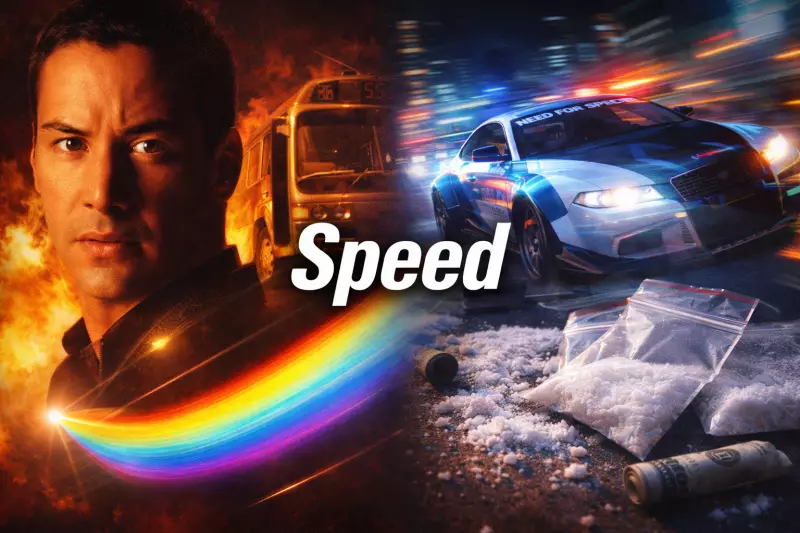
The Wordle puzzle on December 26 presented players with the word 'speed'. This seemingly simple choice revealed a profound truth about our times: the concept has become so embedded in our daily existence that it no longer feels like a conscious selection. Speed has transitioned from being an occasional pursuit to the very environment we inhabit. It dictates our expectations for instant replies, shapes our intolerance for silence, and influences everything from urban design to workplace productivity metrics. In a world structured around relentless acceleration, choosing slowness is not merely a preference; it is often viewed as a significant liability.
The Surprising Origin: Speed as Success, Not Velocity
Ironically, the word 'speed' did not originate with a focus on rapid motion. Its roots trace back to the Old English term spēd, which signified success, prosperity, and good fortune. To 'have speed' meant to fare well in life, to navigate the world advantageously, and to arrive at one's destination not just quickly, but intact and ahead. The emphasis was squarely on the favorable outcome. Motion was valued only insofar as it produced a successful result. The ultimate goal was arrival, not the act of acceleration itself.
Over centuries, this rich meaning underwent a gradual thinning. The idea of prosperity slowly morphed into efficiency. Efficiency, in turn, became synonymous with quickness. Eventually, quickness hardened into our modern understanding of pure velocity. At some point in this linguistic journey, speed detached itself from the concept of a destination and became attached to motion for its own sake. Remarkably, the word retained a positive, almost moral connotation even as its original meaning hollowed out, and this residual glow continues to influence us today.

Physics Intervenes: The Crucial Difference Between Speed and Velocity
Physics, with its characteristic precision, makes a critical distinction that contemporary culture largely chooses to ignore. Speed is a scalar quantity; it tells you only how fast an object is moving, with no regard for direction. Velocity, however, is a vector. It insists on specifying both the rate and the direction of movement. It asks the essential, and often inconvenient, follow-up question: Fast towards where?
Our society engages in obsessive talk about speed while systematically avoiding conversations about velocity. We celebrate the pace at which we are moving but frequently fail to pause and question whether the direction of that movement is sensible or meaningful. In this context, the cultural triumph of speed over velocity feels less like an achievement and more like a collective confession of aimlessness.
Speed Cemented as Cultural Expectation and Norm
What culture began to normalize, modern systems and institutions have rigorously enforced. Speed now defines professional competence. Faster delivery times are assumed, quicker email responses are demanded, and accelerated business growth is disproportionately rewarded. Slowness is rarely interpreted as careful deliberation; it is branded as inefficiency. Delay is seen as incompetence rather than a conscious choice. Even time itself is framed as an adversary—a resource to be optimized and conquered rather than experienced and inhabited.
Our language passively reflects this deep-seated obsession. We talk about 'speeding things up' and 'slowing problems down.' We seldom pause to interrogate whether the missing variable in our challenges is not effort, but considered velocity—purposeful movement in a specific direction. The older, richer meaning of speed as well-being and favorable outcome has quietly slipped away, leaving behind a culture of motion stripped of meaningful reflection.

Speed endures because it flatters our desire for control. It promises mastery over friction, boredom, and limitation. It creates an illusion of progress even when the direction is unclear. It allows mere urgency to masquerade as importance and lets simple acceleration pass for genuine meaning. This explains why the concept moves seamlessly between domains like chemistry (where 'speed' is slang for amphetamines), cinema (like the 1994 film Speed), and digital culture (games like Need for Speed). Each domain sells a variation of the same core fantasy: that stillness is dangerous, that pause is self-indulgent, and that slowing down inevitably means being left behind.
Once, speed meant arriving well. Today, for many, it simply means never stopping. This fundamental shift is perhaps why the word feels so distinctly modern. It's not merely that we move faster than previous generations, but that we have grown profoundly uncomfortable with, and even resistant to, asking the most basic question: Where, exactly, are we all headed?