The year 2025 is poised to be a monumental one for India, marked by a series of grand cultural and spiritual celebrations that will showcase the nation's rich heritage on a global stage. The calendar is packed with events of historical significance, from one of the world's largest religious gatherings to the sesquicentennial anniversary of a revered national song.
A Confluence of Faith: The Maha Kumbh Mela in Prayagraj
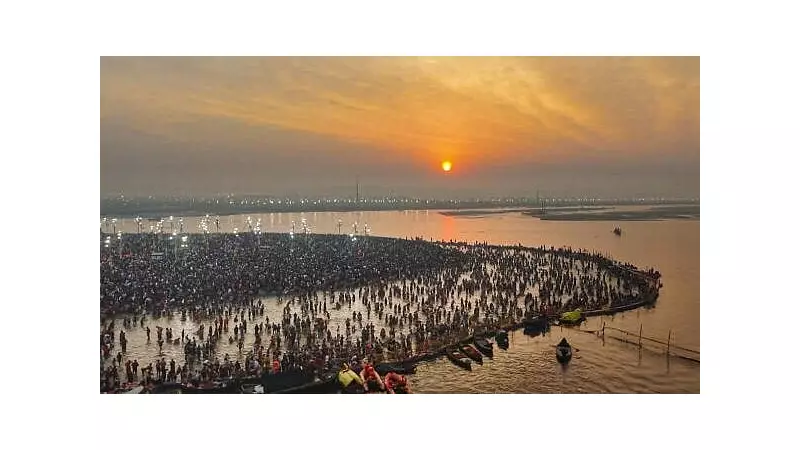
At the heart of 2025's events is the Maha Kumbh Mela, scheduled to be held in Prayagraj (Allahabad), Uttar Pradesh. This isn't just any Kumbh Mela; it is the 'Maha' (Great) Kumbh, which occurs once every 144 years after 12 cycles of the regular Purna Kumbh. The mela is set to take place at the sacred confluence of the Ganga, Yamuna, and the mythical Saraswati rivers, known as the Triveni Sangam.
The Uttar Pradesh government is undertaking massive preparations for this event, which is expected to draw crores of pilgrims and tourists from across India and the world. Authorities are focusing on enhancing infrastructure, sanitation, security, and crowd management to host a smooth and spiritually fulfilling event. The Maha Kumbh is not only a profound religious pilgrimage but also a stunning display of India's living cultural traditions.

Celebrating a Patriotic Anthem: 150 Years of Vande Mataram
Parallel to the spiritual festivities, the nation will commemorate a pivotal moment in its modern history: the 150th anniversary of the composition of Vande Mataram. The iconic song, a hymn to the motherland, was written by Bankim Chandra Chattopadhyay in 1875. It was first published in his Bengali novel 'Anandamath' in 1882 and later set to music by Rabindranath Tagore.
Vande Mataram became a powerful rallying cry during the Indian independence movement, embodying the spirit of resistance and national pride. The government plans year-long celebrations to honor this legacy. These will include:
- Special events in schools and universities to educate the youth about its history.
- Cultural programs and musical renditions across the country.
- Exhibitions and discourses on its literary and historical significance.
The celebrations aim to reconnect citizens, especially the younger generation, with this enduring symbol of India's freedom struggle.
A Push for Global Recognition: UNESCO Heritage Ambitions
Adding another layer to 2025's cultural agenda is India's determined effort to secure UNESCO World Heritage tags for several of its iconic sites and traditions. The government is actively preparing dossiers and fulfilling technical requirements for nominations. Key contenders include:
The sacred city of Mathura, the birthplace of Lord Krishna, is a prime candidate. Its nomination seeks to preserve its immense religious, cultural, and architectural heritage.
Furthermore, India is pursuing a transnational nomination for the Ramayana circuit along with neighboring countries like Sri Lanka, Nepal, and Indonesia. This ambitious project aims to gain recognition for the shared cultural landscape associated with the epic Ramayana, promoting both heritage conservation and tourism across borders.
Modhera's Sun Temple in Gujarat, an architectural marvel from the 11th century, is also on the list, highlighting India's ancient scientific and artistic achievements in temple architecture.
A Year of National Showcasing and Soft Power
The convergence of these major events in a single year presents a unique opportunity for India. 2025 is strategically positioned as a year to project India's soft power and cultural diplomacy. The government, through the Ministry of Culture and other bodies, intends to coordinate these celebrations to present a cohesive narrative of India's ancient civilization, its vibrant living traditions, and its modern national identity.

From the spiritual magnetism of the Maha Kumbh to the patriotic fervor of Vande Mataram and the global prestige of UNESCO heritage, 2025 will be a year where India celebrates its past while confidently presenting itself to the future. It is a calendar designed to foster national pride, boost tourism, and solidify India's standing as a leading cultural civilization on the world stage.