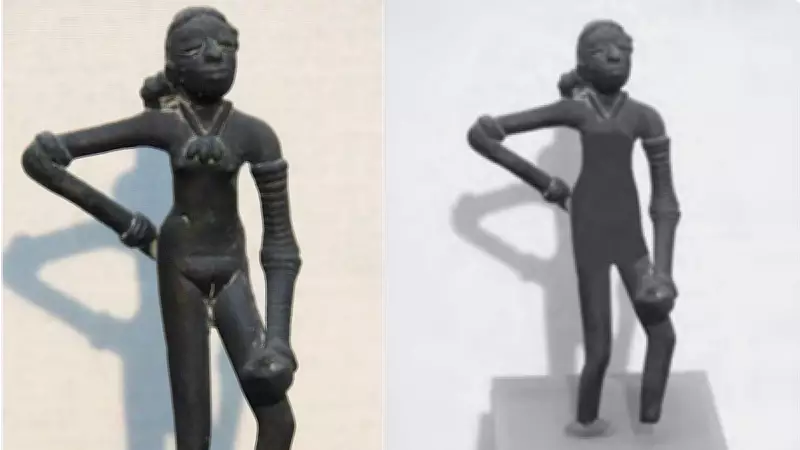
The dancing girl of Mohenjo-daro, a bronze figurine dating back to 2500 BCE, stands as a testament to the comfort with the bare body in ancient Indian culture. Yet today, discussions around fashion and modesty in India often spark intense debate, with many attributing contemporary anxieties to colonial-era impositions. S R Ramakrishna, in his opinion piece, delves into this paradox.
The Dancing Girl: A Symbol of Ancient Confidence
The figurine, discovered in the 1920s, depicts a young woman in a confident pose, adorned only with a necklace and bangles. Her nudity is not a source of shame but a celebration of form. This artifact is part of a broader tradition across ancient civilizations—from Greek kouroi to Egyptian sculptures—where the human body was revered in art.
Colonial Legacy and Modern Sensibilities
Ramakrishna argues that the discomfort with bare bodies in contemporary India is largely a product of Victorian morality imposed during British rule. Pre-colonial Indian art, from temple sculptures to miniature paintings, often depicted nudity without inhibition. The shift, he suggests, came with the colonial encounter, which branded such expressions as obscene.

Fashion Anxieties in the 21st Century
Today, debates over dress codes in schools, workplaces, and public spaces reflect this lingering anxiety. The article notes that while global fashion trends embrace minimalism and body positivity, Indian society remains divided. According to Ramakrishna, “We have internalized a colonial gaze that views the bare body as inherently provocative, ignoring our own heritage that saw it as natural.”
Reclaiming a Pre-Colonial Perspective
The author calls for a re-examination of these attitudes by revisiting ancient art and texts. He points out that the Mohenjo-daro girl is not an exception but part of a continuum. By acknowledging this history, Indians can challenge the notion that modesty must equate to covering up. The article concludes with a reflection on how fashion choices today are often caught between global influences and local taboos, with the colonial shadow still looming large.
Ramakrishna’s piece serves as a reminder that cultural anxieties around the body are not timeless but historically constructed. By looking back at the girl from Mohenjo-daro, he invites readers to question the origins of their own discomfort and embrace a more confident, pre-colonial aesthetic.