In the historic temple town of Nanjangud in Karnataka, the ancient Nanjundeshwara Temple stands as a monumental beacon of faith and healing. For centuries, countless devotees have flocked to this sacred site, drawn by the powerful deity Lord Shiva, worshipped here as Nanjundeshwara – the divine consumer of poison. More than a place of worship, it is widely regarded as a potent healing centre, earning the affectionate title 'Hakim Nanjunda' or 'Doctor Nanjunda'.
The Legend of Healing and Divine Patronage
The temple's reputation as a healing abode is deeply rooted in Hindu mythology. Legend states that during the cosmic event of Samudra Manthan, Lord Shiva drank the deadly Halahala poison to save the universe. This act transformed him into Vishakanta, the destroyer of poison, also known as Nanjundeshwara. It is this profound sacrifice that is believed to have bestowed upon the deity extraordinary curative powers.
Devotees arrive with unwavering belief, seeking relief from a spectrum of ailments, from skin and eye problems to chronic, long-term illnesses. The prescribed ritual involves taking a sacred dip in the nearby Kapila River, a tributary of the Cauvery, before offering prayers at the temple for recovery and health.

Historical accounts powerfully reinforce this belief in the temple's miracles. It is recorded that Tipu Sultan of Mysore, after witnessing the miraculous recovery of his father Hyder Ali's ailing royal elephant following prayers at the temple, became a major benefactor. In a notable act of cross-religious patronage, he is said to have gifted the temple a precious emerald linga.
A Kshetra for Cleansing Sins: The Dakshina Kashi
Nanjangud, once known as Garalapuri, is also celebrated as a papa vinashini kshetra – a place where sins are absolved. The ritual bath in the Kapila River after temple visitation is believed to wash away sins and purify the soul. Mythology adds that the sage Parushurama performed intense penance here to atone for his past sins, further cementing the location's sanctity for spiritual cleansing.
Given its immense Shaivite significance and role in sin-absolution, the temple complex is often revered as Dakshina Kashi, positioning it as the southern counterpart to Varanasi.
Architectural Grandeur and Festive Fervour
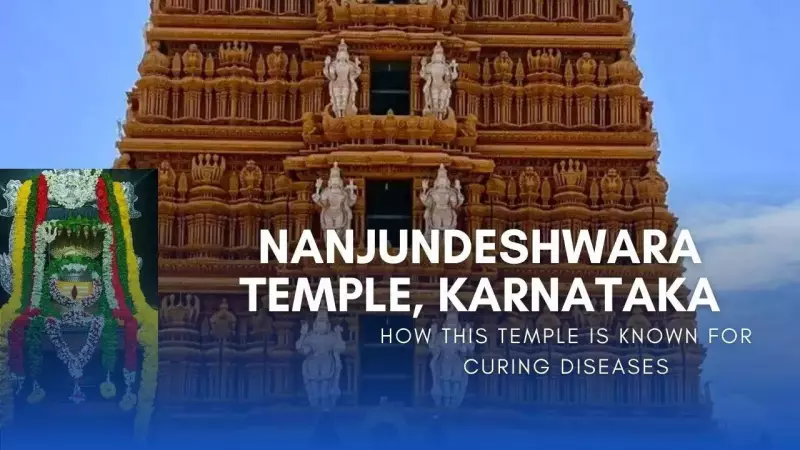
The temple itself is a magnificent testament to centuries of artistic evolution and royal support. Its structure showcases the architectural influences of successive dynasties, including the Cholas, Hoysalas, Vijayanagara kings, and the Mysore Wodeyars. The soaring gopurams and distinct Dravidian style silently affirm its enduring legacy.
The town transforms into a major pilgrimage hub during grand festivals like Maha Shivaratri, Dodda Jathre, and Theppotsava. During these times, pilgrims converge not only for divine blessings but also with the hope of finding healing, comfort, and spiritual renewal at this unique confluence of faith, history, and tradition.