Ancient Stone Tools Unearthed in Odisha's Ib River Valley Point to 40,000-60,000 Year Old Human Habitation
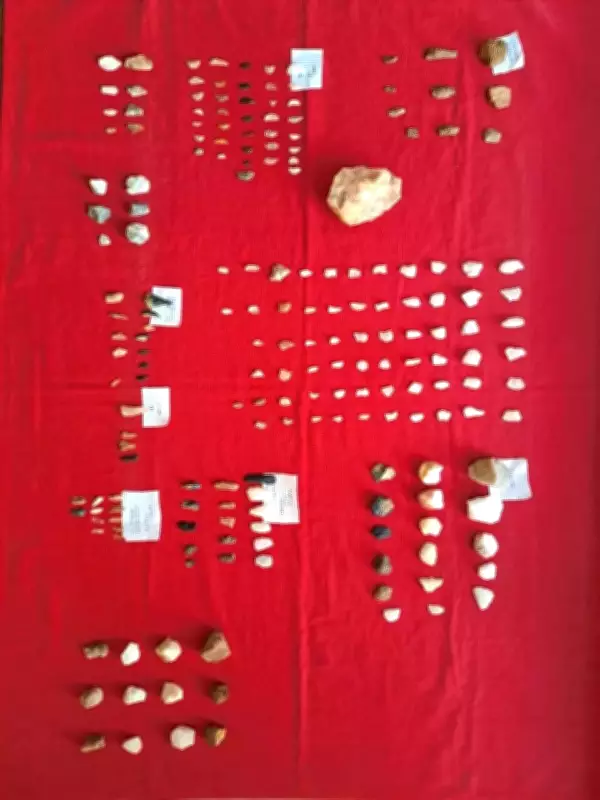
In a significant archaeological breakthrough, researchers from the history department of Government Autonomous College in Sundargarh, Odisha, have discovered stone tools in the Ib river valley that are believed to belong to the Middle and Upper Palaeolithic periods. This remarkable find suggests that human habitation existed in this region approximately 40,000 to 60,000 years ago, shedding new light on the prehistoric timeline of eastern India.
Two-Year Field Survey Led by Assistant Professor Sakir Hussain
The discovery was made during an extensive two-year field survey led by assistant professor Sakir Hussain, who was accompanied by postgraduate students from the college. The team focused their archaeological efforts on the Ib valley region, specifically targeting the areas of Balijori and Baladmal under the Sadar block. This initiative was particularly motivated by Sundargarh's existing reputation for prehistoric rock paintings, indicating the area's rich historical significance.
Analysis of Stone Tools Reveals Hunting and Daily Life Evidence
During their meticulous survey, researchers collected numerous stone tools that are believed to have been used by early humans for hunting and various daily activities. Assistant Professor Hussain explained the methodology behind their findings, stating, "As the stone assemblages collected during field surveys from Baladmal and Balijori are surface finds, and radiometric dates are absent, the cultural attribution of the sites is based primarily on material remains, especially the characteristics of lithic assemblages."

He further elaborated on the specific characteristics of the tools, noting, "Typological and techno-morphological analysis of the stone tools like small-sized hand axes suggests an association with the Middle Palaeolithic period. Similarly, the occurrence of blades and bladelets, along with tool types such as burins and end scrapers, indicates characteristic of the Upper Palaeolithic period."
Comprehensive Examination and Comparative Analysis
The research team conducted a thorough examination of multiple aspects of the stone tools to strengthen their cultural interpretation. This included detailed analysis of raw material selection, core reduction strategies, retouch patterns, and degrees of tool standardization. These findings were then carefully compared with well-dated reference assemblages from other regions to establish credible connections and historical context at a prima facie level.
Call for Large-Scale Excavation by Archaeological Survey of India
Recognizing the immense significance of this discovery, Assistant Professor Hussain has formally requested the Archaeological Survey of India to undertake large-scale excavation at the site. Such an excavation would potentially reveal more artifacts and provide deeper insights into the lives of early human inhabitants in this region, possibly uncovering additional evidence of their settlements, tools, and cultural practices.
Historical Context: Sundargarh's Growing Archaeological Profile
This discovery adds to Sundargarh's growing reputation as an important archaeological region. In 2023, the Geological Survey of India identified a unique geo-heritage site at Chengapahad near Kanika Brahmani village under Sundargarh's Hemgir block. This site was listed among 90 rare geo-heritage sites in the country and is believed to date back to the Jurassic period, further establishing the district's significance in India's geological and historical landscape.
The combination of prehistoric rock paintings, Jurassic-era geological formations, and now Palaeolithic stone tools positions Sundargarh as a crucial area for understanding human and natural history in eastern India. These discoveries collectively contribute to a more comprehensive understanding of the region's ancient past and its place in the broader narrative of human civilization on the Indian subcontinent.