

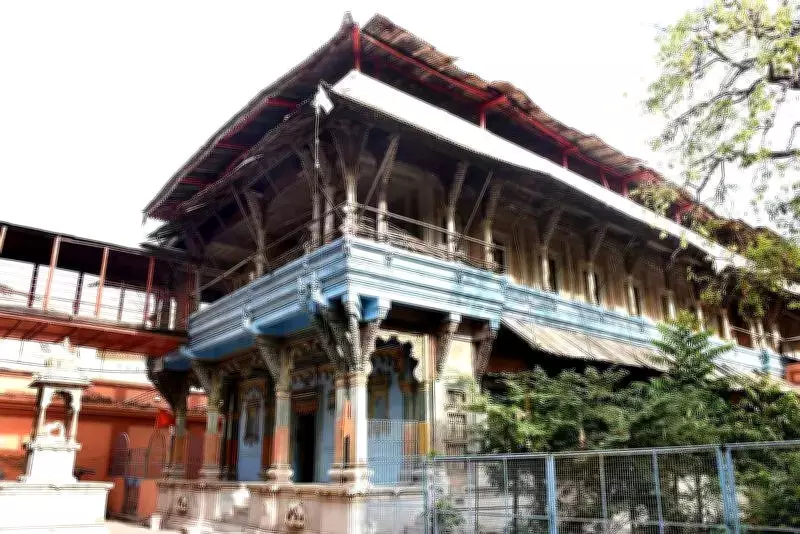
Vadodara's 175-Year-Old Teakwood Temple Eyes UNESCO Heritage Status After Restoration
In the heart of Vadodara's Wadi area, a remarkable 175-year-old teakwood temple dedicated to Lord Ganesha is quietly emerging as a restored heritage gem from the Gaekwadi era. Once neglected and on the brink of deterioration, the Dundiraj Ganpati Mandir has undergone a significant transformation through sustained private efforts, positioning it as a potential contender for UNESCO World Heritage recognition.
A Unique Architectural Marvel
Constructed entirely from teakwood, this temple stands as a unique architectural specimen in Gujarat, showcasing a distinctive fusion of Maharashtrian and Gujarati styles. Despite its profound historical and architectural value, the structure had fallen into disrepair over the years, with no restoration support forthcoming from the government or the Archaeological Survey of India (ASI).
Private Restoration Efforts Lead the Way
The revival of this heritage site was spearheaded by the Mairal family, who own the temple. Choosing to act independently, the family assembled a team of experts to undertake the meticulous restoration work. "A significant portion of the work has been completed over the past few years, though sourcing skilled artisans for heritage woodwork was a major challenge," explained Ashutosh Mairal, a retired professor from MS University.

The restoration efforts gained wider attention when a team from the Council of Architecture visited the temple two years ago. They were impressed by its craftsmanship and historical significance, indicating they would recommend the temple for nomination to the UNESCO World Heritage list. More recently, local authorities have begun documenting the site for potential inclusion in heritage walks, further highlighting its cultural importance.
Historical Origins and Construction
The temple dates back to 1849, built by Gopalrao Mairal, who served as dewan during the Gaekwadi rule. A devout follower of Lord Ganesha, he constructed the two-storeyed structure at his own expense during the reign of Maharaja Ganpatrao Gaekwad. To ensure exceptional craftsmanship, he brought in skilled artisans from Hyderabad, Rajasthan, and Mumbai for its construction.
Architectural Features and Unique Elements
Architecturally, the temple stands on 44 intricately carved wooden pillars, each approximately 16 inches in diameter. In a distinctive feature, the 'mushak' (mouse), typically placed near the deity's feet, is positioned outside the temple, facing the idol. The idol of Lord Ganesha, flanked by Riddhi and Siddhi and accompanied by sons Laabh and Laksh, can be viewed through the space between the ears of the mushak.
The temple was consecrated through a havan performed by Gopalanand Swami of the Swaminarayan sect. Its interiors also house paintings over a century old, created under the supervision of the celebrated painter Raja Ravi Varma. The Mairal family continues to preserve two original paintings by the renowned artist.
Artistic Legacy and Local Lore
The temple houses a room with miniature paintings created by artists under Raja Ravi Varma's supervision, ensuring his artistic legacy lives on within its walls. Local lore adds to the temple's mystique, speaking of a secret tunnel beneath the Mairal Wada. This tunnel is believed to have held hidden wealth and was guarded by a 'naag' (cobra), with access said to require chanting a secret mantra.
The restoration of the Dundiraj Ganpati Mandir represents a significant achievement in heritage conservation, demonstrating how private initiatives can preserve cultural treasures. As documentation continues and recognition grows, this teakwood temple stands as a testament to Vadodara's rich historical tapestry and architectural ingenuity.






