The Enduring Legacy of Irani Cafes in Mumbai
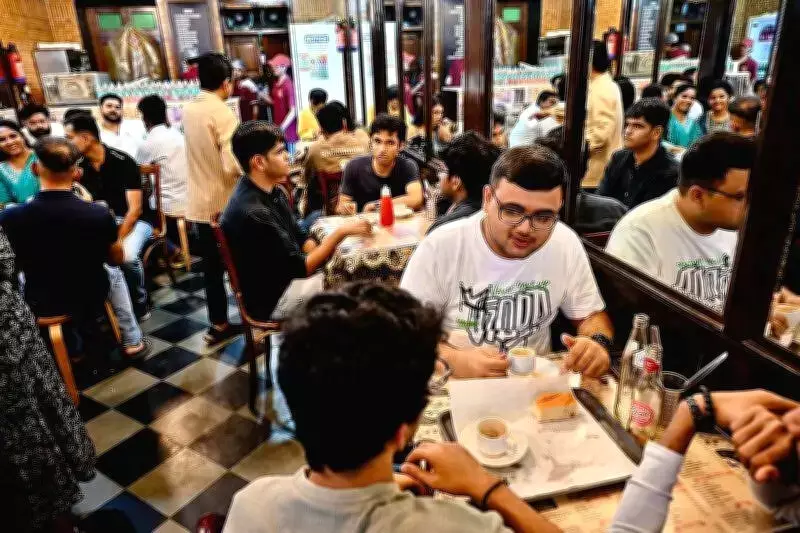
Bentwood chairs, glass-topped tables, and wooden counters displaying glass jars filled with baked goods. This is the quintessential image of a Parsi or Irani cafe in Mumbai. However, there is far more to these beloved eateries and chai-khanas than meets the eye. These establishments have masterfully blended authentic Irani recipes with local Indian spices, crafting a cuisine uniquely tailored to Indian palates.
A Culinary Bond Spanning Centuries
As conflicts unfold in Iran, we momentarily shift our focus to explore how Iranian culture has profoundly influenced Mumbai's food landscape. Despite many iconic Irani cafes closing or being replaced by Udupi restaurants, several have resiliently weathered the winds of change. From the iconic brun maska—a crusty bread served with butter—at Kayani & Co in Dhobi Talao, to the aromatic berry pulao, a rice dish infused with cranberries and saffron, at Britannia & Co in Fort, these cafes are culinary landmarks.
Other notable offerings include the chicken cheese omelette paired with reddish-black tea at Cafe Irani Chai in Mahim West, and the succulent joojeh kebabs—boneless barbecued chicken marinated with saffron and spices—at Cafe Mommyjoon in Bandra. These dishes serve as delicious reminders of the deep Indo-Iranian culinary bonds that stretch back centuries.

Expert Insights on Iranian Culinary Influence
Noshir Dadrawala, a self-described "Parsi foodie" who has visited Iran over 40 times, emphasizes that Mumbai's culinary scene would be significantly poorer without Iranian contributions. "Their kebabs, whether joojeh kebabs or kebab-e-mahi (fish kebab), are incredibly juicy, flavourful, and packed with herbs," he enthuses. He also highlights that naan, the Persian bread, is a major addition to India's culinary culture.
Few understand the history of Mumbai's bakeries as deeply as Asif Farooqui. His father and uncle, immigrants from Azamgarh in Uttar Pradesh, arrived in Mumbai in 1943 and worked at a Parsi-owned bakery in Dongri. "In the 1940s, Parsis and Britishers dominated the bakery industry. After Partition, many Muslims, including my father and uncle, entered the field and thrived," explains Farooqui, who now owns Azmi Bakery in Dongri.
Key Iranian Contributions to Indian Cuisine
The tandoor is another significant Iranian gift to Indian food culture. Originating from the Persian word ‘tanur,’ meaning clay oven, tandoor and tandoori cooking methods are now ubiquitous across India. "Just imagine how bland our food would be without tandoori roti and tandoori chicken, though the latter is often associated more with Mughlai cuisine than Persian," Farooqui notes.
Amidst the iconic restaurants and cafes serving Iranian and Parsi dishes, newcomers like Cafe Mommyjoon are making their mark. This refined restaurant features charming decor and offers "authentic" Persian dishes such as shish kebabs—chicken cubes marinated with herbs and chilli—and paya shorba, a slow-cooked lamb trotter soup served with roti. "Its decor and dishes transport diners to the eating houses of Tehran and Isfahan," says Ali Akbar Shroff, president of the Koja Shia Ishna Asheri Jamaat in Mumbai.
The Story of Irani Chai
No discussion of Iranian influence on Mumbai's food and beverages is complete without mentioning Irani chai. Interestingly, in Iran, tea is typically served without milk. Mohammed Hussain Showghi of Cafe Irani Chai in Mahim represents the fourth generation of an Iranian family originally in the tea business. His father, Mohammed Showghi Yezdi, also a filmmaker, once shared the fascinating tale of his grandfather's journey to Mumbai.
"He walked from Yazd in Iran to Mumbai in the early 19th century, fleeing drought-induced starvation. He started by selling tea from a coal-fired kettle at street corners," recalled the senior Showghi. "My father later ran a restaurant at Plaza cinema in Dadar, where he developed a love for cinema. We continue our ancestors' legacy by serving both original black tea and tea with milk, along with many other dishes," Hussain explains.

A Different Perspective on Culinary Influence
Khojeste Mistree, who teaches Parsi theology and Zoroastrianism, offers a contrasting view. He argues that it is not Iran that has influenced Mumbai's food, but rather the reverse. "The restaurants established by Zoroastrians in Mumbai were heavily influenced by local flavours and spices. Nonetheless, the resulting fusion has been exceptional," he states.
This rich tapestry of culinary exchange highlights how Irani cafes have become an integral part of Mumbai's identity, blending traditions to create a unique and enduring food heritage.