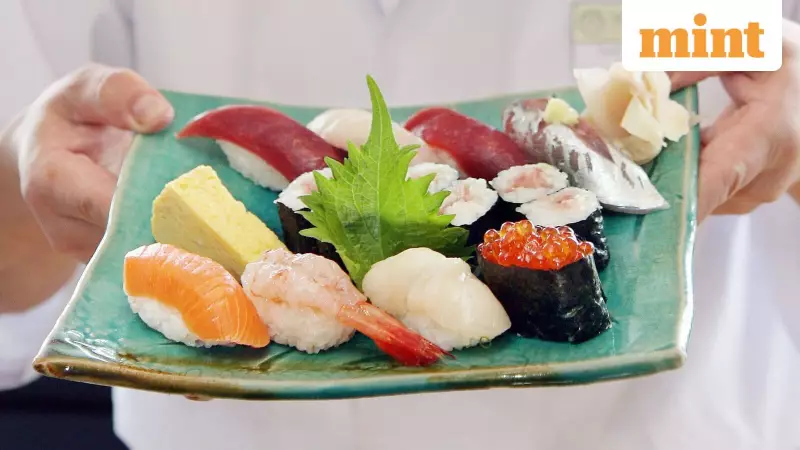
India's culinary landscape is witnessing a fascinating new chapter, as the Japanese delicacy sushi follows a now-familiar path blazed by dishes like momos. Once an exclusive offering in upscale metropolitan restaurants, sushi is now popping up on menus in tier-II and tier-III cities across the country, becoming an accessible and popular choice for a growing number of Indians.
From Lakeside to Local Eatery: Sushi's New Indian Homes
The trend is visible in cities far beyond Delhi and Mumbai. In the picturesque city of Udaipur, "Verandah by the lake" restaurant serves a variety of vegetarian sushi, including Dragon Rolls and California Rolls, at affordable prices like ₹500 for a plate of six pieces. Shravan Singh, the restaurant's manager, notes that the dish's vibrant presentation makes it a hit with younger, social-media-savvy consumers.
Similarly, in Kanpur, "Oishi the temple of Wok" has made sushi its menu highlight, offering varieties from Prawn Tempura to Avocado Cream Cheese, priced between ₹325 and ₹525. Manager Ram Pandit reveals that their clientele heavily includes students from IIT-Kanpur, who even travel from suburbs like Jajmau specifically for sushi. Pandit credits his restaurant with starting a wave, as several other outlets in Kanpur have now begun serving the Japanese dish.

This demand is nationwide, with sushi appearing in eateries in Coimbatore, Kochi, Thiruvananthapuram, Vijayawada, Visakhapatnam, and Madurai, signalling a clear move beyond metro confines.
The Digital Appetite: How Exposure Fuels Demand
A key driver behind this shift is increased digital exposure and changing consumer habits. A 2025 Swiggy-Kearney report highlighted that Indians are now experimenting with about 20% more unique cuisines and trying 30% more restaurants. Digital ordering and quick-commerce have made international foods accessible in smaller towns as new restaurants and cloud kitchens open rapidly.
Chirag Kenia, founder of gourmet food brand Urban Platter, explains the pattern: "Global foods usually enter as lifestyle experiences, but as access improves and usage becomes familiar, they transition into everyday consumption." He adds that demand from tier-II and III cities is driven by "digital exposure and aspirational consumption," with home kitchens often pioneering the trend before restaurants follow.
Localization and Challenges: The Recipe for Sustained Growth
For sushi to thrive in the Indian heartland, adaptation has been crucial. Restaurant operators emphasize that localization is key. Vegetarian rolls, cooked proteins, and smaller portions have proven far more successful than traditional raw fish offerings in driving repeat consumption in smaller cities.
At pan-Asian chain Gong, sushi has evolved from a special-occasion treat to a part of weekday meals. Avik Chatterjee of Speciality Restaurants Ltd. states, "Repeat consumption in smaller cities increases when offerings are localized." At Mumbai's Koko, sushi has become a core revenue driver, playing a strategic role in improving average ticket sizes, according to Keenan Tham of Pebble Street Hospitality.
However, scaling sushi presents significant hurdles. "Sushi is technically demanding and requires precision, trained chefs and strict cold-chain integrity. It’s not a category that allows shortcuts," Tham cautions, citing sourcing, skill availability, and wastage as major constraints.
Despite these challenges, sushi's trajectory in India mirrors the successful journey of the momo. From a niche, exotic item to a mainstream, localized favourite, its spread across tier-II and III cities marks a significant moment in the ongoing evolution of India's diverse and adventurous food culture.