

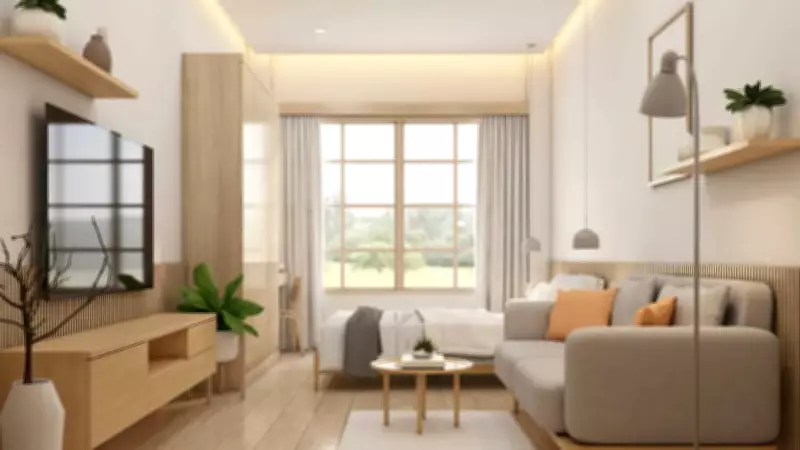
The Secret to Making Small Apartments Feel Spacious
Are you staring at your compact apartment and wishing the walls would magically push outward? You are certainly not alone in this feeling. With property prices soaring dramatically and living spaces shrinking consistently, many urban residents are desperately trying to make the absolute most of every single square inch they possess. According to the comprehensive Global Urban Living Trends 2026 report published by UN-Habitat, increasing urban density is actively driving significant demand for what they term "space-optimising interior solutions in smaller residential units." The encouraging news is that physical size is not everything when it comes to creating a home that feels genuinely open, airy, and inviting. According to experienced moving and storage experts, there exists one surprisingly simple styling trick that can transform even the tiniest apartment into a space that feels twice as large. These professionals claim they have witnessed countless homes during relocations and know precisely what makes a small space work effectively.
The Revolutionary Floor-Clearing Rule
The secret? Absolutely nothing, not even a simple lamp or a small plant, should sit directly on the floor if it can possibly be wall-mounted or floated instead. This concept sounds almost too simple, but this one fundamental rule can completely and utterly transform how spacious a room appears visually. In an exclusive interview with the Times of India, Chris Townsend, the Marketing Manager at Three Movers, a prominent full-service moving and relocation company, shared insightful observations. "When you walk into any room, your brain instinctively scans the floor area immediately. The more floor you can actually see, the larger and more expansive the space feels psychologically. By strategically getting items off the ground and onto the walls, you are essentially giving yourself valuable visual square footage that cleverly tricks the eye into perceiving a much bigger room," Townsend explained. The rule involves deliberately wall-mounting or floating items rather than placing them directly on the floor to maximise visible space effectively.
Scientific Backing for the Technique
According to a recent 2026 study published in the respected journal Environment and Behavior, "Reduced visual clutter and uninterrupted sightlines significantly enhance perceived spatial size and openness in interior environments." This research strongly asserts the idea that clear, uninterrupted floor space makes rooms feel substantially larger and directly supports the "floor-clearing rule" with emphasis on maintaining clean sight lines. The technique works powerfully because uninterrupted floor space creates clean sight lines that make a room feel open and uncluttered. When furniture and decorative items crowd the floor unnecessarily, they break up these crucial sight lines and make the space feel cramped and confined, even if the room is not particularly small in actual dimensions.

Practical Application of the Rule
Start by carefully looking at everything currently sitting on your floor. Table lamps can be easily swapped for elegant wall sconces or stylish pendant lights. Potted plants can move gracefully to floating shelves or attractive wall-mounted planters. Even traditional bedside tables can be replaced efficiently with floating shelves or wall-mounted alternatives. As per a 2025 study in the Journal of Environmental Psychology, widely cited in 2026 design research, the authors noted, "Furniture elevated from the floor increases visible surface area noticeably, which enhances perceptions of openness and reduces feelings of confinement considerably." This study backs the claim that furniture with legs or wall-mounted pieces makes spaces feel bigger and supports practical advice on floating shelves, raised sofas, and wall-mounted units.

"We help people move into all sorts of properties regularly, and the homes that feel most spacious are always the ones where residents have maximised their wall space intelligently," said Townsend. "Floating shelves, wall-mounted TV units, and hanging plants all contribute significantly to that airy, open feeling." The same fundamental principle applies seamlessly to larger furniture pieces. Sofas and chairs with visible legs create more visual floor space than pieces that sit flush to the ground completely. This does not mean everything needs to hover mid-air magically, but choosing furniture that shows a bit of floor underneath makes a surprising and noticeable difference.
Storage Solutions and Expert Insights
Storage is another critical area where this rule shines brilliantly. Wall-mounted cabinets and floating vanities in bathrooms keep the floor clear while providing plenty of functional storage. In living areas, tall, narrow bookcases take up less visual floor space than wide, squat storage units. Another 2026 study published in Building and Environment claimed, "Simplified interiors with fewer floor-level objects improve both perceived spaciousness and psychological comfort in compact living environments." This research reinforces that fewer items on the floor improve both space perception and comfort and supports the idea that small apartments can feel more livable with smarter, more strategic placement.
"The beauty of this approach is that it works effectively in any room," Townsend added enthusiastically. "Whether it is your bedroom, living room, or kitchen, freeing up those visible floor inches creates an immediate and powerful sense of space. People are often genuinely amazed at how much bigger their apartment feels after making just a few simple swaps." Chris Townsend concluded with finality, "Small apartments do not have to feel claustrophobic or cramped. Through years of helping people relocate, we have noticed that the most comfortable small spaces all share one thing in common: they maximise visible floor area strategically. It is not about having less stuff necessarily but simply being smarter with placement. Wall-mounted solutions and floating furniture create essential breathing room that makes even a studio apartment feel surprisingly spacious and wonderfully livable."
