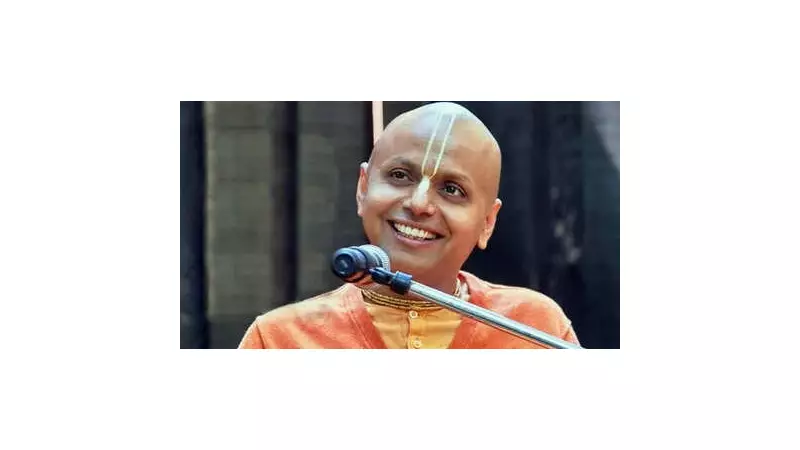
When faced with life's inevitable problems, we often ask ourselves a silent question. According to renowned spiritual speaker and monk Gaur Gopal Das, this question can either drain our energy or restore it. The common, instinctive reaction is to ask, 'Why is this happening to me?' This line of questioning, while natural, can quietly trap the mind in a cycle of frustration and helplessness.
The Problem with Asking 'Why'
Gaur Gopal Das, in his popular talks on mindset and resilience shared on his official YouTube channel, points out a critical flaw in our default response. Asking 'why' focuses the mind on the past, seeking blame, logic, or fairness where often none is readily available. Whether it's a personal failure, a painful breakup, a professional rejection, or a significant loss, the mind craves an explanation. However, life's challenging events rarely come with neat explanations attached.
This persistent questioning, Das explains, often pulls an individual into a state of victimhood. It leads to thoughts about fate, other people's actions, karma, or bad timing. While reflection has its place, staying stuck in the 'why' phase subtly hands away personal power. It keeps attention fixed on what cannot be changed, fueling frustration and rarely leading to clarity or solutions.

The Bhagavad Gita's Prescription: Act, Don't Agonise
Drawing from the timeless wisdom of the Bhagavad Gita, Gaur Gopal Das advocates for a subtle but powerful mental shift. The ancient scripture never promises a life free from difficulty. Instead, it trains the mind to respond with strength rather than collapse under pressure.
Das simplifies this core teaching: life presents situations, but we always have a choice in our response. The situation may be unfair or painful, but the response is always ours to own. He references the moment when Arjuna stands frozen on the battlefield of Kurukshetra, overwhelmed by confusion, fear, and emotional conflict. Lord Krishna's guidance is not to analyse why life has placed him in that predicament. The instruction is to stand up, centre himself, and perform his duty, one right action at a time.
The Gita does not deny human emotion, but it firmly refuses to let emotion paralyse necessary action. The central emphasis is on karma as righteous action, not merely as a system of punishment and reward.
The Empowering Shift to 'What Can I Do?'
The transformative moment occurs when the internal question changes from 'Why me?' to 'What can I do about it now?' Gaur Gopal Das highlights that this shift immediately relaxes the nervous system. Instead of looking backward and replaying events, the mind starts scanning forward for options, however small or practical they may be.
Potential answers to this new question could be modest but powerful: get some rest, offer a sincere apology, try a different approach, ask for help, or practice letting go. This process restores a sense of agency and control. Das reminds us that solutions do not emerge when the mind is busy protesting reality. They arrive when the mind accepts the present reality and begins to work constructively within its framework.
Applying the Wisdom to Everyday Struggles
This single question shift has practical applications across various life challenges:
- In failure: 'Why?' creates shame and stagnation. 'What can I do?' creates space for learning and a new attempt.
- In strained relationships: 'Why are they like this?' breeds bitterness. 'What can I do?' can lead to setting healthy boundaries or seeking deeper understanding.
- In anxiety: 'Why am I like this?' deepens the panic spiral. 'What can I do right now?' helps restore grounding through immediate, calming actions.
The power of the Gita's teaching lies in its practicality. It trains the mind to move from helplessness to empowering responsibility.

Surrender is Not Passivity
Gaur Gopal Das also addresses a common misunderstanding about spiritual acceptance. The Gita teaches intelligent surrender, not passive resignation. The wisdom lies in accepting what truly cannot be changed while vigorously acting upon what can be influenced. Surrender, in this context, removes the debilitating emotional resistance to reality. Action, then, restores momentum and direction. Together, they can transform chaos into clarity.
This mental shift does not magically solve problems overnight. Its true strength lies in preventing problems from owning your inner peace. The moment you stop personalizing hardship by asking 'Why me?', life stops feeling personally cruel. The moment you start asking 'What can I do?', life begins to feel manageable and workable again. The Bhagavad Gita's promise is not of easy answers, but of a steadier mind that does not collapse under the weight of unanswerable questions. Often, that cultivated steadiness itself becomes the most profound solution.