Sadhguru on Live-In vs Marriage: The 'Exit Door' Philosophy Explained
In today's world, where we can test everything from software to mattresses, it's no surprise that this mindset has extended to our love lives. Many people have shifted from the high stakes of traditional courtship and marriage to the convenience of swipe-right culture and no-strings-attached relationships. This trend often sparks a heated debate: Should you commit to marriage or opt for a casual live-in setup with your partner?
The Viral Insight from Sadhguru
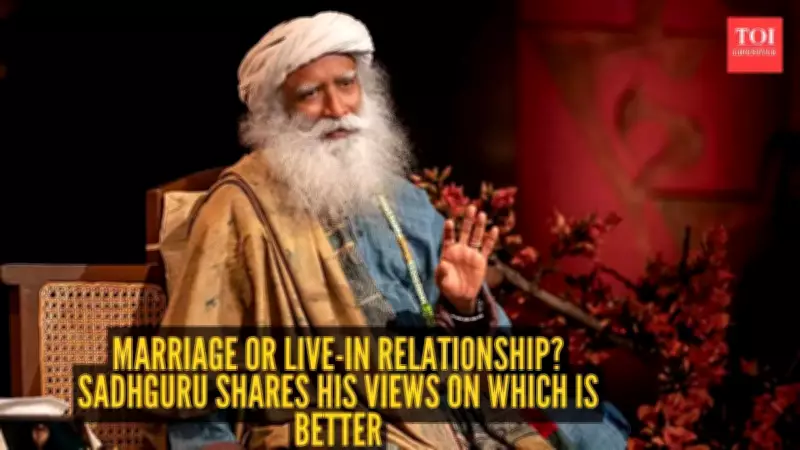
Sharing his perspective in a viral social media moment, Indian spiritual master Sadhguru urged people to stop kidding themselves about why they choose the "middle ground." He doesn't sugarcoat his views, offering a blunt analysis that cuts to the core of modern relationship dynamics.
The "Exit Door" Philosophy: A Harsh Truth
Sadhguru argues that the primary difference between a live-in relationship and marriage isn't just a piece of paper—it's the location of the nearest exit. In the video, he stated, "You say marriage versus live-in—what is it? Uncommittedly you want to live in, that's all, isn't it? What you are saying is, 'I'll walk out anytime it doesn't suit me.' That's a live-in relationship."

This might sound harsh, but Sadhguru taps into a psychological truth: Real intimacy requires a lack of an escape plan. When you keep one foot out the door "just in case," you never truly lean into the relationship. It's akin to "emotional renting"—comfortable and low-risk, but you'll never renovate the house if you think you might move out next month.
Why "Convenience" is the Enemy of Transformation
We often prioritize comfort above all else, but Sadhguru contends that love isn't meant to be comfortable—it's supposed to be transformative. He highlights two key pitfalls in live-in setups:
- The Calculation Trap: In a live-in arrangement, it's easy to fall into "calculation mode." You might ask yourself: Is this person worth the rent? Are they annoying me enough to leave? This turns you into a consumer of a person rather than a partner to them.
- The "Safety Net" Paradox: We believe having an exit door makes us feel safe. However, knowing your partner has an "easy out" often keeps your nervous system in a state of low-level hypervigilance, leading to anxiety or avoidance in the relationship.
The Role of Community and Commitment
In India, marriage isn't just between two individuals; it involves their respective families too. When a whole community—or even just a formal vow—surrounds a couple, it creates a supportive container. This container allows partners to navigate the "ugly" phases, such as ego clashes, boring Tuesdays, or challenging moments, without the entire structure collapsing.
Marriage, in its truest sense, is a conscious choice to love and stay with the person you select as your life partner. It's the decision to evolve with this person, rather than seeking a new partner every time you encounter a trigger or difficulty.
Reflecting on the "Why" of Relationships
Sadhguru's views prompt deep reflection: Are you living together because you're building a life, or because it makes the bills cheaper? Are you staying because you're "all in," or because you haven't found a better option yet? True love isn't an Instagram-perfect montage; it's a gritty, committed evolution of two people who decide that the "exit door" isn't worth the view.
This perspective challenges modern norms and encourages individuals to evaluate their relationship choices with honesty and intention, fostering a deeper understanding of commitment and intimacy in an era of convenience.