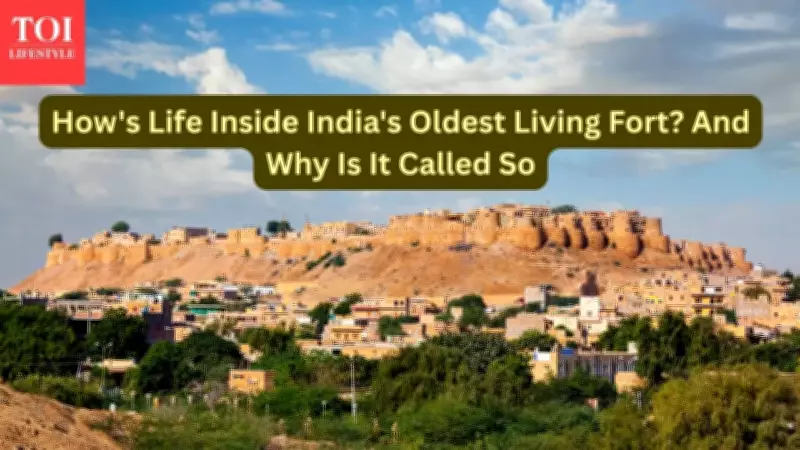
Most forts in India have transformed into museums, where visitors purchase tickets, stroll through empty courtyards, admire ancient cannons, and depart with a few photographs. However, Jaisalmer Fort stands apart. Within its massive sandstone walls, life persists: residents wake each morning, open shops, prepare meals, operate guesthouses, and transport groceries through narrow medieval lanes.
This is why Jaisalmer Fort is renowned as India’s oldest “living fort.” Constructed in 1156 AD by Rajput ruler Rawal Jaisal, this magnificent structure emerges like an ethereal mirage from the Thar Desert. While most historical forts gradually lose their inhabitants over time, Jaisalmer Fort has remained continuously occupied. Thousands of people still reside within its walls, making it a rare example of a living fort.
Living the Life of a Town Inside a Fort
As travelers step through the fort’s massive gates, the atmosphere defies expectations of a historical monument. Motorcycles navigate streets too narrow for two people to walk side by side. Children chase each other past Jain temples that date back centuries. Within the fort, one finds family homes, temples, handicraft shops, restaurants, guesthouses, small hotels, tiny courtyards, and local markets. The fort does not pause for tourism; daily life continues unabated. This peculiarity makes Jaisalmer Fort unique—while most monuments preserve history by design, this fort preserves history by accident, simply because no one ever left.

Why Is It Called the Golden Fort?
Jaisalmer Fort is also known as Sonar Quila, meaning the Golden Fort, due to its golden-colored sandstone architecture. During the day, the fort appears honey-colored, but at sunrise and sunset, it gleams deeply gold against the desert backdrop. Its fame grew further when the name was used in the famous Bengali film Sonar Kella by filmmaker Satyajit Ray. However, the structure was built for more than beauty. Its sandstone walls, balcony carvings, courtyards, and lattice work helped protect residents from the harsh desert climate long before air conditioning was invented. Many traditional houses within remain naturally cooler than the outside temperature.
The Fort Was Once a Complete City
For centuries, Jaisalmer Fort was not just a fortress but the entire city. Its strategic position on the medieval trading route linking India to Central Asia brought immense wealth. Caravans loaded with silk, spices, fabrics, opium, and valuable goods regularly passed through this desert city. The ruling family grew rich taxing this commerce. The fort developed a complex defensive mechanism with 99 bastions, most of which survive today. Perched on Trikuta Hill, the fort provided rulers with panoramic views of the desert and approaching caravans. Unlike other abandoned forts in India, the economy here never died because the fort housed people.
Life Inside a UNESCO World Heritage Site
Jaisalmer Fort has stood for centuries, long before modern plumbing, hotels, cafes, and tourism emerged. Several sections of its foundation have been adversely affected by leakage, and conservation experts express concerns about infrastructure strain from rising tourism. Yet this contradiction is what makes Jaisalmer Fort unique. It is not stuck in time; it is loud, bustling, commercial, spiritual, historical, and lively all at once. The fort maintains a delicate balance between heritage and survival—a rarity in today’s world.
What Visitors Will Always Remember
Visitors come to see a beautiful fort but remember the ambiance instead: the sounds of ringing temple bells echoing through narrow sandstone passages, the sight of havelis carved into golden beauty under the sun’s glow, the vastness of the Thar Desert viewed from rooftops, and elders gossiping outside walls far older than many countries.