

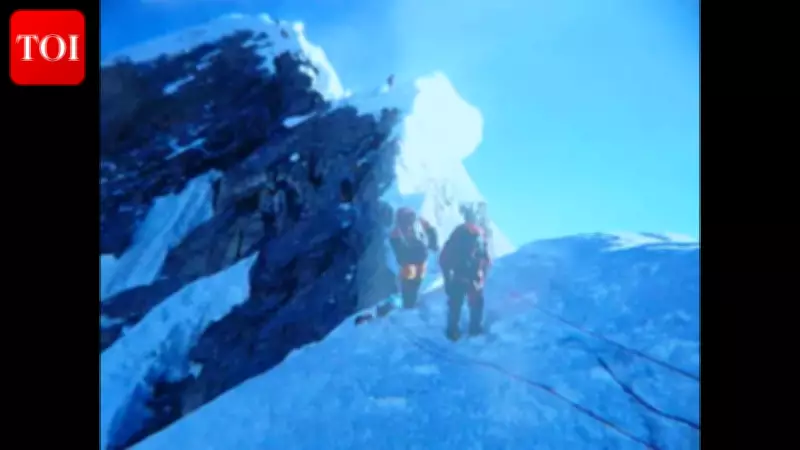
Nepal's Spring Everest Season Commences Amid Major Insurance Fraud Investigation
Nepal's spring climbing season on Mount Everest has officially opened this week, but the excitement is overshadowed by a significant police investigation into an alleged insurance fraud scheme valued at nearly $20 million. Authorities are probing accusations that guides, helicopter operators, hospital staff, and agents collaborated to stage or exaggerate medical emergencies, leading to costly helicopter evacuations and fraudulent insurance claims.
Deceptive Methods Uncovered in Fake Rescue Operations
Police have revealed disturbing tactics used in the scam, which include mixing baking soda into food to induce nausea and bloating among trekkers. Additionally, excessive doses of Diamox—a medication intended to aid acclimatization at high altitudes—were administered alongside forced over-hydration to mimic symptoms of high-altitude cerebral edema (HACE). In some instances, laxatives were used to weaken individuals to the point where they could no longer continue on foot.
To support these fabricated claims, perpetrators allegedly created fake flight manifests, load sheets, invoices, and hospital records. Shiva Kumar Shrestha, spokesperson for Nepal Police's Central Investigation Bureau, stated, "Hospitals, helicopter operators, and guides are also linked in this chain; we are investigating this."

Impact on Genuine Emergencies and International Confidence
Tour operators have expressed concern that the abuse of rescue flights has escalated in recent years, potentially compromising the availability of helicopters for real emergencies. Mingma Sherpa, owner of Kathmandu-based Seven Summit Treks, warned that the fallout could extend beyond the current case if international insurers lose trust in Nepal's rescue infrastructure.
Lukas Furtenbach, head of Furtenbach Adventures, emphasized the severity of the allegations, particularly those involving food tampering and falsified hospital records. He remarked, "The level of organised crime here is staggering. We are talking about millions of dollars being funneled through hospitals that provide fake discharge summaries for patients who were never even sick."
Investigation Details and Legal Actions
Investigators report that the racket operated between 2022 and 2025, involving more than 300 fake rescues. In some cases, trekkers were allegedly made ill intentionally before being flown to Kathmandu, with foreign insurers billed through forged or manipulated documents.
Police have charged 32 individuals with offences related to organised crime, expanding the investigation to include the owners of Mountain Rescue Service, Nepal Charter Service, and Shreedhi Hospital. Among the accused, nine are currently in custody, while 23 remain at large. Shiva Kumar Shrestha added, "In our initial investigation, we found that these companies were involved in around 300 fake rescues."
Specific Fraud Techniques and Industry Concerns
One prevalent method involved loading multiple trekkers onto a single helicopter while billing insurers as if each person had been evacuated on a separate private charter. Investigators also allege that exhausted trekkers were pressured to exaggerate symptoms or deliberately pushed into distress to justify evacuations.
Manoj Kumar KC, chief of the Central Investigation Bureau, affirmed, "We have hard evidence of the companies and individuals involved in the fake rescue scam. All of them will be prosecuted..."
Garrett Madison, an expedition leader with Madison Mountaineering who has summited Everest ten times, shared his observations: "We see it every season: helicopters flying in circles for people who just have a headache or are a bit tired from the walk. It has turned a life-saving tool into a mountain taxi service. My concern is for the person who actually has HACE or a broken limb—will the helicopter be available for them...?"
Systemic Issues and Efforts to Restore Trust
The probe has also examined how commissions allegedly circulated within the system. In a recorded statement, Dr. Girwan Raj Timilsina of Shreedhi Hospital admitted, "My hospital has also given commission from its earnings to trekking companies and rescue companies to promote business."

Deepak Raj Joshi, chief executive of the Nepal Tourism Board, highlighted that corrective actions could help restore confidence in the country's tourism and rescue operations, ensuring the integrity of future climbing seasons.





