

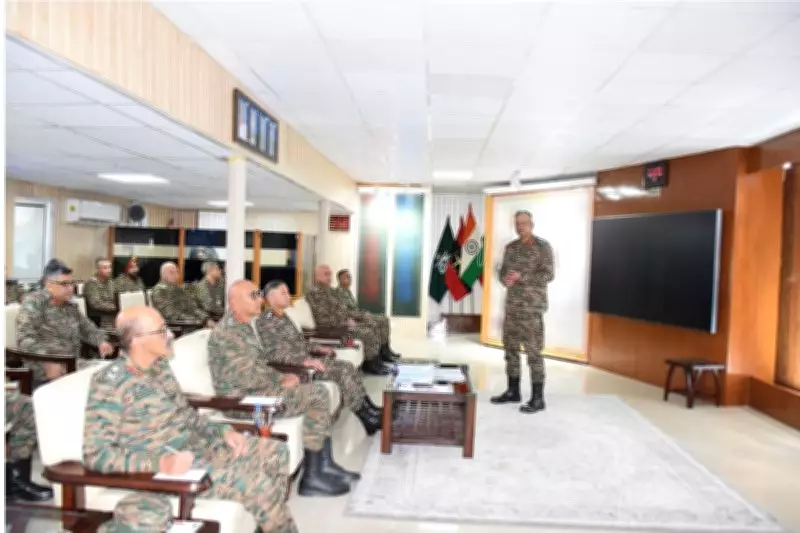
Army Chief Urges Deployment of Advanced Tech in Counter-Terrorism Efforts
The Chief of Army Staff has issued a strong call for the integration of cutting-edge technological solutions to bolster the nation's counter-terrorism capabilities, particularly in the sensitive region of Jammu and Kashmir. This directive underscores a strategic shift towards modernizing military operations to address evolving security threats more effectively.
Emphasis on AI and Drone Technology
In his address, the Army Chief highlighted specific areas where technology can play a transformative role. He pointed to the potential of artificial intelligence (AI) for real-time data analysis and predictive intelligence, which could help in anticipating terrorist movements and planning preemptive actions. Additionally, the use of unmanned aerial vehicles (UAVs) or drones was emphasized for surveillance and reconnaissance missions, reducing risks to human personnel in hostile environments.
The integration of these technologies is seen as crucial for enhancing situational awareness and operational precision. By leveraging AI algorithms, security forces can process vast amounts of intelligence data faster, identifying patterns and threats that might otherwise go unnoticed. Drones, on the other hand, offer persistent monitoring capabilities over difficult terrains, such as the mountainous regions of Jammu and Kashmir, where traditional ground patrols face significant challenges.

Context in Jammu and Kashmir
The focus on Jammu and Kashmir is particularly significant due to its history of insurgency and cross-border terrorism. The Army Chief's remarks come at a time when security forces are continuously engaged in operations to neutralize terrorist networks and maintain peace in the region. The adoption of advanced tech is expected to not only improve the efficiency of these operations but also minimize collateral damage and civilian casualties.
Recent incidents have highlighted the need for more sophisticated tools to combat terrorism. For instance, the use of technology could aid in:
- Enhanced border surveillance to prevent infiltration.
- Improved communication systems for coordinated responses.
- Advanced weaponry and protective gear for troops.
This push aligns with broader national efforts to modernize the armed forces and invest in defense innovation. The government has been promoting initiatives under the 'Make in India' campaign to develop indigenous military technologies, reducing dependence on foreign imports and boosting self-reliance.
Broader Implications for National Security
The Army Chief's advocacy for advanced technology extends beyond immediate operational needs. It reflects a forward-looking approach to national security, where technological superiority is viewed as a key deterrent against asymmetric threats. By incorporating AI, drones, and other innovations, the military aims to stay ahead of adversaries who are also increasingly leveraging technology for malicious purposes.
Experts suggest that this move could lead to:
- Greater interoperability between different branches of the armed forces.
- Development of specialized training programs for personnel in tech-driven warfare.
- Collaboration with private sector and academic institutions for research and development.
In conclusion, the Army Chief's call for advanced technology in anti-terror operations marks a pivotal moment in India's defense strategy. As security challenges evolve, embracing innovation will be essential to safeguarding national interests and ensuring the safety of citizens in conflict-prone areas like Jammu and Kashmir.






