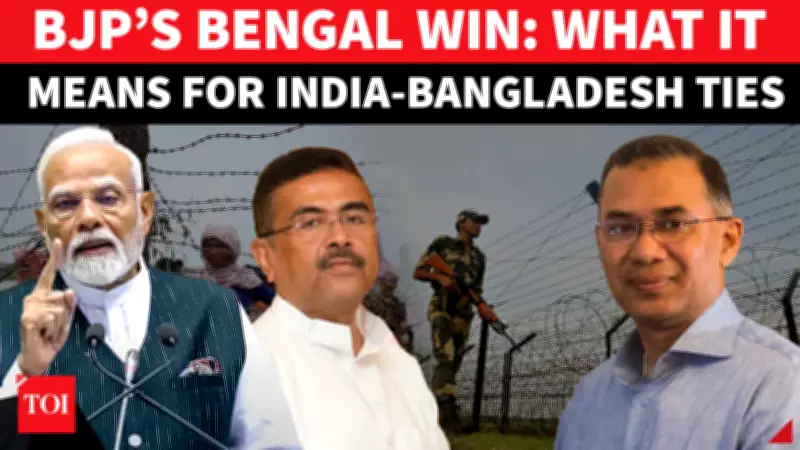
The Bharatiya Janata Party's historic victory in the West Bengal assembly elections is not just a domestic political story. It carries significant implications for India's relationship with Bangladesh, as the new government in Kolkata is ideologically aligned with the BJP-led central government for the first time.
Why West Bengal Matters for Bangladesh
West Bengal shares nearly 54 percent of India's entire border with Bangladesh. This geographic reality makes the state's political orientation crucial for bilateral ties. The election result comes at a time of major political change in Bangladesh, where the Bangladesh Nationalist Party returned to power after the fall of Sheikh Hasina's government in 2024.
Key Issues at Stake
Several contentious issues are now expected to see movement under the new BJP government in Kolkata. Border fencing and illegal immigration have become major political topics in both countries. The so-called 'Assam model' of strict border management and crackdowns on alleged infiltration may now be replicated in West Bengal.

The long-pending Teesta water-sharing agreement, which remained stuck for over a decade under Mamata Banerjee's government, could finally move forward. This would be a major diplomatic breakthrough for New Delhi-Dhaka relations.
Diplomatic Reset
India's appointment of politician Dinesh Trivedi as High Commissioner to Bangladesh signals New Delhi's attempt to politically reset ties with Dhaka at a crucial moment. The alignment between the state and central governments is expected to streamline decision-making on bilateral issues.
Observers note that the BJP's rise in Kolkata could significantly impact border security policies and immigration enforcement. The new government's approach to these issues will be closely watched in both capitals.
As Bangladesh undergoes its own political transition, the ideological convergence between Kolkata and New Delhi may create new opportunities for cooperation on trade, water sharing, and security matters. However, it also raises concerns about potential friction over border management and the treatment of minority communities.