

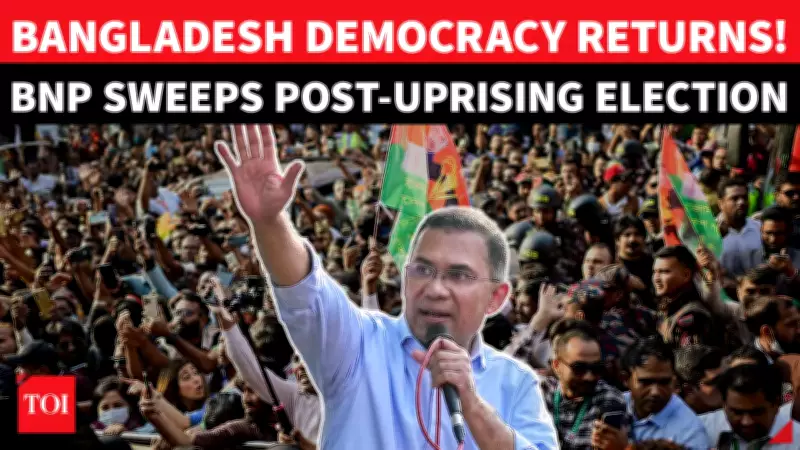
Bangladesh Nationalist Party Achieves Historic Election Triumph
In a stunning political reversal, the Bangladesh Nationalist Party (BNP) has stormed to power in the nation's 13th parliamentary election. Preliminary results indicate the BNP is leading in a commanding 181 out of 299 parliamentary seats, securing a decisive majority that will reshape the country's governance.
Tarique Rahman's Return and Prime Ministerial Position
The victory paves the way for Tarique Rahman, the acting chairman of the BNP, to become the next Prime Minister of Bangladesh. This marks a significant personal and political comeback for Rahman, who has spent 17 years in exile following corruption charges and legal battles. His return to the forefront of Bangladeshi politics comes after the 2024 ouster of long-time leader Sheikh Hasina and the subsequent banning of her Awami League party from participating in this national vote.
International Reaction and Diplomatic Shift
In a notable diplomatic gesture, Indian Prime Minister Narendra Modi extended congratulations to Tarique Rahman on securing what he termed a "decisive mandate." This move signals India's readiness to engage with the new administration, despite historical tensions and Rahman's past criticisms of Indian influence in Bangladeshi affairs. The congratulatory message underscores the importance New Delhi places on maintaining stable relations with its eastern neighbor, regardless of the ruling party.

The electoral process was not without controversy. While the Islamist party Jamaat-e-Islami conceded defeat gracefully, the National Citizen Party has raised serious allegations of result tampering in several constituencies. These claims have added a layer of uncertainty to an already volatile political transition.
Violence Mars the Democratic Process
Regrettably, the election was marred by significant violence across the nation. Reports confirm that at least 72 individuals sustained injuries in clashes between supporters of rival political factions, security forces, and protesters. This violence highlights the deep-seated political divisions within Bangladeshi society and the challenges facing the incoming government in fostering national unity.
A New Chapter in Bangladesh's Political SagaThe election outcome undeniably signals the opening of a new chapter in Bangladesh's turbulent political landscape. After nearly two decades of Awami League dominance under Sheikh Hasina, the BNP's resurgence represents a profound shift in the nation's democratic trajectory. Observers are closely watching how Rahman's government will address pressing issues such as:
- Economic stability and growth
- Diplomatic relations with key partners like India and China
- Human rights and political freedoms
- Security challenges and counter-terrorism efforts
The coming days will be critical as the BNP moves to form a government, with Tarique Rahman expected to take the oath of office shortly. The world watches as Bangladesh embarks on this new political journey, balancing domestic expectations with international diplomacy.






