Sharp Exchange Between Hillary Clinton and Czech Deputy PM at Munich Security Conference
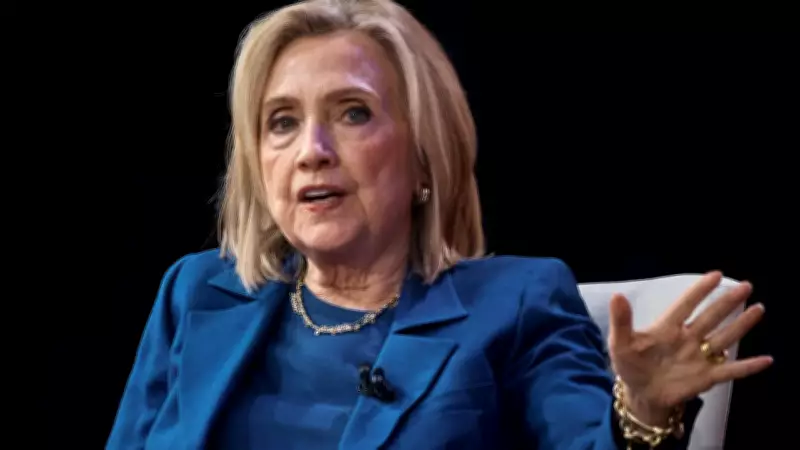
Former US Secretary of State Hillary Clinton engaged in a pointed and lively debate with Czech Republic Deputy Prime Minister Petr Macinka during a panel discussion at the prestigious Munich Security Conference in Germany on Saturday. The exchange highlighted deep ideological divides on contemporary social and political issues, capturing significant attention from international observers.
Clash Over "Woke" Politics and Gender Identity
Petr Macinka initiated the confrontation by criticizing what he termed "woke" politics, explicitly targeting gender identity debates and climate activism. "We saw the woke revolution. I don't agree with the gender revolution, the climate alarmism," Macinka stated firmly, setting the stage for a direct rebuttal.
Hillary Clinton promptly challenged his remarks with a pointed question: "Which gender? Women having their rights?" This response underscored her defense of gender equality and women's rights, framing the discussion within broader human rights contexts.

When Macinka asserted that there are only two genders and dismissed other identities as a "social construct that had gone too far," Clinton countered with a powerful retort: "How about half of us? Can we have our rights?" Her emphasis on inclusivity and rights for all gender identities highlighted the fundamental disagreement between their perspectives.
Connecting Gender Debates to Ukraine Support
Clinton further argued that domestic debates over gender should not undermine international support for critical global issues, specifically referencing Ukraine. "But does that justify selling out the people of Ukraine, who are on the front lines, dying to save their freedom — and their two genders if that's what you're worried about," she remarked, linking the discussion to geopolitical solidarity and humanitarian priorities.
Macinka responded by suggesting Clinton appeared nervous about his comments, stating, "can I finish my point? I'm sorry it makes you nervous." This attempt to deflect criticism added a layer of personal tension to the already heated exchange.
Discussion on Donald Trump and US Politics
The conversation shifted to US domestic politics when Macinka commented on Clinton's apparent dislike for former President Donald Trump. "I think you really don't like him," Macinka observed, to which Clinton candidly replied, "You know, that is absolutely true."
Clinton elaborated on her stance, emphasizing broader concerns beyond personal sentiment. "But not only do I not like him, but I don't like what he's actually doing to the United States and the world, and I think you should take a hard look at it if you think there is something good that will come of it," she asserted, urging a critical evaluation of Trump's policies and their global impact.
Macinka described Trump's actions as a reaction to policies he claimed had strayed too far from ordinary people, prompting Clinton to request specific examples to substantiate his argument, though none were detailed in the exchange.
Clinton's Comments on US Immigration System
During the same panel, Hillary Clinton addressed US immigration, describing the current system as having "gone too far." She characterized it as "disruptive and destabilizing" and called for comprehensive reforms that balance security with humanity.
Clinton advocated for policies that ensure secure borders while protecting human life and supporting strong family structures. She acknowledged the utility of barriers in specific locations but opposed the large-scale expansion of the border wall, a position consistent with her 2016 presidential campaign.
Historically, Clinton supported former President Barack Obama's executive actions that deferred immigration enforcement for millions of undocumented children and parents, aiming to end family detention. Her approach focused on deporting "violent criminals" while scaling back immigration raids, which she argued caused "unnecessary fear and disruption in communities."

The Munich Security Conference, a key forum for international security policy, provided a global stage for this significant dialogue, reflecting ongoing debates about social values, political leadership, and international cooperation in today's complex geopolitical landscape.