Davos 2026: A World on Edge Amid Trump's Threats and Institutional Rupture
The atmosphere at the World Economic Forum in Davos this year was palpably tense, charged with more than just economic anxieties. Delegates grappled with the looming specter of a potential transatlantic alliance collapse, as US President Donald Trump renewed his controversial threat to seize Greenland from Denmark by force—a move analysts warned could effectively shatter the North Atlantic Treaty Organization (NATO).
The NATO Paradox: External Threats Versus Internal Discord
Founded in 1949 to counter the Soviet Union, NATO has evolved through decades, facing threats from Russia's Ukraine invasion to potential challenges from China. Yet, few anticipated the alliance's greatest vulnerability might stem from within its own leadership. The core Article 5 principle—that an attack on one member constitutes an attack on all—was tested post-9/11 when NATO supported US actions in Afghanistan. Now, Trump's threats against Denmark, a fellow NATO member, risked undermining this very foundation.
A collective, albeit quiet, sigh of relief followed Trump's January 21 speech, where he walked back the Greenland threat and omitted punitive tariffs against eight opposing nations, including Denmark. However, his reassurance came laced with characteristic warnings: "You can say 'yes', and we will be very appreciative, or you can say 'no', and we will remember." Trump reiterated grievances about NATO partners' insufficient burden-sharing, despite the alliance's post-9/11 support for Washington.

Trump's Rambling Address Versus Carney's Clarion Call
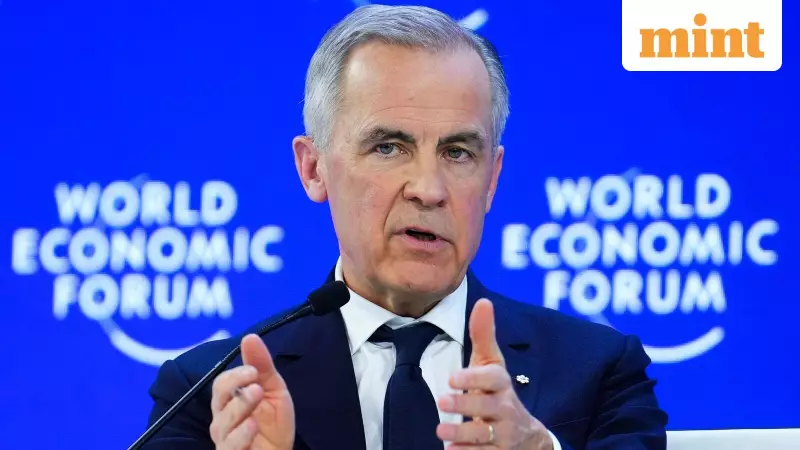
Trump's 70-minute speech, exceeding its allotted time by 25 minutes, was a blend of self-praise, disdain for European leaders, and veiled threats. He boasted of extracting concessions through tariff pressures and credited his policies for a buoyant global economy. In stark contrast, Canadian Prime Minister Mark Carney delivered a concise, 20-minute address that earned a standing ovation for its hard truths.
Carney presented a clear-eyed critique of the rules-based international system, arguing it has primarily benefited a select few while powerful nations exempt themselves when convenient. He described the current global shift not as a transition but a profound rupture, warning that middle powers negotiating individually with hegemons do so from a position of weakness. "If we’re not at the table, we’re on the menu," he cautioned, advocating for collective action among middle powers to resist economic coercion and forge an independent path. This masterclass on power dynamics seemingly irritated Trump, who later labeled Canada ungrateful and rescinded Carney's invitation to the US-convened Board of Peace (BoP).
The Controversial Board of Peace and Global Reactions
The BoP, ostensibly focused on Gaza reconstruction under Trump's 20-point peace plan, is viewed as a broader conflict-resolution body with a $1 billion price tag for permanent membership. Chaired by Trump with veto powers, its executive council includes figures like former UK PM Tony Blair and US Secretary of State Marco Rubio. Notably, the charter lacks direct reference to Gaza, instead proposing a sweeping mandate that challenges established institutions like the UN.
India's cautious stance saw Prime Minister Narendra Modi invited to the signing ceremony but declining to send a representative, possibly due to concerns over the charter's vague language on "lawful governance" in conflict zones—potentially interpretable to include regions like Kashmir. Pakistan's Prime Minister Shehbaz Sharif attended with army chief Field Marshal Asim Munir, reflecting Islamabad's warmer ties with Trump. Other nations like France, Spain, and Carney's Canada also abstained, while participants included Saudi Arabia, UAE, and Jordan.

Broader Implications and Japan's Political Gamble
This Davos underscored a fragile multilateral landscape, where India's critique of an outdated UN Security Council coexists with its support for multipolarity. Meanwhile, in Japan, Prime Minister Sanae Takaichi—the nation's first female leader—has dissolved parliament for snap February elections, betting on her 70% approval ratings to secure a Liberal Democratic Party majority after recent losses. This political gamble mirrors the high-stakes dynamics playing out globally, as nations navigate an era of institutional uncertainty and shifting power balances.
The 2026 Forum ultimately revealed a world at a crossroads: between unilateral hegemonic actions and a collective, middle-power response, with the future of international cooperation hanging in the balance.