Venezuela's Delcy Rodríguez Reveals US Ultimatum After Maduro Capture in Leaked Recording
In a startling revelation, a newly leaked audio recording has exposed the chaotic aftermath of the targeted US military operation that captured Venezuela's president, Nicolás Maduro. The recording, obtained from a meeting held among Maduro's allies just seven days after the capture, features then vice-president Delcy Rodríguez detailing harrowing threats from US forces.
"15 Minutes to Respond or They Would Kill Us"
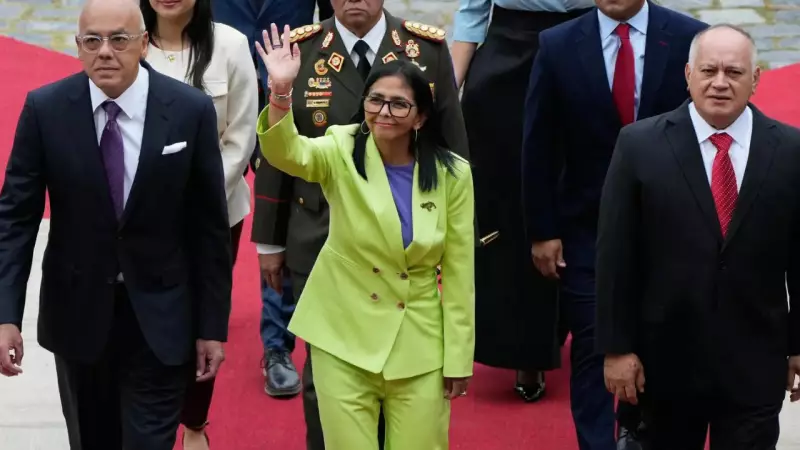
Speaking for six minutes during the clandestine gathering, Delcy Rodríguez recounted the immediate threats that followed Maduro's apprehension. "They gave us 15 minutes to respond, or they would kill us," Rodríguez told her colleagues, referring to herself, interior minister Diosdado Cabello, and her brother Jorge Rodríguez, who serves as congressional president.
Rodríguez described the alleged constant threats that began "from the very first minute they kidnapped the president." She emotionally recalled, "Hurt ... to have to assume responsibilities in these circumstances," emphasizing the pressure her team faced.

Claims of Assassination and Secret Communications
The leaked audio further reveals Rodríguez's claim that US troops informed her Maduro and his wife, Cilia Flores, had been assassinated rather than kidnapped. "The US troops told us [Maduro and his wife] had been assassinated, not kidnapped," she stated, adding that she and Cabello "were ready to share the same fate."
This disclosure comes alongside reports that Rodríguez had been engaged in secret communications with Washington since November 2025. According to sources cited by The Guardian, Rodríguez signaled to US officials that Maduro needed to be removed and assured them she could oversee a controlled transition to prevent state collapse.
An involved individual revealed to The Guardian, "Delcy was communicating 'Maduro needs to go.' She said, 'I'll work with whatever is the aftermath.'" This backchannel arrangement aimed at keeping the power transition under control, suggesting the operation was coordinated months in advance.
Transition of Power and Political Maneuvering
Following Maduro's capture, rumors circulated that Rodríguez had fled to Moscow. However, reports indicate she was actually on Margarita Island, awaiting developments. On January 5, she returned to Caracas and was inaugurated as acting president, succeeding Maduro.
Her brother, Jorge Rodríguez, assumed a pivotal role as national assembly chief, aligning with the pre-negotiated transition framework. Communication minister Freddy Ñáñez defended Rodríguez during the meeting, urging colleagues to dismiss "gossip, rumours, intrigues and attempts at discrediting" her. Ñáñez asserted that Rodríguez was "the only guarantee we have that we can bring back the president and the first lady – but also turn the page and reconfigure our forces."
US Acknowledgment and Strategic Implications
Former US President Donald Trump acknowledged the backchannel deal, telling the New York Post, "We've spoken to her numerous times, and she understands, she understands." This admission underscores the strategic coordination between Rodríguez and Washington, which began when Trump urged Maduro to step down—a demand the Venezuelan leader declined.
In her address, Rodríguez urged her allies to "preserve peace, to rescue our hostages, and to preserve" stability. She emphasized proceeding with "patience and strategic prudence, with very clear objectives," highlighting the ongoing threats and blackmail her administration faces.
The leaked recording and subsequent reports shed new light on the tense hours following Maduro's capture, revealing a complex web of political maneuvering, international intervention, and internal strife that continues to shape Venezuela's turbulent political landscape.