How Denmark Came to Control Greenland: A Detailed Historical Overview
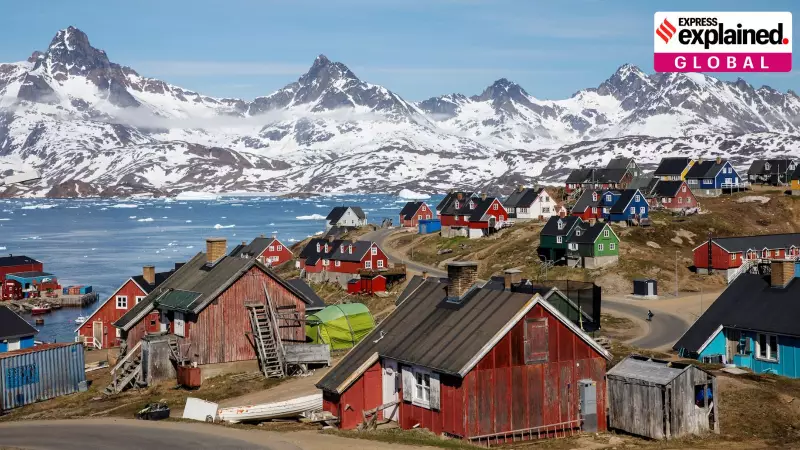
Greenland stands as an autonomous territory within the Kingdom of Denmark today, yet its governance and ownership have sparked renewed interest, particularly with recent geopolitical discussions involving figures like former US President Donald Trump. While Greenland manages a wide array of internal affairs independently, the Danish government retains authority over foreign policy, defense, and security matters. This article delves into the intricate history of how Denmark established and maintained control over the world's largest island, tracing a journey that spans millennia and involves diverse cultures and political shifts.
Early Inhabitants and Norse Explorations
Over centuries, various migrant groups have inhabited Greenland's challenging and icy landscape. Archaeological evidence, as noted by researcher Jorgen Taagholt, indicates that the earliest explorations occurred approximately 4,000 years ago when Inuit communities from North America reached northwestern Greenland. Subsequent waves of Inuit migrants arrived via Canada over the next 3,000 years, with the current population largely descending from those who migrated around the 1200s AD, belonging to the Thule culture.
Simultaneously, Norsemen from Iceland, led by the Viking explorer Eric the Red, settled on the island's western coast, engaging in animal husbandry. However, by 1500 AD, the Norse population had largely vanished, leaving behind a mystery that continues to puzzle historians. Theories suggest they may have migrated to Europe for improved climates or livelihoods, but their disappearance set the stage for Danish colonial ambitions inspired by these lost settlements.

Missionary Efforts and Colonial Expansion
The re-establishment of European contact with Greenland came in 1712 through Christian missionary Hans Egede, supported by the Dano-Norwegian crown. Initially seeking to reform the Norse settlers, Egede shifted focus to converting the Inuit to Christianity upon finding only them. His efforts, financially backed by the Bergen Company, marked the beginning of colonization. A statue of Egede in Nuuk, Greenland's capital, symbolizes this contentious history, often viewed as a representation of colonial imposition.
Historian Iben Bjornsson explains that the colony initially incurred losses for the crown, leading King Christian VI to consider shutting it down by 1736. However, Egede's persistence and the success of the Christian mission kept it operational. A prevailing belief that Greenland was part of the Dano-Norwegian realm due to Norse presence further justified colonization. By 1776, Denmark established a monopoly over Greenland's trade, restricting foreign access and controlling exports like whale blubber and sealskins.
Political Changes and Path to Autonomy
Following the split of Denmark and Norway in 1814 under the Treaty of Kiel, Denmark retained Greenland along with other overseas colonies. Greenland remained a Danish colony until the mid-20th century, with control largely unchanged until World War II. During the war, the US established bases on the island to prevent enemy occupation, as highlighted in recent discussions.
Post-World War II, the United Nations advocated for decolonization, leading to Greenland's integration into the Kingdom of Denmark in 1953 without a referendum. In 1979, a referendum granted Greenland greater autonomy through the Home Rule Act, establishing its own Parliament. Further autonomy came in 2008 with the Act on Self-Government, giving Greenland more control over legal and political affairs, including independence considerations.
Contemporary Debates and Independence Movements
Today, Greenland exercises significant internal autonomy but relies on Denmark for foreign policy, defense, and substantial funding grants, totaling over USD 500 million annually. Despite this, a growing desire for independence persists, fueled by a painful colonial legacy. Recent research and documentaries, such as The White Gold of Greenland, have exposed darker aspects of Danish rule, including forced conversions, cultural suppression, and exploitation of resources like cryolite.

Controversial incidents, such as the forced insertion of intrauterine devices in Greenlandic women during the 1960s and 70s, and the social experiment involving Inuit children in the 1950s, have led to apologies and compensation from Denmark. The 2025 elections in Greenland, which brought Jens-Frederik Nielsen to power, underscored a preference for gradual independence. However, external interests, like those expressed by Donald Trump, complicate the situation, with Greenland's leadership affirming a preference for Danish ties over American control in current scenarios.
In summary, Denmark's control over Greenland is a complex tapestry woven from early settlements, missionary endeavors, colonial monopolies, and modern political evolution. As Greenland navigates its path toward potential independence, its history with Denmark remains a critical factor in shaping future relations and governance.