German Chancellor Calls for Renewed Trans-Atlantic Partnership at Munich Security Conference
In a significant address at the annual Munich Security Conference, German Chancellor Friedrich Merz emphasized the urgent need for the United States and Europe to repair and revive trans-Atlantic trust together. He warned that in an era of intensifying great-power rivalry, even the United States will not be powerful enough to go it alone, underscoring the critical importance of a unified approach.
Acknowledging a Deep Rift Across the Atlantic
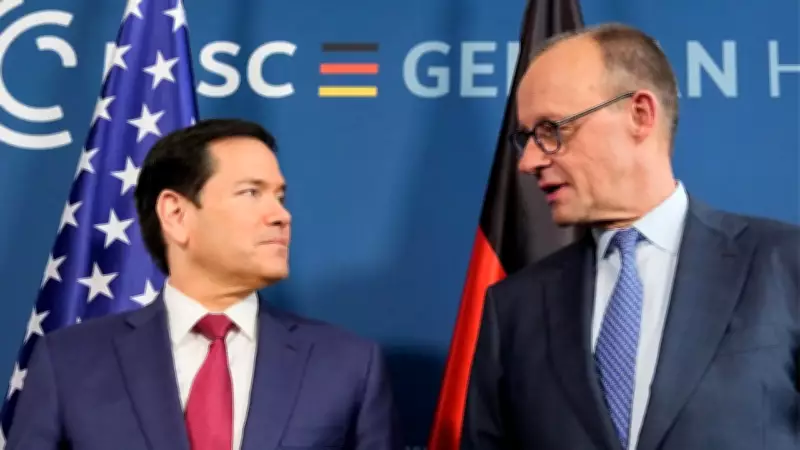
Opening the high-profile gathering, which brings together senior global security officials including European leaders and US Secretary of State Marco Rubio, Merz acknowledged that a divide, a deep rift has opened across the Atlantic. He called for a new trans-Atlantic partnership to address this growing gap, as reported by AP.
Shadow of Last Year's Tensions Lingers
The conference comes against the backdrop of last year's tensions, which were marked by friction following US Vice President JD Vance's criticism of democracy and free speech in Europe. This episode set the tone for a year of strain, compounded by the Trump administration's moves affecting allies, such as threats to impose tariffs on European countries in a bid to secure US control of Greenland, a semiautonomous territory of Denmark and a NATO ally. Although the threat was later dropped, it highlighted ongoing challenges.

Distancing from US Domestic Politics and Emphasizing Shared Values
In his speech, Merz distanced Europe from US domestic political debates, stating, The culture war of the MAGA movement in the US is not ours. He emphasized that freedom of speech ends when it undermines human dignity and the constitution, and rejected tariffs and protectionism in favor of free trade. Merz added that Europe remains committed to climate agreements and the World Health Organization, convinced that global tasks can only be solved together.
Strengthening NATO and European Defense Efforts
Merz highlighted the importance of the trans-Atlantic alliance, noting that being part of NATO is a competitive advantage for both Europe and the United States. He urged collaborative efforts to rebuild trust. In response to US pressure for higher defense spending, Merz reported that NATO allies have agreed to significantly raise their targets since last year's conference. Mark Rutte noted a shift in mindset, with Europe taking more leadership within NATO and enhancing its own defense capabilities.
Rubio Signals a New Era in Geopolitics
US Secretary of State Marco Rubio, addressing the conference, described Europe as vital for the US, citing cultural and heritage ties. However, he emphasized that we live in a new era in geopolitics, requiring a reexamination of alliances. Rubio arrived in Munich on Friday, meeting Chinese Foreign Minister Wang Yi on the sidelines and scheduling meetings with Danish Prime Minister Mette Frederiksen and Greenlandic Prime Minister Jens-Frederik Nielsen, with a planned address on Saturday.
Europe Seeks a Stronger Pillar Within the Alliance
Merz acknowledged that Europe's excessive dependency on the US was its own fault but stated the continent is moving beyond this by building a strong, self-supporting European pillar within NATO. He emphasized that managing differences with new strength, respect, and self-respect will benefit both sides, ensuring a more resilient partnership in the face of global challenges.