

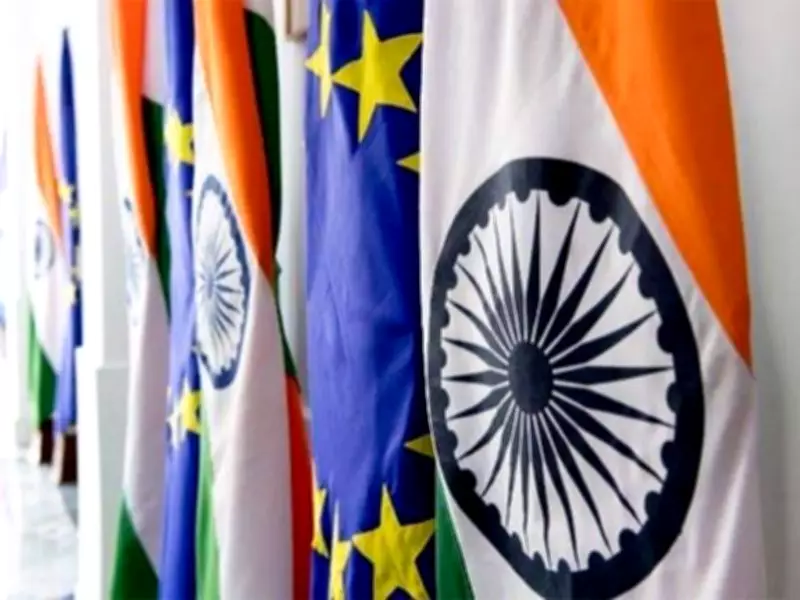
India and the European Union held the 12th India-EU Human Rights Dialogue in New Delhi on Wednesday, June 25, 2026. The dialogue, co-chaired by Piyush Srivastava, Additional Secretary (Europe West), and Herve Delphin, Ambassador of the European Union to India, featured free and frank discussions on the advancement of all human rights.
Shared Values and Strategic Partnership
Both sides recalled the historic 16th India-EU Summit held in New Delhi in January 2026, where leaders underscored their commitment to elevating the India-EU Strategic Partnership to a higher level based on shared values including democracy, human rights, pluralism, rule of law, and a rules-based international order with the UN at its core. The dialogue reaffirmed their dedication to the promotion and protection of all human rights, emphasizing their universality, indivisibility, and interrelatedness. As major democracies, open market economies, and diverse societies, India and the EU together represent nearly one-fourth of the global population.
Key Topics Discussed
India and the EU exchanged views on civil and political rights; social, economic, and cultural rights; elimination of discrimination in all its manifestations; the rights of migrants; freedom of religion or belief; freedom of expression and opinion both online and offline; and gender, LGBTQI+, and child rights. They reiterated their commitment to developing trustworthy, sustainable, and human-centric artificial intelligence, as conveyed during the AI Impact Summit 2026 hosted by India. Cooperation on humanitarian assistance and disaster relief was also discussed. Both sides updated each other on implementation of the UN Guiding Principles on Business and Human Rights and explored ways to strengthen cooperation.

Institutional Cooperation and Human Rights Mechanisms
India and the EU recognized the importance of strengthening and cooperating with national and international human rights institutions and mechanisms. They concurred on safeguarding the freedom, independence, and diversity of civil society actors, organizations, and journalists, as well as respecting freedom of association and peaceful assembly. The EU reiterated its opposition to capital punishment in all cases and without exception. India reiterated its stand on recognizing the Right to Development as a distinct, universal, inalienable, and fundamental human right.
Future Engagement
The two sides committed to continue engaging on human rights bilaterally and multilaterally, including through the regular India-EU Human Rights Dialogue and on the sidelines of the UN General Assembly and the UN Human Rights Council. They explored concrete avenues for consultation and cooperation at the multilateral level. Both sides looked forward to continuing the constructive dialogue at the next Human Rights Dialogue in 2027.






