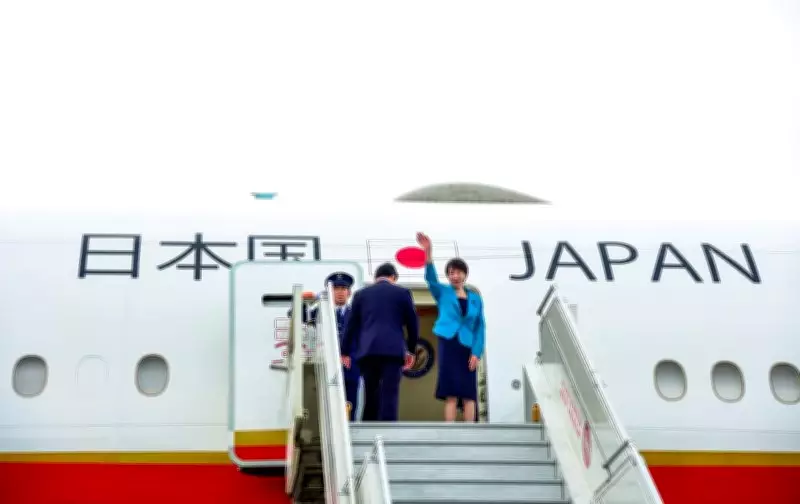
Japanese Prime Minister Sanae Takaichi concluded her official visit to India on Friday, with the Ministry of External Affairs (MEA) describing the 16th India-Japan Annual Summit as "highly successful." The visit reaffirmed the commitment of both nations to nurture a partnership vital for shared growth and prosperity, while serving as an anchor for peace, stability, and prosperity in the Indo-Pacific and beyond.
Summit Outcomes and Ceremonial Send-off
External Affairs Ministry Spokesperson Randhir Jaiswal posted on X: "A memorable visit concludes, advancing India-Japan partnership towards shared horizons. PM @takaichi_sanae of Japan departs from India following the highly successful 16th India-Japan Annual Summit. She was seen off by Minister of State @DrJitendraSingh." Photos of the send-off at Delhi airport were also shared.
Takaichi visited India from July 1 to 3 at the invitation of Prime Minister Narendra Modi. She was accorded a ceremonial welcome at Rashtrapati Bhavan on Thursday morning, with PM Modi present.

Landmark Initiatives Unveiled
During the summit, PM Modi and PM Takaichi unveiled several landmark initiatives, including an economic partnership framework, a defence pact for co-development of military hardware, and steps to enhance energy ties to address oil shocks. The talks focused on strengthening mutual trust to navigate global uncertainties.
Foreign Secretary Vikram Misri described the visit as "extremely successful," highlighting the "exceptional breadth and depth" of outcomes. He also noted that the two leaders discussed the 75th anniversary of diplomatic relations next year, with 2027 to be commemorated as the India-Japan Year of Shared Horizons.
Strengthened Strategic Partnership
On Wednesday, the MEA stated that the visit marked an "important step" in advancing the Special Strategic and Global Partnership between India and Japan. Jaiswal posted: "Taking forward a partnership anchored in trust, shared values and strategic..." The summit reaffirmed the commitment to nurture a partnership pivotal to shared growth and prosperity, and as an anchor for promoting peace, prosperity, and stability in the Indo-Pacific and beyond.