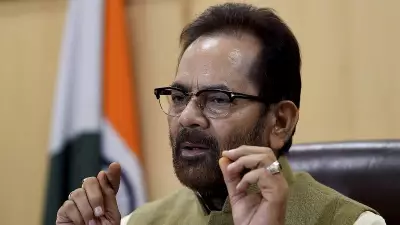
The Ministry of External Affairs on Tuesday categorically rejected the 'unwarranted references' to Jammu and Kashmir in the joint statement issued by China and Pakistan. Responding to media queries, MEA spokesperson Randhir Jaiswal stated that Jammu and Kashmir and Ladakh have been, are, and will always remain integral and inalienable parts of India, and no other country has the locus standi to comment on the issue.
India's Strong Opposition to CPEC Projects
Jaiswal further said, 'As regards the so-called China-Pakistan Economic Corridor (CPEC) projects, some of which are in India's sovereign territory, we resolutely oppose and reject any moves by other countries to reinforce or legitimise Pakistan's illegal and forcible occupation of these territories, impinging on India's sovereignty and territorial integrity. This has been clearly conveyed to Pakistani and Chinese authorities several times.'
Trans-Boundary Water Cooperation Refuted
The MEA spokesperson also addressed references to 'trans-boundary water resources cooperation' between China and Pakistan. 'As the two countries do not share any boundary, the question of so-called trans-boundary water resources cooperation does not arise. India has never recognized the so-called 1963 boundary agreement between Pakistan and China,' he added.

Background of the Joint Statement
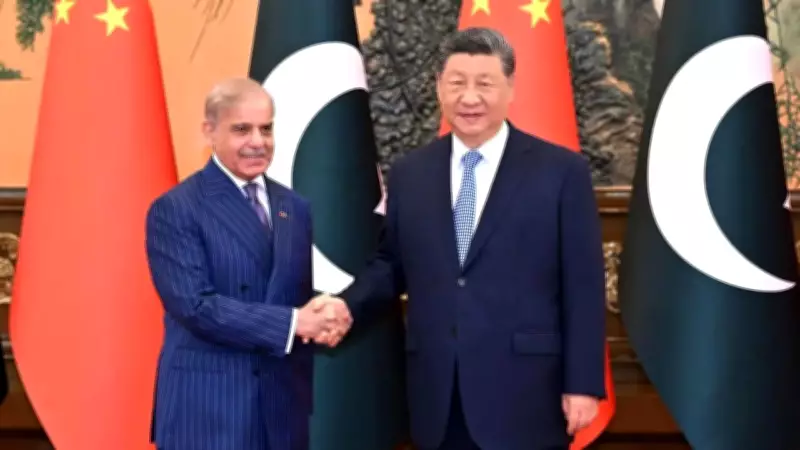
This reaction comes after a China-Pakistan joint statement described the Kashmir issue as 'left over from history' and called for its resolution through peaceful means under the UN Security Council framework. The remarks followed high-level discussions between Chinese President Xi Jinping and Pakistan Prime Minister Shehbaz Sharif on May 25.
The statement was issued by Pakistan's Foreign Office as PM Shehbaz concluded his four-day visit to China. According to the statement, Pakistan briefed the Chinese side on the 'latest developments' in Jammu and Kashmir. China reiterated its longstanding position that the dispute should be 'properly and peacefully resolved in accordance with the UN Charter, relevant UN Security Council resolutions and bilateral agreements.'
Reiteration of Opposition to Unilateral Actions
Both sides reiterated opposition to any unilateral actions and reaffirmed the significance of maintaining peace and stability in South Asia, resolving all outstanding disputes through dialogue and diplomacy. The Pakistani side briefed the Chinese side on the latest developments in the situation in Jammu and Kashmir. The Chinese side reiterated that the Jammu and Kashmir dispute is left over from history and should be properly and peacefully resolved in accordance with the UN Charter, relevant UN Security Council resolutions, and bilateral agreements.
India has consistently maintained that Jammu and Kashmir is an integral part of the country and any external commentary on the matter is unwarranted. The MEA's strong response underscores India's firm stance on its sovereignty and territorial integrity.